At the old Battery Park Hotel in Asheville, North Carolina, a service elevator is said to run floor to floor by itself after midnight. It traces the route of Martin Moore, a young bellhop beaten into confessing to a 1936 murder he almost certainly didn't commit.
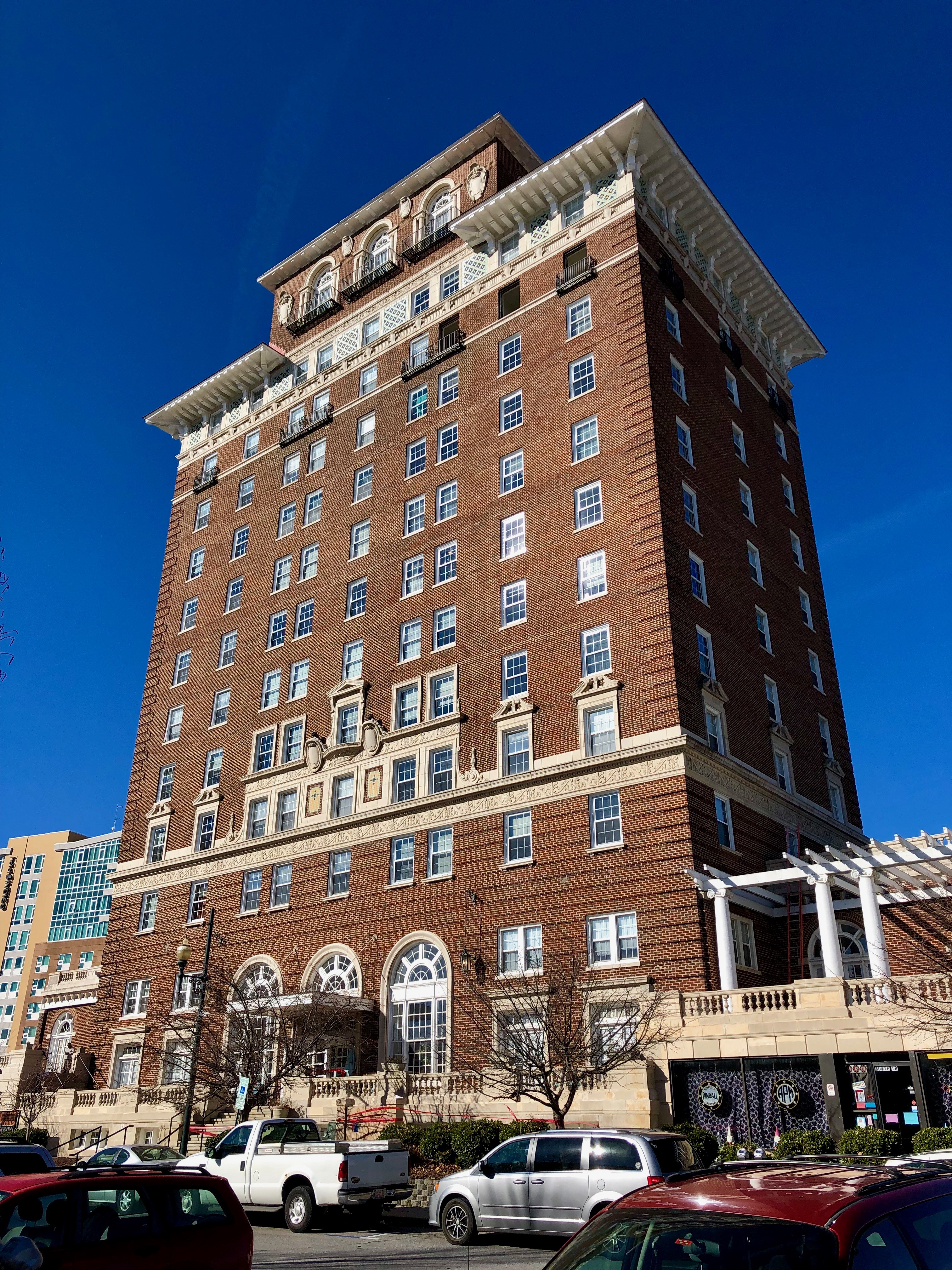
The Battery Park Hotel in Asheville, North Carolina is senior apartments now, but residents say the service elevator still works its old shift. After midnight it runs floor to floor on its own, opening and closing on empty halls, the way it would if a bellhop were still operating it. The man who used to operate it was Martin Moore.
E.W. Grove, the magnate behind the Grove Park Inn, built the 14-story tower in 1924 on a hill that had once held a Confederate gun battery. It ran as a hotel until 1972 and became Battery Park Apartments in 1979. Somewhere in those 220 rooms is the one that gave the place its darkest week.
In the early hours of July 16, 1936, an NYU student named Helen Clevenger was shot and beaten to death in Room 224 during a thunderstorm. She was 18, in town visiting her uncle, a professor who found her body when he came to call on her for breakfast. A .32-caliber round had gone through her chest, and her face had been badly beaten. Early witnesses described a white man fleeing the scene. Police held three white men without charges, then let the case drift.
Three weeks later they arrested Martin Moore, a Black hotel employee of nearly three years. Officers beat him with a length of rubber hose and told him they'd found his bloody fingerprints on the light bulb in Helen's room. There were no such prints. "The officers wrote out half of what I told them," Moore said of the confession, "and helped me explain it, and told me what to say."
His own court-appointed lawyer opened by telling the room he was there only "because it was his court-appointed duty to do so." An all-white jury convicted him in under an hour. He was executed in the gas chamber at Raleigh that December. The Asheville Museum of History now argues he almost certainly didn't do it, and a 2021 book by the historian Anne Chesky Smith makes the case at length.
So the haunting here isn't really about the girl. It's about the elevator. Around mid-July, the anniversary of her death, the window of her old room is said to glow red from the inside, and a tour guide who has covered the case says management leaves it unrented. But the thing that runs all night, floor to floor, belongs to the man they hanged for her — still working the route, in a building that long ago stopped being a hotel.