On Spook Rock Road near Hudson, New York, locals report a woman crying in the dark, wandering as if she's looking for someone. The boulder in the creek beside her has a legend older than the road: it turns over when the Claverack church bell tolls, and the lovers buried under it appear.
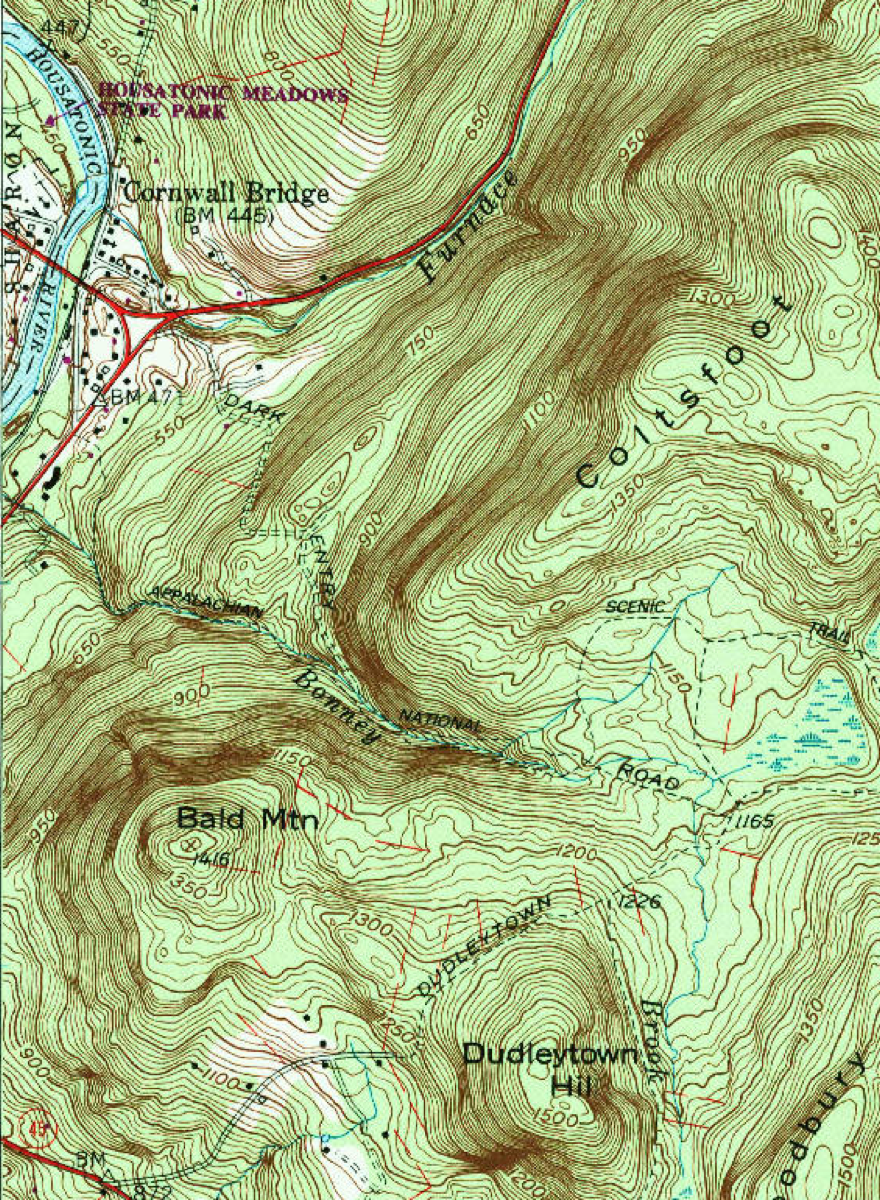
On Spook Rock Road, a country lane that runs south off NY-23B along Claverack Creek about a mile east of Hudson, New York, people say they hear a woman crying in the dark. They see her too, wandering the roadside, distressed, as if she's searching for someone she's lost.
The road is named for a rock, and the rock is named for a spook. There's a boulder sitting in the creek, and the legend attached to it is older than almost any roadside ghost story can prove. In 1909, a Columbia County historian named Elizabeth Gebhard wrote it down in a chapter she titled "The Legend of 'Spook Rock.'"
In Gebhard's telling, a Mohican chief kept his wigwam on the summit of Becraft Mountain, in a village called Pot Koke, and his daughter loved the son of an enemy tribe. They met at night, in secret. One night a storm broke over them. "A heavy crash, a blinding light," she wrote, "and the great boulder rolled into the stream, carrying the lovers with it." Both drowned in the creek.
The detail that outlasted everything else is the one Gebhard recorded too: the rock turns over every time it hears the Claverack church bell toll, and when the bell rings, the two lovers appear.
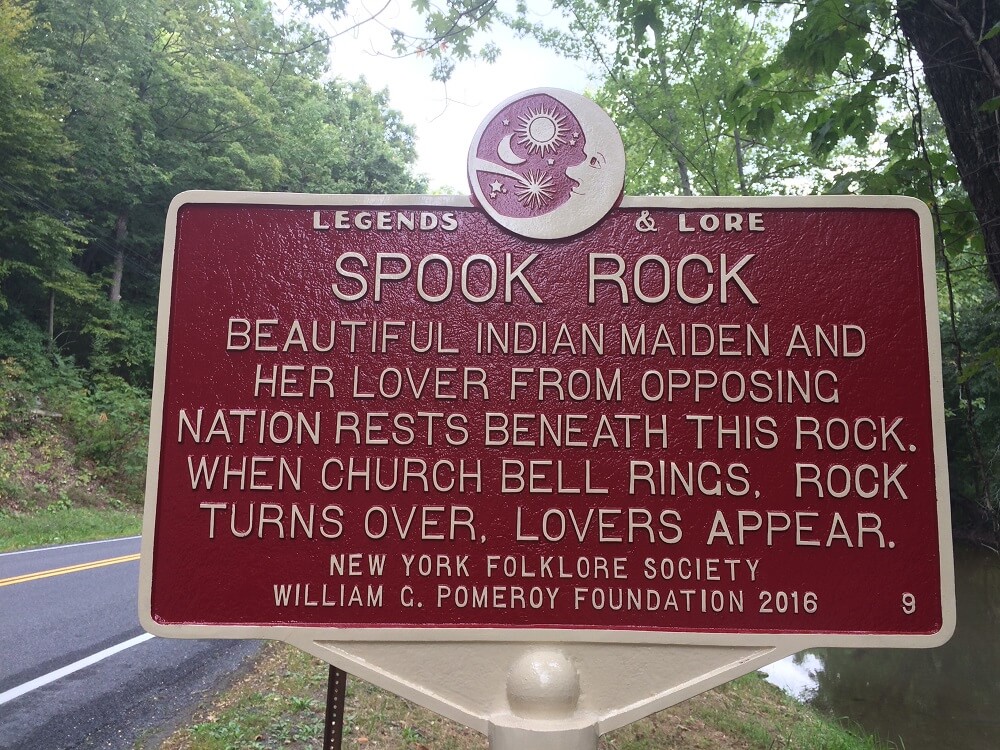
That line is the legend itself. In 2016, the New York Folklore Society and the Pomeroy Foundation put a historical marker on the road. It reads, in part: "WHEN CHURCH BELL RINGS, ROCK TURNS OVER, LOVERS APPEAR."
The story has mutated over the century since Gebhard wrote it down. Some tellings make the woman Dutch and the man Lenape; some have the gods flood the creek on purpose to punish the match. The cultural details drift from teller to teller, but the bones hold every time: a forbidden love, a death at the rock, a grieving spirit left behind on the road.
People still go looking for her. There's an unpaved pull-off by the creek, and they wade in near the boulder, fish beside it, wait in the dark to hear something. The rock has turned up on calendars and postcards over the years, a real piece of Columbia County. There's even a Spook Rock Cemetery a short way off. The legend got a literary origin, a marker, and a permanent name on the map. The woman on the roadside is the only part nobody ever wrote down, and she's the part people keep reporting.