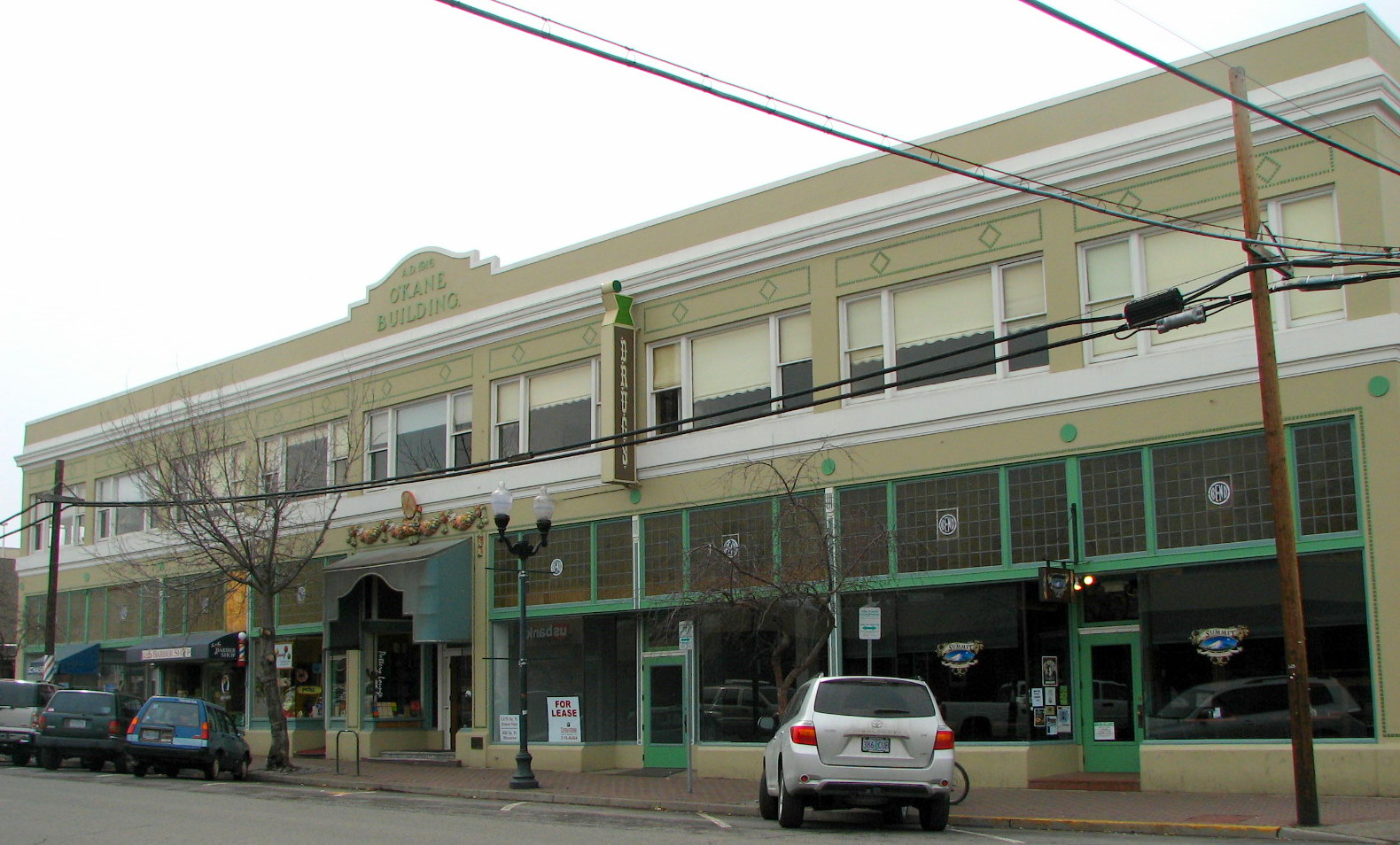
Tenants and tour guests at the O'Kane Building in Bend, Oregon keep meeting an old man in the basement — footsteps on empty floors, a voice with no body. They call him Hugh O'Kane, who raised the building fireproof in 1916 after fire took his hotel, and never left.
In the basement of the O'Kane Building in Bend, Oregon, people keep running into an old man.
Visitors and tenants describe an elderly figure downstairs, footsteps crossing floors confirmed empty, and a voice with no body to it. The basement is where they meet him most, though the accounts climb the whole building — strange lights on the top floor seen from the street, a presence at the upper windows after closing. Locals long ago stopped arguing about who he is. They call him Hugh.
Hugh O'Kane built the place, and he built it to last. Born in County Antrim, Ireland, in 1857, he stowed away on a ship to New York as a boy and spent the next decades trying on every life available to a restless man: tailor, sailor, stagecoach driver, gold miner. He made $50,000 in the Black Hills and lost all of it gambling. He managed a wrestler and a troupe of sprinters on tours overseas. In 1903 he and his wife Helen settled in Bend and built the Bend Hotel, which became a Central Oregon landmark.
On August 30, 1915, it burned to the ground.
The next year O'Kane poured the foundation of this one — two stories, six storefronts, a theater, and 20 offices above. It was the first reinforced-concrete structure in Bend, built fireproof by a man who had just watched fire take everything he owned. It is still downtown Bend's largest commercial block, listed on the National Register of Historic Places.
The accounts pile up across all of it. Meg Kehoe, who co-founded Bend Ghost Tours, says the reputation is town-wide: "Most people who have grown up in Bend know this building by its reputation of being haunted." A guide reports that "almost every business we've talked to in that space has had weird things happen" — including a tour guest whose phone, unprompted, spoke a single sentence aloud: "he never came home." Tenants describe a young girl's voice, and in what was once a restaurant, a waitress heard shouting orders to a kitchen that no longer exists.
Scott Gibbs, the property manager, keeps it plain. He gets the occasional morning call about a light "that was on in the morning even though the last person out the door was sure they switched them all off."
Hugh O'Kane died in 1930, in Portland, far from Bend and far from the block he built. But it's the one he raised out of fireproof concrete — the single thing he made that fire couldn't take — that people say he never left.