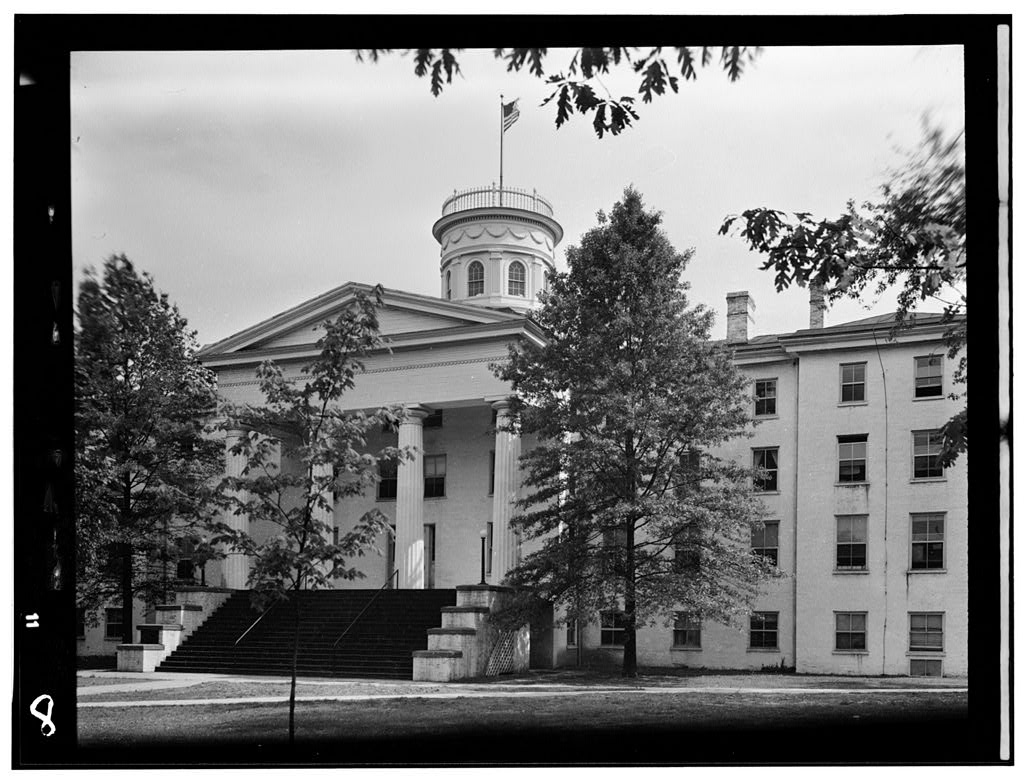
The story goes that two Gettysburg College administrators rode the Pennsylvania Hall elevator down past the basement and the doors opened on a Civil War surgical ward. The building really was a field hospital in 1863. The basement part is where the record runs out.
The most-told ghost story at Pennsylvania Hall in Gettysburg, Pennsylvania is a single elevator ride. Two college administrators got in after hours, the car dropped past the first floor toward the basement, and the doors opened on a surgical ward: wounded men, blood on the walls, surgeons mid-amputation, an orderly turning toward them with a pleading look before the doors slid shut. Security checked the basement. It was empty.
Nobody can tell you who the two administrators were. The witnesses are anonymous in every retelling, and no record fixes a date. Even the people who repeat it concede it reads like a movie.
A former battlefield ranger named Mark Nesbitt put the story in print in his Ghosts of Gettysburg books in the 1990s, and a 1996 Unsolved Mysteries episode carried it across the country. An unnamed pair of administrators on an undated night became, somehow, the building's most famous haunting.
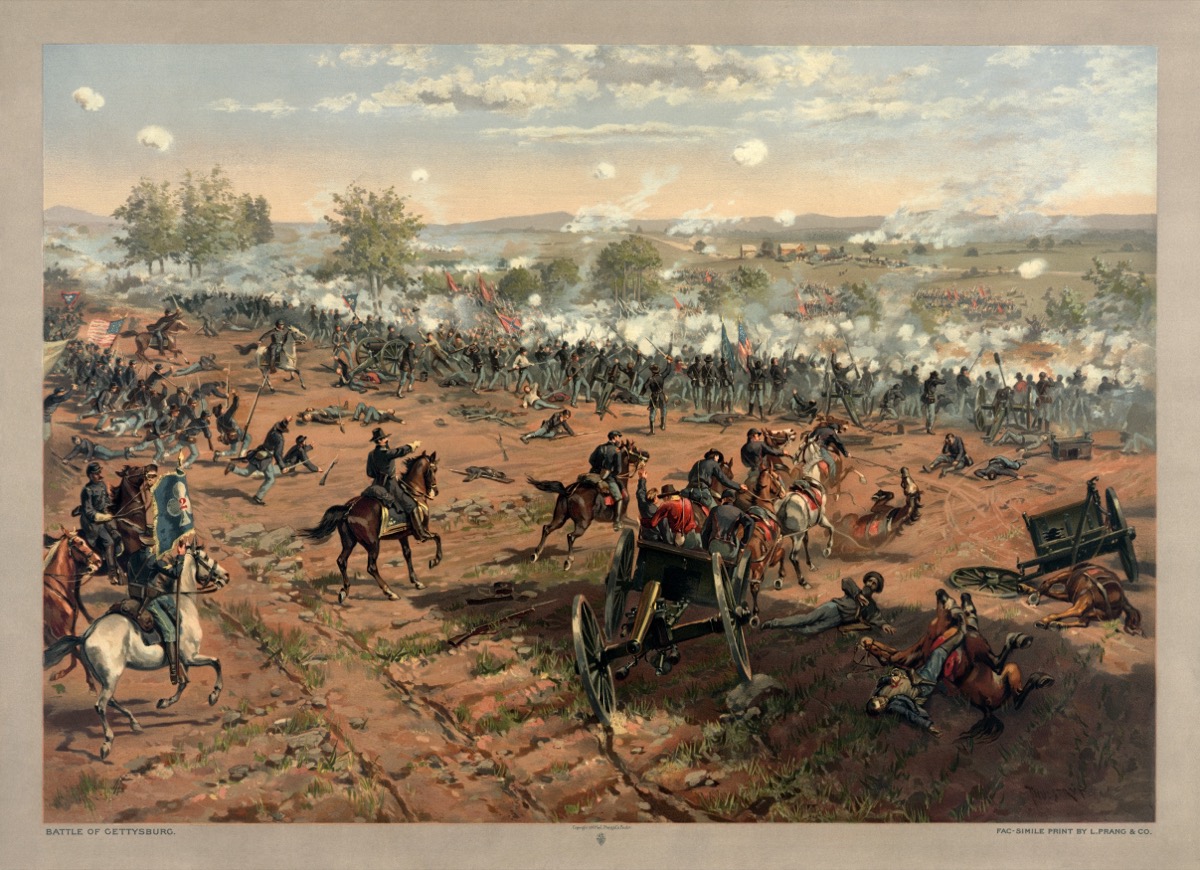
What sits under the story is not legend. Pennsylvania Hall was Gettysburg College's first building, a Greek Revival block finished in the late 1830s, and from roughly July 1 to July 29, 1863, it served as a field hospital for both armies and treated about 700 men. Surgeons operated in the hallways, the stairwells, the dormitory rooms. Piles of severed limbs were stacked outside. Colonel Waller Tazewell Patton, great-uncle of the WWII general, took an artillery shell to the lower jaw during Pickett's Charge and was carried in to die here on July 21; a nurse held him upright so he could breathe. When the Confederates retreated, they left 259 men too unstable to move.
The building has a second ghost, this one up in the cupola, the tower Confederate officers really used to watch the battle. Students have reported a figure up there, sometimes waving frantically as if for help, sometimes seeming to raise a rifle toward the people below. One sighting sent students calling campus security about a possible gunman. The building was locked and empty.
The blood stayed in the floors for years. As late as 1937, workers digging on the grounds turned up bits of bone.
But no record places any of the surgery in the basement. The hallways and the stairwells, yes, and the dormitory rooms. The basement ward the elevator opens on is the one part of the scene the documents never confirm. The building did everything the legend says it did, the amputations and the limbs and the dying men, just one floor too high.