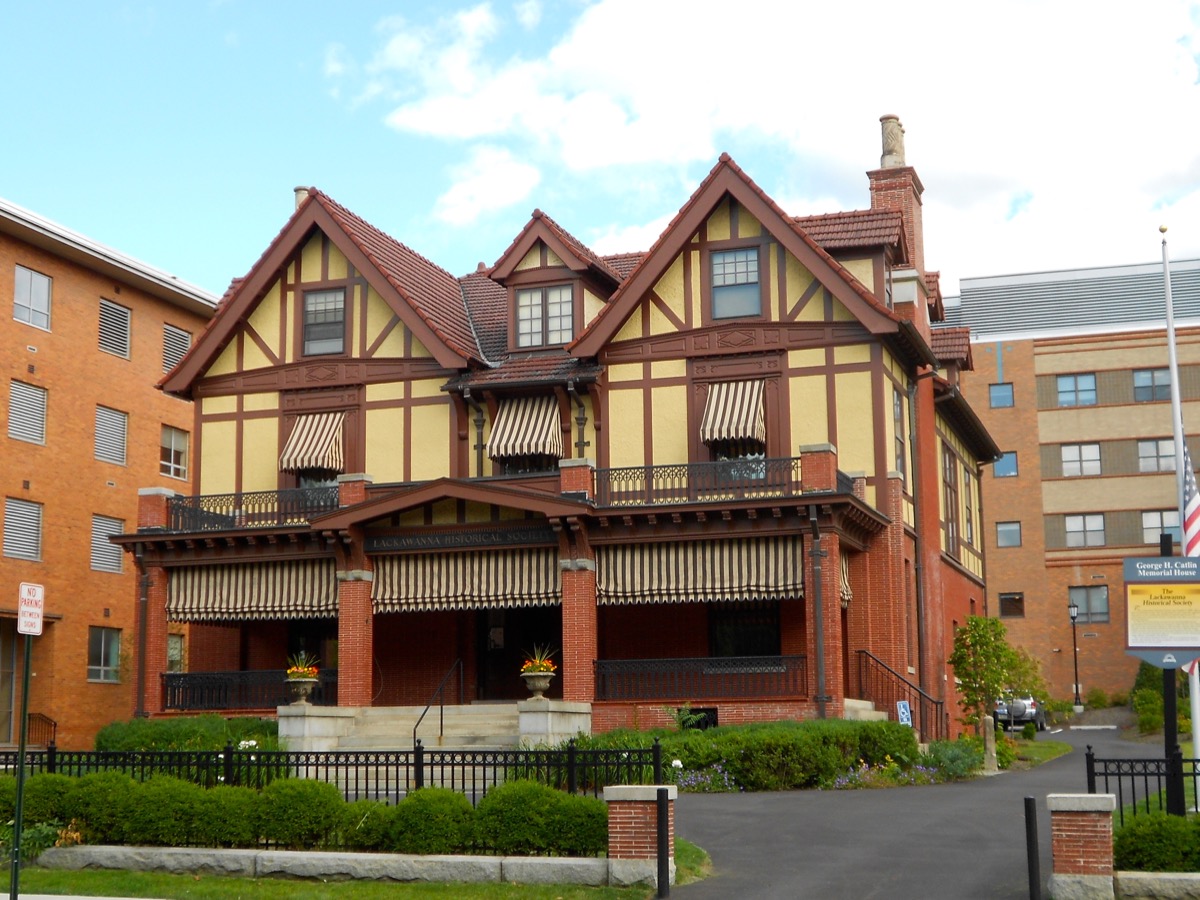
The Catlin House in Scranton is run by historians whose whole job is keeping accurate records. They also keep two recordings of voices in empty rooms — and some of them think the haunting isn't the Catlins, but the salvaged county packed into the house.
The people who run the Catlin House in Scranton, Pennsylvania are historians. The Lackawanna Historical Society — archivists, the careful, note-keeping sort — has its headquarters here, and they keep two audio clips they can't quite explain.
A paranormal team recorded them in empty rooms of the house. On the first, a voice says "a horse length... this one goes first." After a member asked aloud to speak with whatever was there, a second clip came back. It sounds like "I'll let you know." The society still has both.
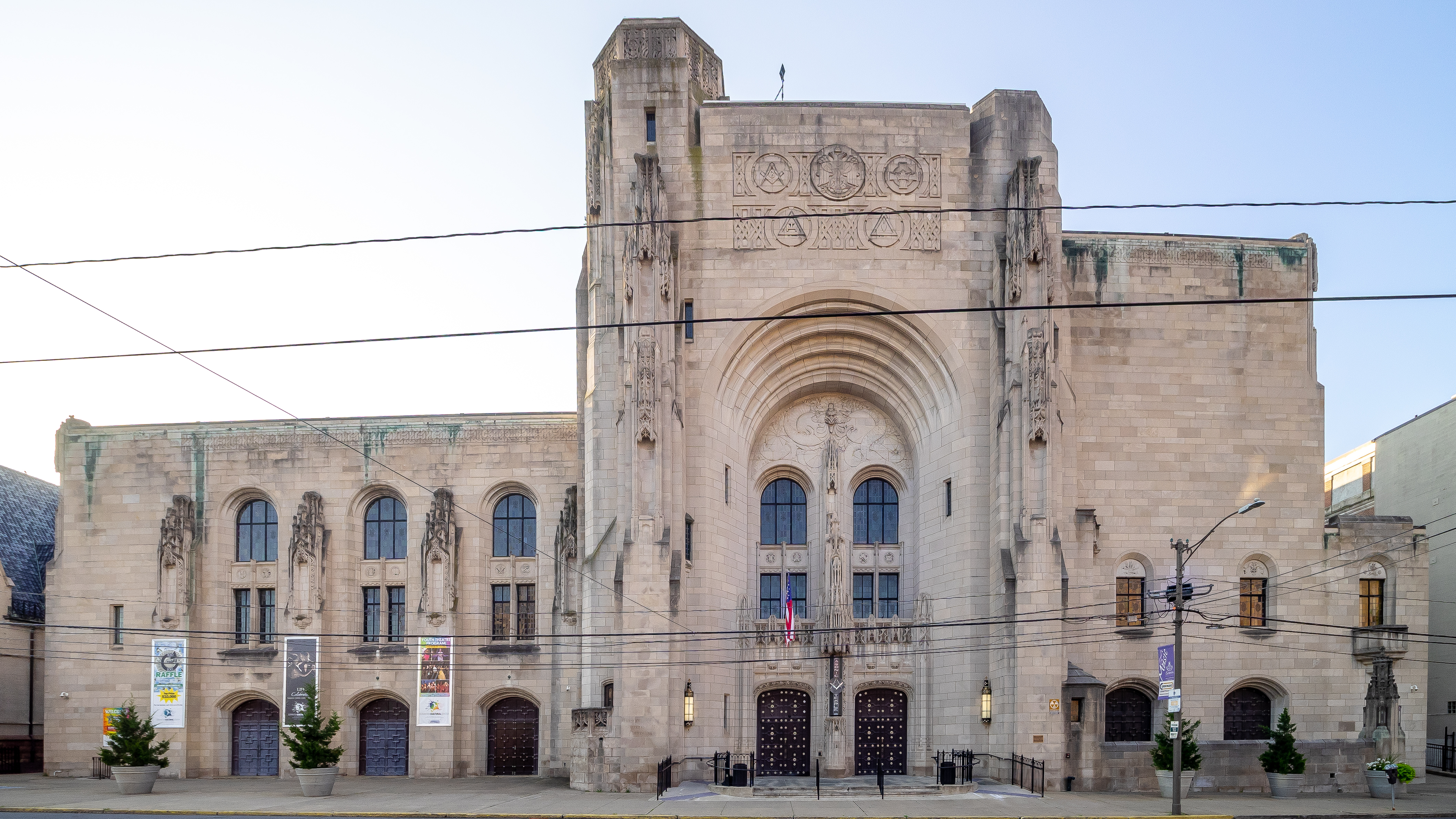
The house was built in 1912 for George Catlin, a Scranton banker, lawyer, and judge, and his wife Helen. It's a sixteen-room Tudor Revival with walnut woodwork, six fireplaces, a three-panel stained glass window, and molded plaster ceilings. George died in 1935. Helen followed in 1942, and in the early 1940s the house passed to the society George had helped found, which has filled it ever since.
The filling is the part their own members keep circling back to. The society didn't just inherit a house. It packed three floors with salvaged Lackawanna County: coal-town signage, mining gear, a coal executive's office rebuilt with anthracite field maps, military history, period gowns, a large collection of hair art. The theory some of them float is that the haunting isn't George and Helen at all. It's the collection, each object dragging its own crowd of dead owners in behind it.
The reports cluster where the objects sit densest. The second floor, the old servants' quarters, now holds offices, costumes, and mannequins. In the "fashion room" closet, a volunteer said one of the antique gowns hanging there "suddenly seemed to be filled by the form of a body, with no legs or feet." The basement gives people cold spots, drafts, disembodied voices, and the sense of being watched.
The team leader had a phrase for what they were finding. Many of the voices, he said, were "unintelligent" spirits, not minds answering questions, just past conversations echoing back. It's a strange thing for a building full of historians to keep on file. The society exists to take accurate notes about the past, and what it has recorded in its own rooms is the dead telling you nothing at all, only repeating themselves. The same people lead the annual "Scranton After Dark" walking tours out of the house on Friday evenings each fall, and the two clips are part of the telling. They are historians. They wrote down what the rooms gave them, and what the rooms gave them was a voice that already knew which one goes first.