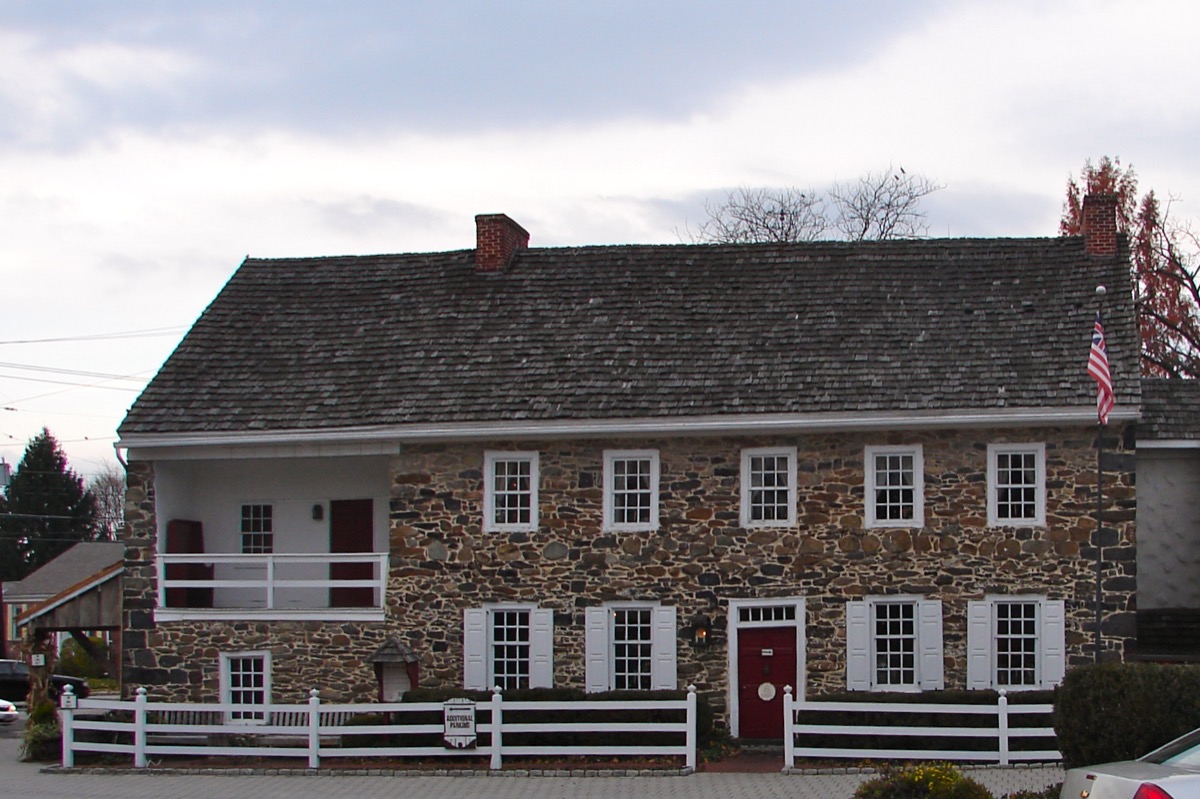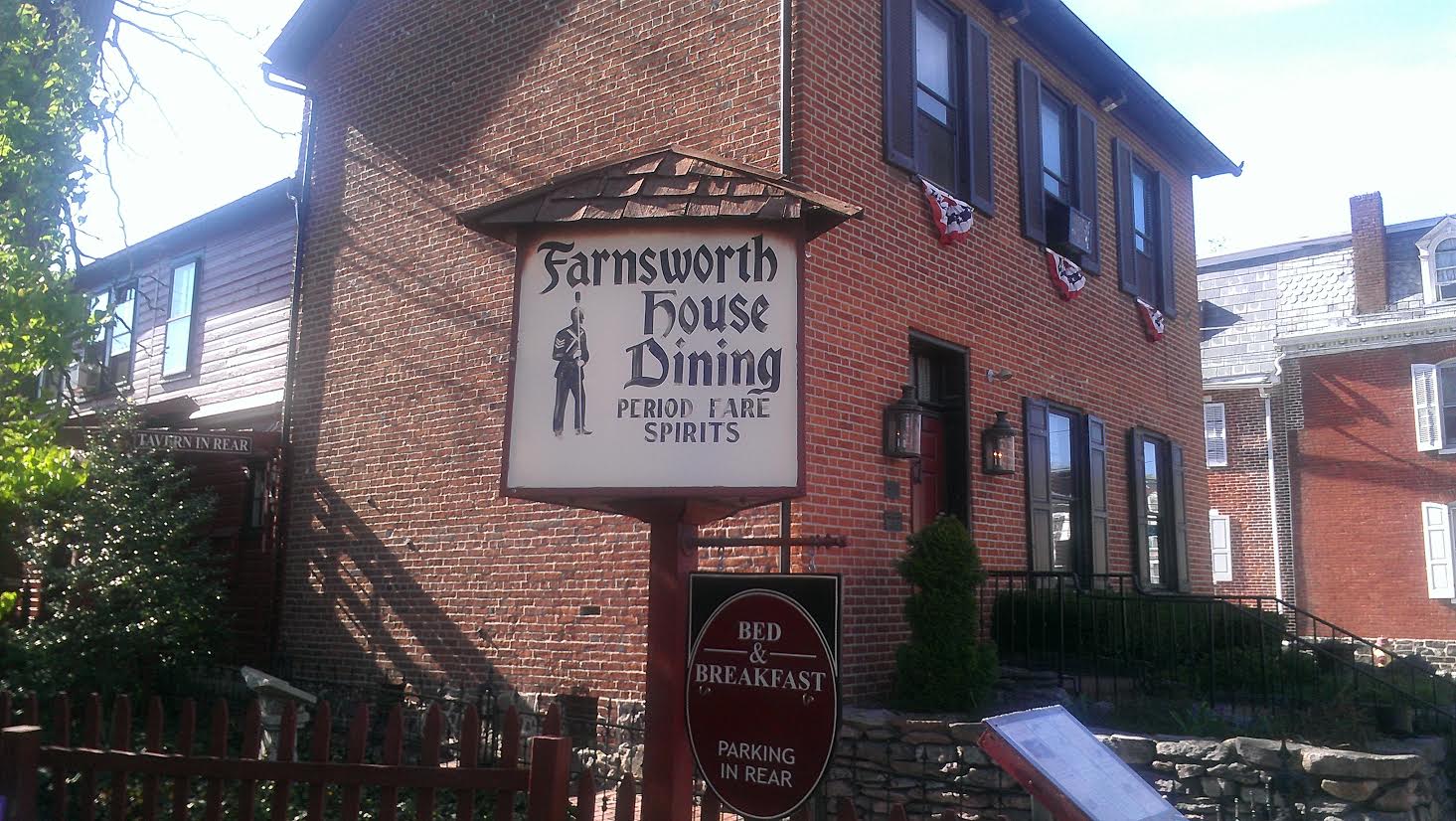
The Farnsworth House Inn in Gettysburg, Pennsylvania still wears more than 100 bullet holes in its south attic wall. The inn runs candlelit tours up to that garret window — and tells you a Confederate marksman there fired the shot that killed the battle's only civilian.
The south brick wall of the Farnsworth House Inn in Gettysburg, Pennsylvania is pocked with more than 100 white bullet scars, and they run highest around a small attic window. The inn walks visitors up to that window by candlelight and tells them what a man did from it.
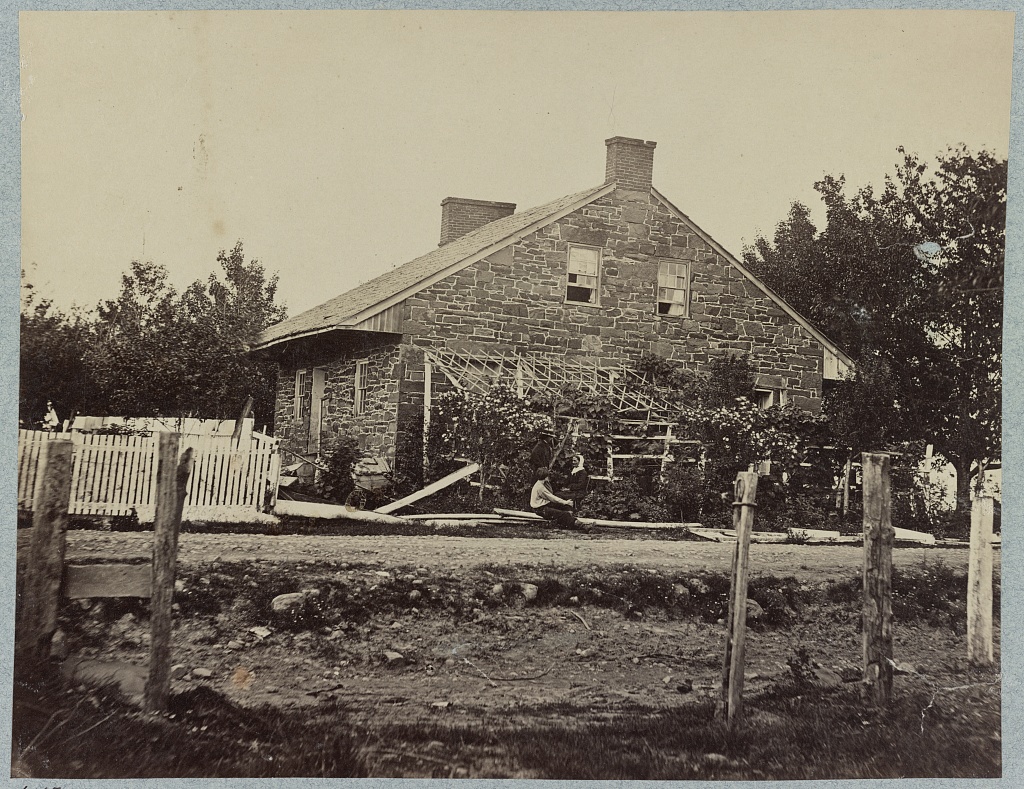
During the Battle of Gettysburg, Confederate sharpshooters from Louisiana, Georgia, and Alabama held this house — then known as the Sweney House, after the butcher who owned it. They used the south-facing garret window as a perch to fire on Union troops dug in on Cemetery Hill, half a mile off. The Union riflemen fired back. The pock marks on the brick are where their return fire landed, and they're still there to count from the street.
The inn leans on one bullet in particular. Two blocks away, in her sister's kitchen, a 20-year-old named Jennie Wade was struck dead while kneading bread — the only civilian killed in the three-day battle. The inn tells you the shot came from a marksman in this attic, a redheaded Confederate they call Walt. The angle works. The distance works.
But there's no record it was him. Gettysburg's own careful historians note that no document even establishes which Confederates held this house, let alone who fired the killing round. Several other Baltimore Street buildings claim the same shot. The story is unproven, and the inn builds its tour around it anyway. Guests climb to the garret in the dark and describe footsteps crossing wood that isn't there anymore, and the sense of someone crouched by the dormer where the marksman knelt.
The house dates to around 1810. The Shultz family saved it from demolition in 1972 and restored it toward how it looked in 1863, then renamed it for Brigadier General Elon J. Farnsworth, who was killed near Gettysburg in a doomed cavalry charge. The general had no wartime tie to the place at all.
It has collected gentler ghosts since. The owners claim as many as 16 spirits live here, though only a handful are ever named. The best known is Jeremy, a boy of five or six said to have died under a horse and buggy out front in the mid-1800s. Servers say he rolls marbles, tugs at apron strings, and giggles when children are in the building. "I heard the front door open, then heard giggling, and then saw a little boy go running past," one of them recalled. In the Sara Black Room, named for an early-1900s owner, guests report a figure caught in the window glass.
No record confirms a boy ever died here at all. Historian Tim Smith dates the Jeremy legend to the 1990s. So the inn's friendliest ghost has no proof behind him, and its darkest claim has none either — and the bullet holes, the one thing that's real, say nothing about who pulled the trigger.