TLDR
Resurrection Mary is Chicago's most famous ghost, a blonde woman in a white dress who has been hitching rides down Archer Avenue and vanishing at the gates of Resurrection Cemetery in Justice, Illinois since the 1930s. The first documented encounter, Jerry Palus's 1939 dance at Liberty Grove Hall, set the template for dozens of sightings over nearly a century.
The Full Story
Jerry Palus danced with a dead woman at Liberty Grove Hall in 1939 and didn't realize it until she vanished through the gates of Resurrection Cemetery.
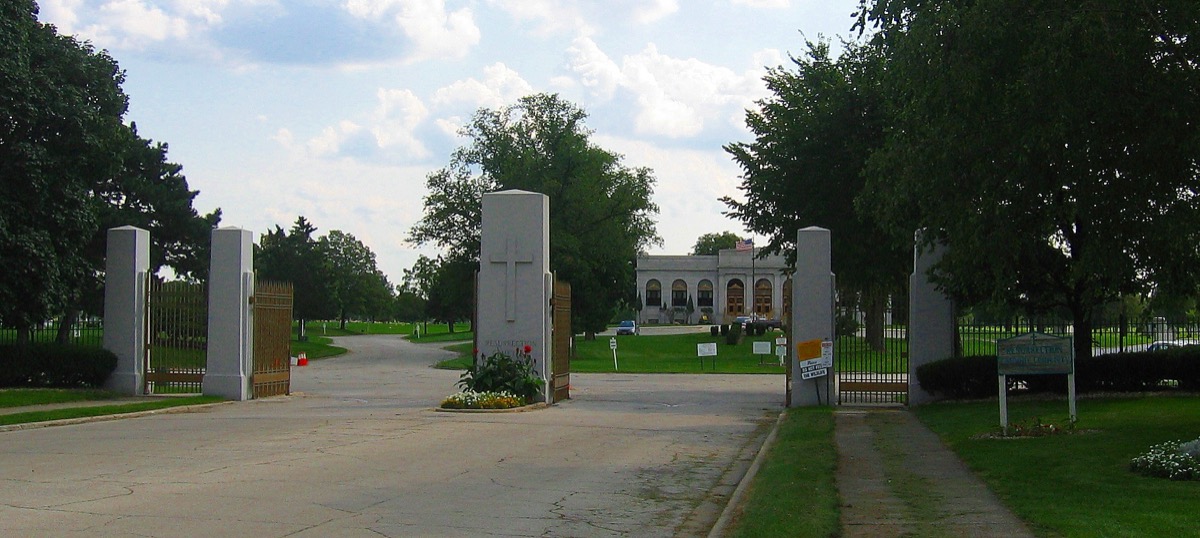
Palus was out with friends at the ballroom on 47th and Mozart in Chicago's Brighton Park neighborhood when he noticed a blonde woman, about five-foot-seven, with shoulder-length curls. They danced. They kissed. Her skin was ice cold. When the evening wound down, she asked him to drive her home along Archer Avenue, the long road that cuts southwest out of Chicago through a string of working-class suburbs. Near the cemetery in Justice, she asked him to stop. She stepped out, crossed the road, and walked through the closed gates. Just walked through them.
Palus described his encounter in a videotaped interview in 1986, two years before he died. That interview aired on Unsolved Mysteries. By the time cameras found him, dozens of other people had told similar stories. A blonde woman in a white dress, hitching a ride or appearing on Archer Avenue, always heading toward Resurrection Cemetery, always vanishing when she gets there. The stories go back to the early 1930s and they haven't stopped.
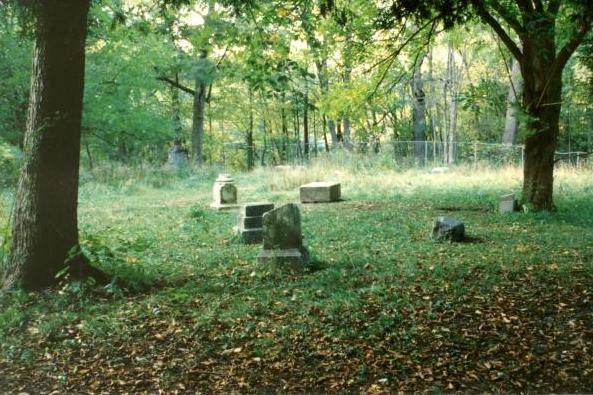
The cemetery was consecrated in 1904 by the Archdiocese of Chicago. It sits on Archer Avenue in Justice, Illinois, a small suburb about ten miles southwest of downtown. Archer Avenue runs through Polish and Lithuanian neighborhoods that were full of dance halls and ballrooms in the 1920s and '30s. The Oh Henry Ballroom (later renamed the Willowbrook) was a few miles down the road. Chet's Melody Lounge sits across the street from the cemetery gates. The geography matters: young people danced at the ballrooms, drove Archer Avenue to get home, and passed the cemetery on the way. It's the perfect setting for a vanishing hitchhiker legend.
Two women buried at Resurrection have been proposed as the real Mary. Mary Bregovy was killed in a car crash at Lake Street and Wacker Drive on March 10, 1934, a month before her 21st birthday. She was buried at Resurrection in her favorite white gown. The problem: Bregovy was a brunette, and every witness describes a blonde. Anna "Marija" Norkus, the daughter of Lithuanian immigrants, died on July 21, 1927, when a car carrying six people flipped into a ditch on Harlem Avenue at 66th Street. Anna was crushed. She was blonde, which fits, but she was only twelve, and every sighting describes a young woman in her late teens or twenties. Neither candidate lines up perfectly, and the true identity has never been established.
The physical evidence showed up on August 10, 1976. A Justice police officer named Pat Homa responded to a trespassing call at the cemetery and found two of the iron gate bars bent apart. The bronze had what looked like fingerprints melted into it, with scorch marks around the impressions. The cemetery said a front-end loader had backed into the gates during sewer work, and grounds workers had tried to fix the bars with a blowtorch, which only made them more conspicuous. Crowds gathered. The cemetery eventually removed the bars, sent them off for straightening, and put them back in December 1978. The discoloration never came out.
The last weekend of August 1980, between Friday night and Sunday morning, Mary was seen by dozens of people. Many flagged down Justice police squad cars to report what they'd just seen. The officers couldn't explain the mass sighting, but they took the calls seriously enough to dispatch multiple units. Sightings in 1973, 1976, 1978, and 1989 involved cars striking or nearly striking a woman outside the cemetery.
In 1973, a cab driver walked into Chet's Melody Lounge across the street to ask about a young woman who'd just left his cab without paying. Nobody inside had seen her.
Chicago historian and ghost tour operator Ursula Bielski has documented the Resurrection Mary legend across multiple books. Adam Selzer, another Chicago historian, has investigated the identity question without resolution. The legend has been covered by Unsolved Mysteries, featured in books on American folklore, and turned Archer Avenue into a pilgrimage route for anyone interested in ghost stories.
Nine decades of sightings. Two plausible candidates, neither confirmed. Scorched gate bars that the cemetery couldn't explain away. A cab driver asking a bar full of strangers if they'd seen his fare. Resurrection Mary is the most documented vanishing hitchhiker story in American folklore, and it all traces back to one stretch of road, one cemetery, and a lot of people who can't agree on who she was, only on what they saw.
Researched from 8 verified sources. How we research.