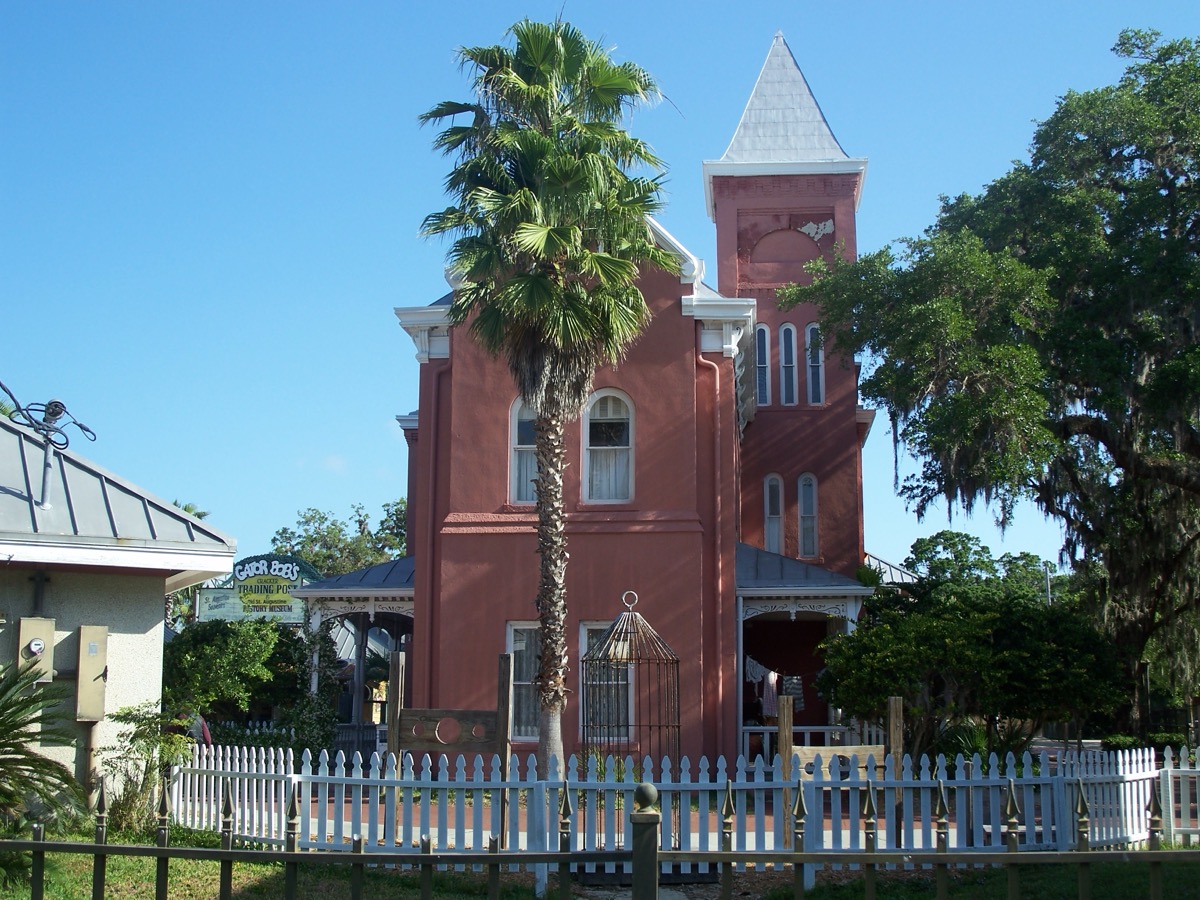
The Old Jail in St. Augustine, Florida looks like a pink Victorian house behind a picket fence. That was the point: it was disguised to spare a railroad baron's hotel guests the sight of it. Inside were maximum-security cells, a gallows, and eight hanged men.
On the after-dark tours at the Old Jail in St. Augustine, Florida, guides say a shadow crawls toward you in the solitary cells, low along the floor. They call it the Crawler. It sounds like tour theater, until you learn what the building was built to hide.
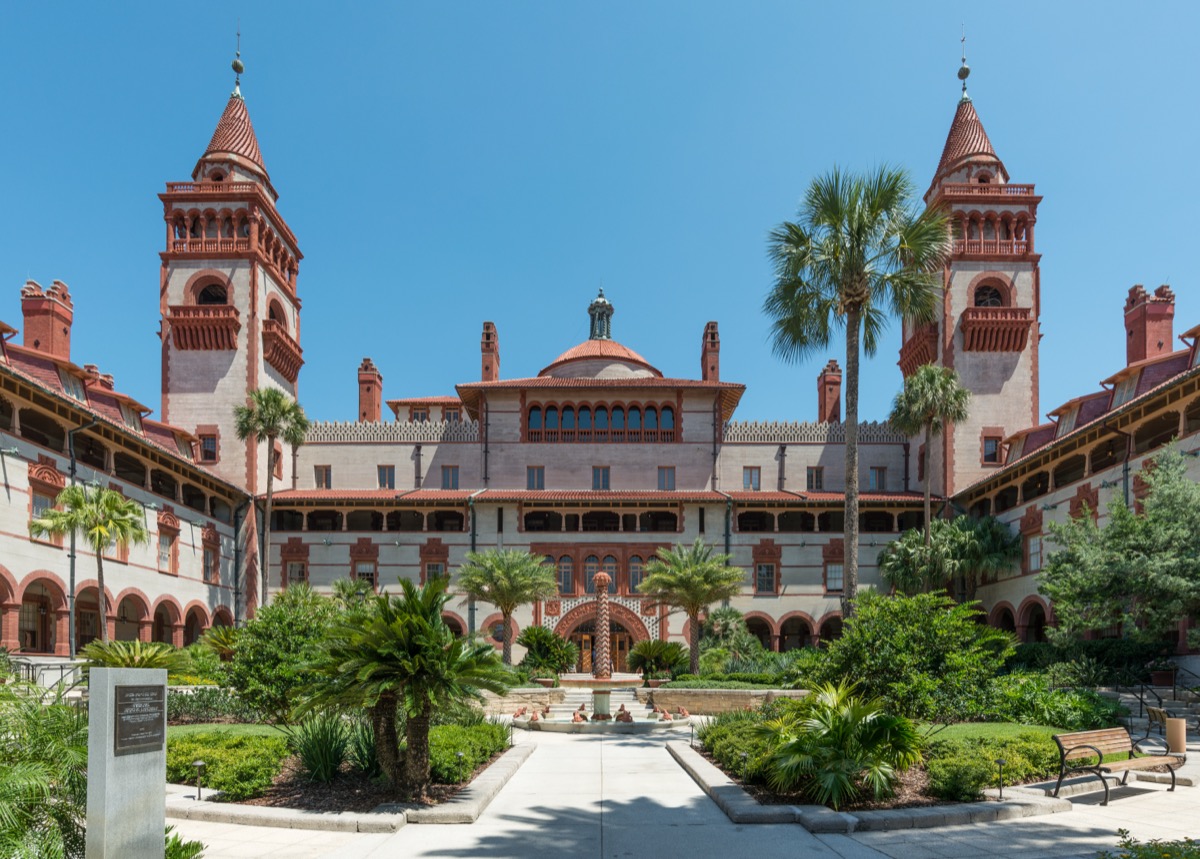
From the street it looks like a pink Victorian house — picket fence, a palm out front, barred windows the only tell. That disguise was deliberate. In 1891 the railroad man Henry Flagler put $10,000 toward moving the county jail a mile up San Marco Avenue, because it sat on land he wanted for his luxury hotel and he didn't want his guests to see it. So he had it dressed up like a fine residence. Behind the genteel front, the Pauly Jail Building company of St. Louis — the firm later tied to building Alcatraz — fitted out maximum-security cells and a gallows.
Eight men were hanged on that gallows over the jail's 60-odd years. Inside, prisoners slept on mattresses stuffed with Spanish moss that crawled with vermin. There was no glass in the barred windows, no plumbing for years, just bucket toilets and chain gangs. "No air conditioning and five women to one cell," a tour guide told a local news crew. A doctor came, mostly, to pronounce the hanged men dead.
Sheriff C.J. "Joe" Perry ran it — by accounts roughly 6 feet 6 and over 300 pounds, carrying a noose on his rounds, with dogs kept inside the walls. His family lived in the south wing. Visitors there report a child's voice in the old living quarters, and heavy footsteps along the halls, like Perry still making rounds with the dogs.
The most-cited ghost is Charlie Powell, an inmate who beheaded a man for slandering his wife. His hanging, the story goes, was slow. They say he still lingers near the gallows — and chats with the people who come to see where he died.