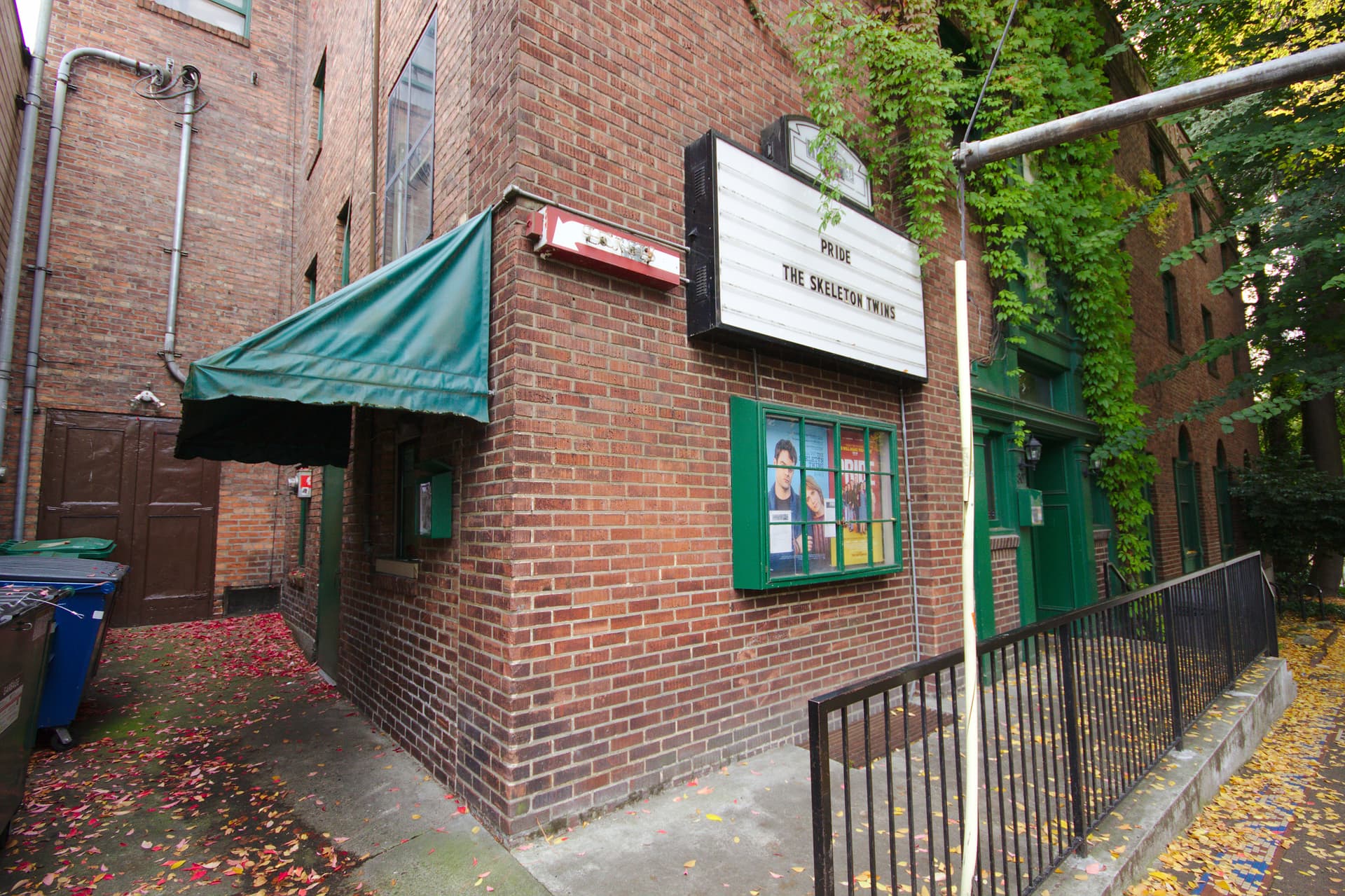
Harvard Exit Theatre

Harvard Exit Theatre

🎭 theater

Seattle, Washington ยท Est. 1925

About This Location

A three-story Capitol Hill building erected in 1925 for the Woman's Century Club, later a beloved independent cinema from 1968 to 2015.

👻

The Ghost Story

In 1891, a group of prominent Seattle women founded the Woman's Century Club for "cultural and intellectual development" and social service. Charter members included Carrie Chapman Catt, who went on to lead the National American Woman Suffrage Association, and Alice Jordan Blake, the first woman law graduate from Yale. The club hosted Susan B. Anthony in 1896 and championed reforms from raising the age of consent to prohibiting public spitting. By the 1920s the club had 350 members, and in 1925 they built their own three-story brick clubhouse at 807 East Roy Street on Capitol Hill, designed by Seattle architect Pierce A. Horrocks. The building contained a main parlor with a fireplace, a dining room, a theater, and rooms that could be rented for meetings. The club hosted lectures, concerts, and theatrical productions, including a 1933 reception honoring Amelia Earhart.

The club's political influence peaked when former president Bertha Knight Landes won election as Seattle's mayor in 1926, the first woman to lead a major American city. Born in 1868, Landes served from 1926 to 1928, campaigning on civic reform and clean government. She died in 1943.

Faced with declining membership as women gained broader workplace access, the club voted to sell the building in 1967. In 1968, two Boeing engineers and movie enthusiasts, Art Bernstein and Jim O'Steen, converted it into the Harvard Exit Theatre, Seattle's first twin cinema. The contract stipulated that the original parlor be maintained as a meeting place for club members, and the Woman's Century Club continued meeting in the lobby until January 2015. For forty-seven years, the theater captivated Capitol Hill with independent and foreign films, becoming one of Seattle's most beloved cultural institutions.

At least four spirits reportedly haunted the building during its theater years. The most dramatic encounter belonged to Janet Wainwright, the theater's manager through much of the 1970s. On one of her first days on the job, Wainwright walked into the lobby and was startled to see a woman sitting in a chair near the fireplace reading a book. She had her hair in a bun on top of her head, wore a long floral dress, and was just slightly see-through. As Wainwright stared, the woman turned, looked at her, and slowly melted into thin air. On subsequent mornings, Wainwright arrived to find lights already on and a fire burning in the fireplace when she was the first person to enter the building. Once she discovered chairs arranged in a semicircle around the fire, as though the Woman's Century Club had reconvened in the night. Psychic investigators identified this entity as the ectoplasmic remains of former mayor Bertha Knight Landes, who had been a leader of the club and whose reforming spirit apparently refused to leave the building she had helped shape.

The most sociable ghost was a portly man in an old-fashioned suit who introduced himself as Peter. His form appeared partially solid and partially transparent, and witnesses described him as "a very lighthearted fellow, kind of goofy." He was most frequently encountered on the first floor, where his playful demeanor startled visitors but caused no distress. A second male entity, described as less sociable and possibly of British descent, also inhabited the first floor. Staff reported feeling touched by unseen hands, witnessing unusual lights, hearing unexplained noises, and finding film reels moved from their shelves.

A female spirit in Victorian dress was observed primarily in the balcony area, where she appeared to enjoy pestering theater employees by materializing unexpectedly. Some accounts connected her to a persistent but unverified legend that a member of the Woman's Century Club hanged herself in the upstairs lounge. That room was associated with cold spots, feelings of dread, and the sensation of being watched. Additional female presences, believed to be former club members, appeared to know one another and were sometimes described as helpfully assisting staff with small tasks.

Curiously, reports of ghostly activity are said to have largely ceased around 1987, though no explanation was ever offered for the spirits' departure. In 2015, the Harvard Exit screened its last films during the Seattle International Film Festival before being sold to developer Scott Shapiro of Eagle Rock Ventures. The furnishings, artwork, and the club's Steinway piano were removed and sold. The building subsequently became the Mexican Consulate. Whether the ghosts of the Woman's Century Club followed their parlor furniture to new homes or remained in the walls of their beloved clubhouse remains, as with all things spectral, a matter of some debate.

Researched from 10 verified sources including historical records, local archives, and paranormal research organizations. Learn about our research process.

More Haunted Places in Seattle

Pike Place Market

Pike Place Market

other

Hotel Sorrento

Hotel Sorrento

hotel

Kells Irish Pub

Kells Irish Pub

restaurant

Georgetown Castle

Georgetown Castle

mansion

🪦

Comet Lodge Cemetery

cemetery

Moore Theatre

Moore Theatre

theater

More Haunted Places in Washington

🏨

Hotel de Haro

Roche Harbor

🎭

Concrete Theatre

Concrete

🏥

St. Ignatius Hospital

Colfax

🪦

Black Diamond Cemetery

Black Diamond

👻

Old City Hall

Tacoma

🎭

Historic Everett Theatre

Everett

View all haunted places in Washington

More Haunted Theaters Across America

McMenamins Bagdad Theater

Portland, Oregon

Shepherdstown Opera House

Shepherdstown, West Virginia

1894 Grand Opera House

Galveston, Texas

Garde Arts Center

New London, Connecticut