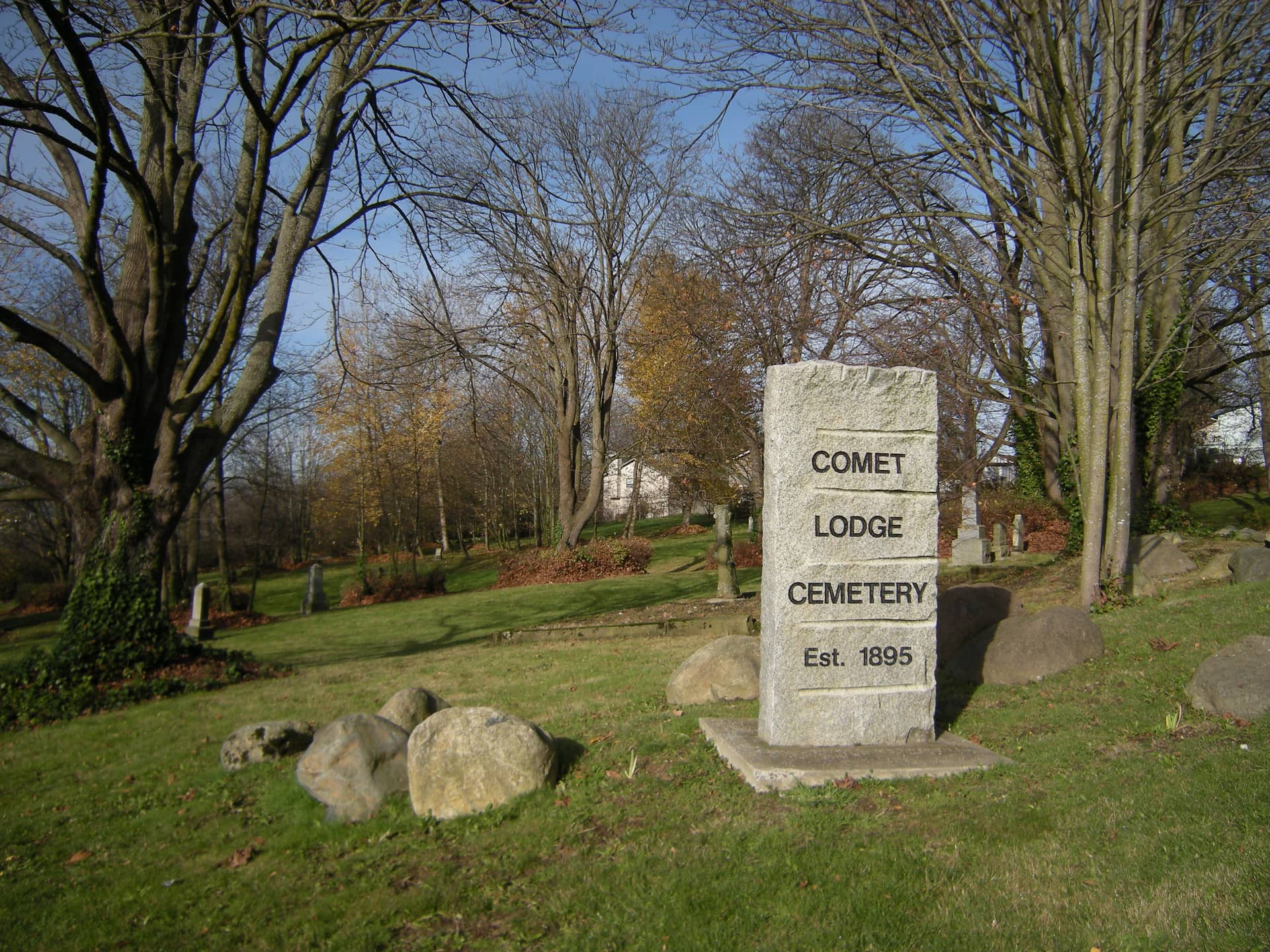
On Seattle's Beacon Hill, 11 houses and a dog run sit on the children's section of Comet Lodge Cemetery, sold to the city for a dollar in 1927 and never emptied. The families living there report kids in early-1900s clothing playing with their own children's toys.
Comet Lodge Cemetery is a green slope on Seattle's Beacon Hill, and 11 houses and a dog run sit on the north half of it. The families in those houses report children in early-1900s clothing playing with their own kids' toys.
"I've heard stories of children dressed in early 1900's clothing being seen playing with the toys of the children who live over here now," local historian Allan Phillips told KING 5.
The dolls come up again and again. A doll collector kept finding hers scattered around the house as though someone had been handling them, and porcelain dolls are said to come out of glass cabinets on their own. Neighbors describe lights flickering, voices with nobody attached to them, and children peeking out from behind the surviving headstones, playing hide-and-seek among the stones.
The north half was the children's and infants' section. Everyone called it Baby Land.
On June 10, 1927, the cemetery's owner, Dr. Hiram Corson, subdivided that half and sold it to the City of Seattle for $1.00. He never vacated the cemetery. A month later the Council accepted the deeds by ordinance and laid 21st Avenue South, 23rd Avenue South and a run of public alleys over ground its own paperwork described as "portions of vacated Comet Lodge Cemetery."
Nobody has ever produced a record of the children being moved. No disinterment order, no court authorization, no reburial. "There's no records of any bodies being moved," Phillips said.
On November 2, 1987, All Souls' Day, a city crew trenching a sewer line through the old children's section knocked over grave markers. The daily engineering report for that date was plainly marked "Historical Cemetery."
Ten years after that, a Georgetown man named John Dickinson wrote Mayor Norman Rice on behalf of nine homeowners, asking the city to buy them out at what their houses were worth. The reply came that December from the director of the Department of Construction and Land Use, who wrote that his department "did not, and does not, have any basis for concluding that the properties you have referred to have ever been used for burial purposes." A woman on the block told a Post-Intelligencer columnist in 2001 that she had tried over and over to sell hers and couldn't. "Everyone knows about the ghosts."
The neighbors have had one line for it for decades: they moved the headstones, but they didn't move the bodies.
King County eventually put around $100,000 into cleaning up what was left, and the surviving markers went back upright. Not over the graves. A landscape architect was brought in to decide where the stones would look best. "They weren't really sure where they belonged anymore," Phillips said. By a 1976 mapping, 24 of the 25 stones out there mark nobody at all.