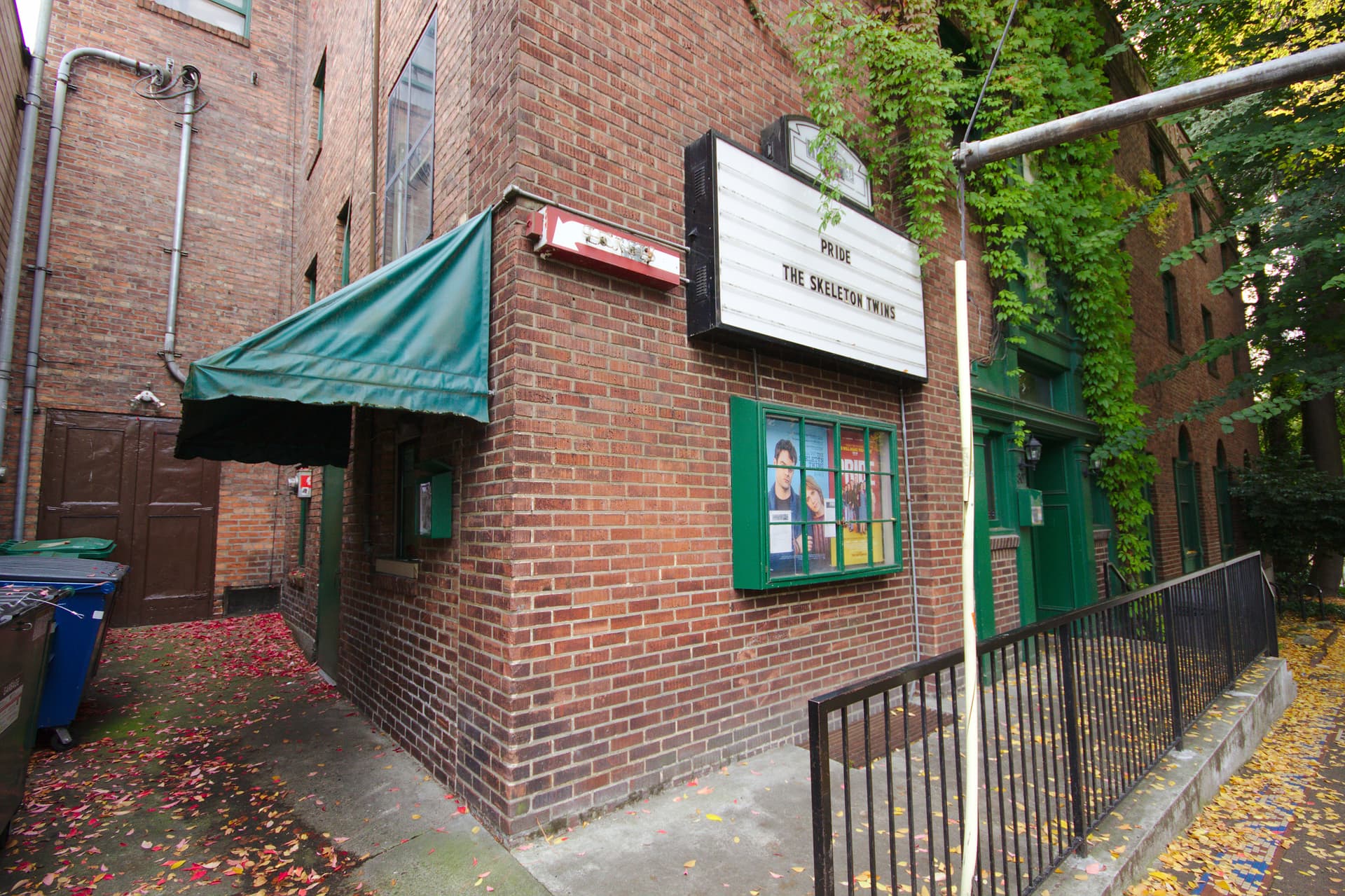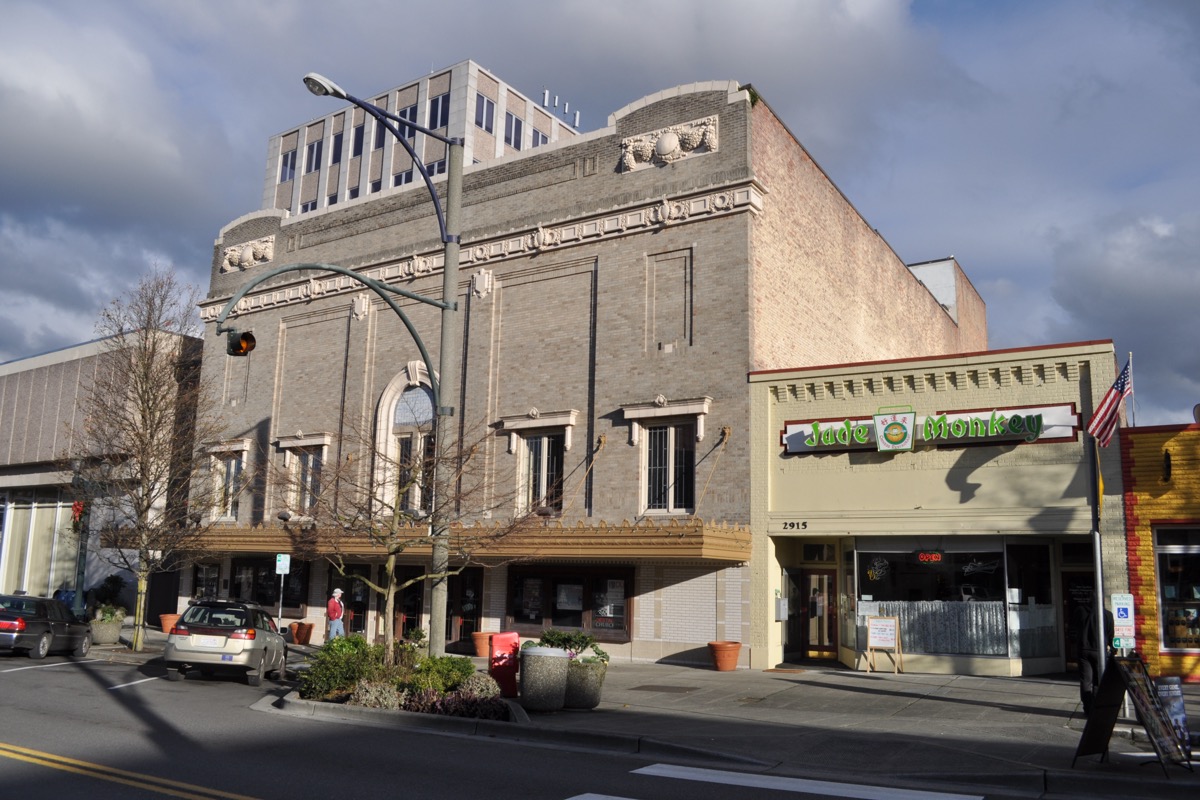
A gray-haired man with a broad grin rushed past a cleaner at the Historic Everett Theatre in Everett, Washington, in September 1993 and shoved her into the glass door. Four other people reported him that year. Nobody knows who he was.
In September 1993, Sherry Penoyer was carrying an armful of cleaning supplies through the front doors of the Historic Everett Theatre in Everett, Washington, getting the place ready to reopen. A man came the other way. "As I start to swing through the front doors this person comes rushing past me and actually pushes me back into the glass door," she told the Seattle Times. He was gray-haired, broadly grinning, jovial about it. Then he was gone.
Penoyer, who founded Wishome Productions, second-guessed it the way anyone would. "I had an armful of cleaning supplies," she said. "How much sleep did I have last night?" She was one of five people who reported the same figure at the theatre that year, and by December 2 the Seattle Times had run the story under a headline about a ghost with a grin.
Staff called him Smilin' Al, after Al Jolson, who played the house in 1906 and again in 1915. That is a tribute, not an identification. Jolson died at a San Francisco hotel in 1950, 43 years before anyone saw the grinning man in the lobby, and no source has ever put a real name to him. West Coast Traveller keeps the question open: "Nobody knows the identity of this spirit. Could he have been a performer? A former employee? An avid audience member?"
The accounts have him rushing in with his arms wide open before he vanishes, reported in the lobby and foyer, near the stage entrance, and in the projection room. One staff member was hit in the chest by a door and knocked to the floor. An employee watched a sweater lift off the floor, float, and get thrown back down. Through the projection window, people have reported a man visible only from the waist up. The everyday complaints are smaller and constant: doors opening and closing untouched, doors that refuse to shut, lights switching themselves, the sense of being watched.
The building had been standing since November 4, 1901, when it opened as the Everett Opera House with the city's upper crust seated in the boxes. A fire started under the stage in December 1923, three dozen firefighters worked it for three hours, and the interior was mostly destroyed, though no death at the theatre appears in the record. It was rebuilt, reopened in 1924, cut into a triplex, and closed in 1989. For roughly ninety years, nobody reported a ghost in it.
The Everett Theatre Society bought the place back and began restoring it, and that is when he turned up. The theatre kept him. Its 2018 haunted house was called "Smilin' Al and the Apparitions," named for the resident. Nobody has worked out who he was in life. What every account agrees on is the direction he moves. He is never leaving the building. He is coming in.