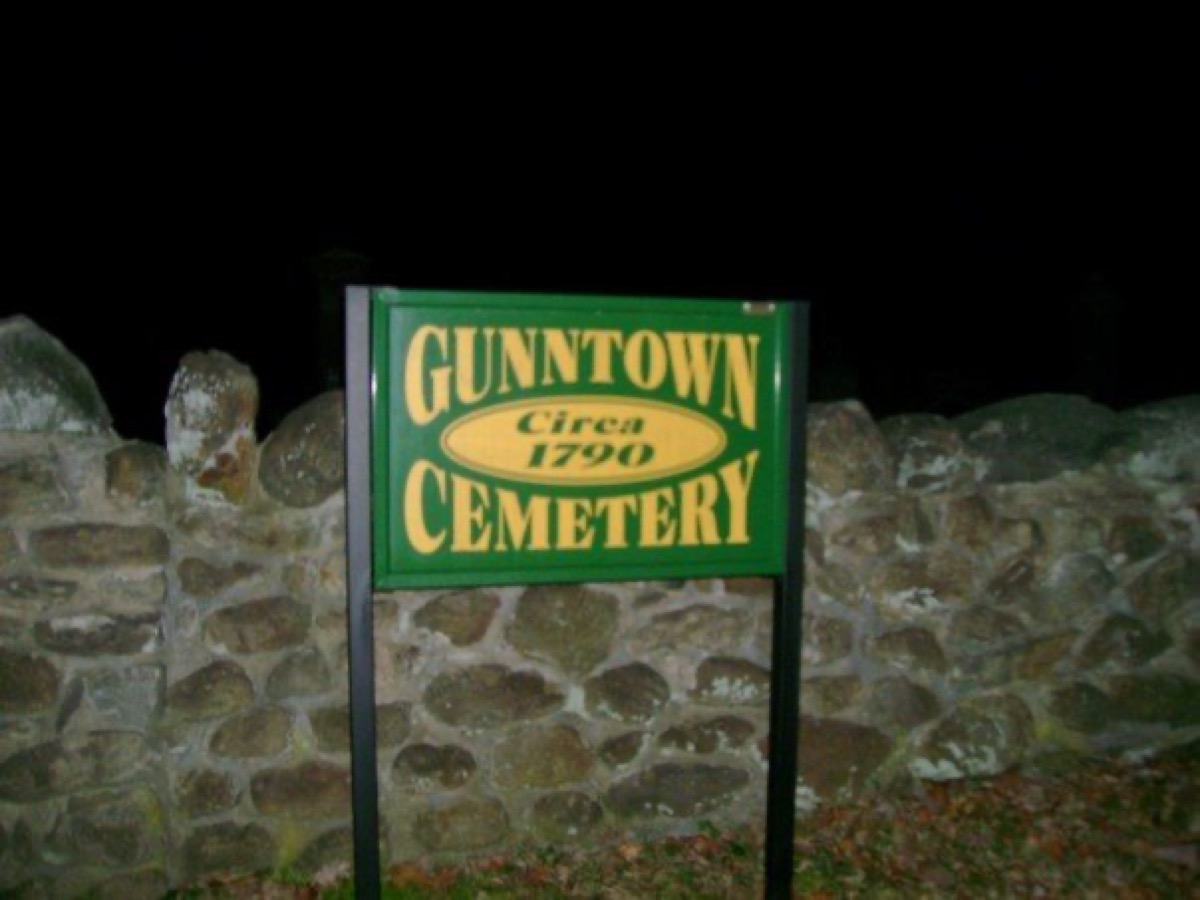
At Gunntown Cemetery in Naugatuck, Connecticut, the thing visitors report most isn't a figure at all. It's the sound of children laughing from the field past the back wall, creeping closer until it seems to come from inside the stone.
Gunntown Cemetery is a small burying ground in the Millville woods of Naugatuck, Connecticut — a stone wall, an iron gate, headstones going back to 1790. The thing visitors report most often isn't a ghost you can see. It's the sound of children laughing, coming from the field beyond the back wall, and as visitors tell it, the sound creeps closer until it seems to be inside the walls with you.
There are figures too, when people see anything at all. A man carrying a lantern, leading a horse. A little boy who plays near the back wall and is gone when you look again. A black dog that appears between the graves and vanishes. Some report a cloaked figure, a white woman, green eyes in the dark. Some say they've been scratched, pushed, grabbed — which is a strange thing to claim about a cemetery.
The ground underneath holds a real and grim history. The place is named for the Gunn family, who built an estate of some 800 acres here with their own mill, store, blacksmith shop, and distillery, run on the labor of sixteen enslaved people. During the Revolution, the Gunns were Loyalists — Tories — even as their neighbors who fought for independence ended up buried in the same plot.
In the spring of 1780, a gang loyal to the crown robbed a house in Bethany and dragged off a 16-year-old patriot named Chauncey Judd. They held him near the Gunn barn. At a bend in Long Meadow Brook, a Captain Daniel Graham moved to shoot the boy — and two young cousins in the gang stepped in and stopped him. Judd lived. The kidnapping site is now on the Connecticut Freedom Trail.
Locals will tell you the Warrens once came through and called it haunted, though no record of that visit holds up. What holds up is the brook, the barn, the boy who nearly died here at 16 — and a back wall where, people say, you can still hear children who won't show themselves.