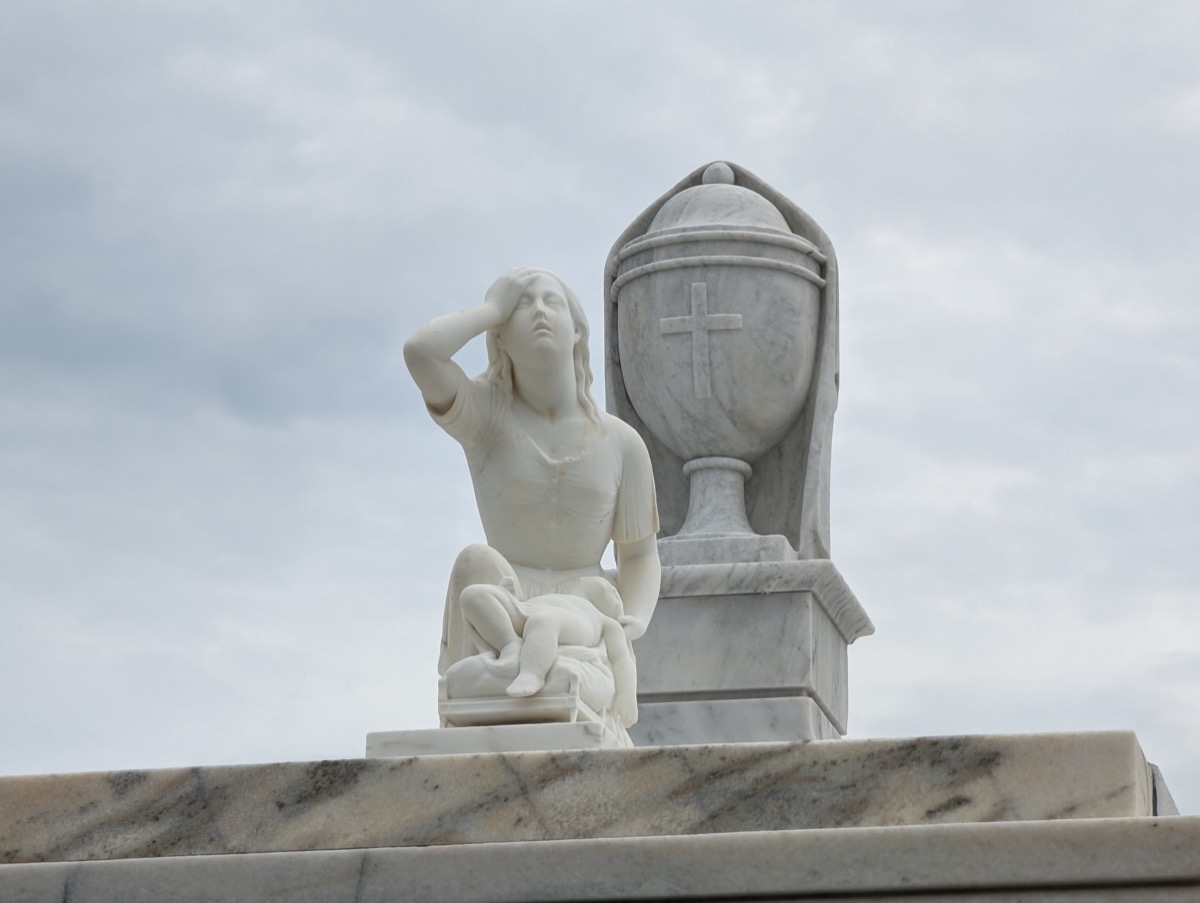
St. Louis Cemetery No. 3 sits on Esplanade Avenue in New Orleans with no marquee ghost to its name. What it has instead are disembodied voices in the rows, figures that turn up in photographs, and the heaviest foundation story of the three.
St. Louis Cemetery No. 3, on Esplanade Avenue in New Orleans, has no famous ghost. The marble here is finer than at the other two St. Louis cemeteries, the tombs lined up like city streets in miniature, and what people report among those rows is quieter than a named specter. Visitors and ghost-tour accounts describe disembodied voices heard throughout the grounds, and full-body figures that turn up in photographs taken down the aisles, standing where no one had been standing.
The famous New Orleans dead are mostly down at No. 1, where Marie Laveau's tomb draws the crowds and the named specters cluster around it. No. 3 trades the marquee ghost for the worse foundation.
The Cathedral wardens bought this tract near Bayou St. John in 1849, for $15,000, and then left it sitting. The ground waited through 1853, the year yellow fever ran through the city worse than it ever had. That epidemic killed over 9,000 people, around 8 percent of New Orleans in a single summer, the deadliest the city ever saw. The wardens cleared the land and opened the cemetery the following year, in 1854, laying elegant tombs over soil already saturated with that summer's mass death.
In 1865 a surveyor named Jules D'Hémécourt redrew the plan to fit more of the dead, widening the central aisle and cutting cross aisles named for the bishops and archbishops of the diocese. What he made were the grand vistas down the rows of aboveground tombs, long straight sightlines of marble running off toward the end of the grounds. Those are the same rows the figures keep turning up in, far down the aisle, in photographs no one meant to put them in.
The people buried here since came from every corner of the city's life. Chef Leah Chase, the Queen of Creole Cuisine, lies next to her husband. Paul Prudhomme is here. So is E.J. Bellocq, the photographer who shot Storyville's red-light district. In 2014 the family of Ernest "Dutch" Morial, the city's first Black mayor, moved him here from No. 1, out from beside Marie Laveau's tomb, to make room for more of their own.
And in one row stands the Gallier tomb, a cenotaph with no one inside it. Architect James Gallier and his wife Catherine drowned on October 3, 1866, when their steamship went down in a hurricane off Savannah, about six survivors out of roughly 250 aboard. Their bodies were never recovered. Their son designed them a tomb anyway, an empty marker among the saturated rows, carved for two people the sea kept and never gave back.