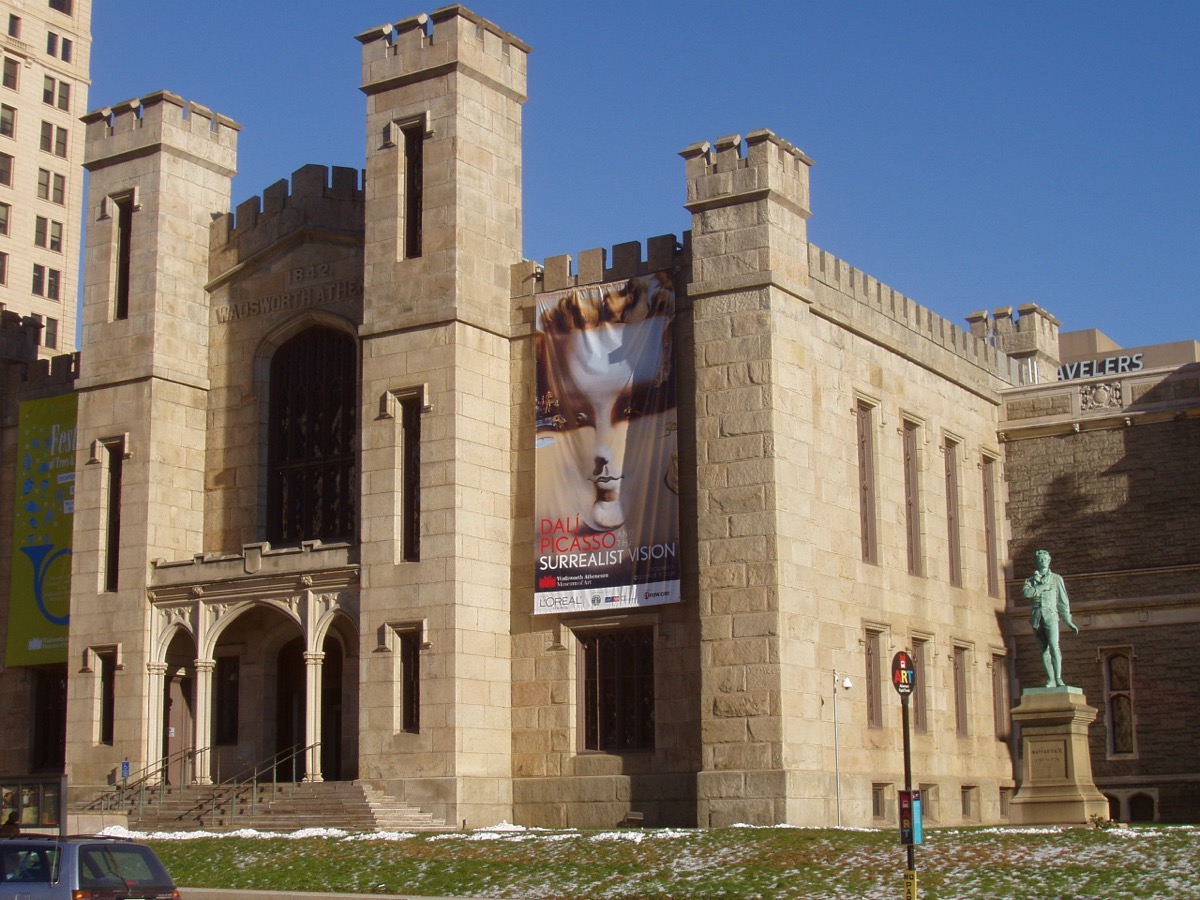
The Wadsworth Atheneum in Hartford, Connecticut is the oldest art museum in America, and by 1891 its staff were sure it was haunted by a librarian who couldn't stop working. The 1911 account names the witnesses. It also describes the day his portrait fell.
The Wadsworth Atheneum in Hartford, Connecticut is the oldest continuously operating public art museum in the country. By 1891, the people who worked inside it were convinced it was haunted by a librarian.
His name was Rev. Thomas Robbins, and the way the 1911 account tells it, a worker went one day in 1892 to take his portrait down off the wall. Someone warned him the painting was the building's ghost. He smiled, lifted it, and dropped it — the canvas popped clean out of its frame and curled up on the floor. They saved it and reframed it, and after that, the account says, the haunting stopped.
Robbins was a Congregational minister who never married and kept a diary for nearly sixty years. What he loved was books. He amassed more than 4,000 volumes on history and theology, and in 1844 he became the first librarian of the Connecticut Historical Society, which was housed inside the Atheneum along with several other libraries — a whole castle full of books and the men who catalogued them.
He died in 1856 and was buried in Old North Cemetery here in Hartford. He wasn't murdered. He didn't die on the property. By the standards of a ghost, he was harmless. He just kept working.
The story stayed in the building until July 1911, when past and present staff sat down with a Bridgeport newspaper to compare notes. These weren't tourists. There was Caroline Hewins, the Hartford librarian who'd held her post since 1875; Frank Gay, the museum's curator; Alfred Bates, the Historical Society's librarian; and Alfred Clifford, who ran the building. They reported footsteps going down the basement stairs toward no one. Doors that slammed on their own. The rustle of newspaper in the reading room when a patron sat alone.
Hewins said she got nervous working late, especially in the winter months. That, she said, was when it was at its peak.
The man loved his 4,000 books so much that, by every account they gave, he saw no reason death should interrupt the filing.