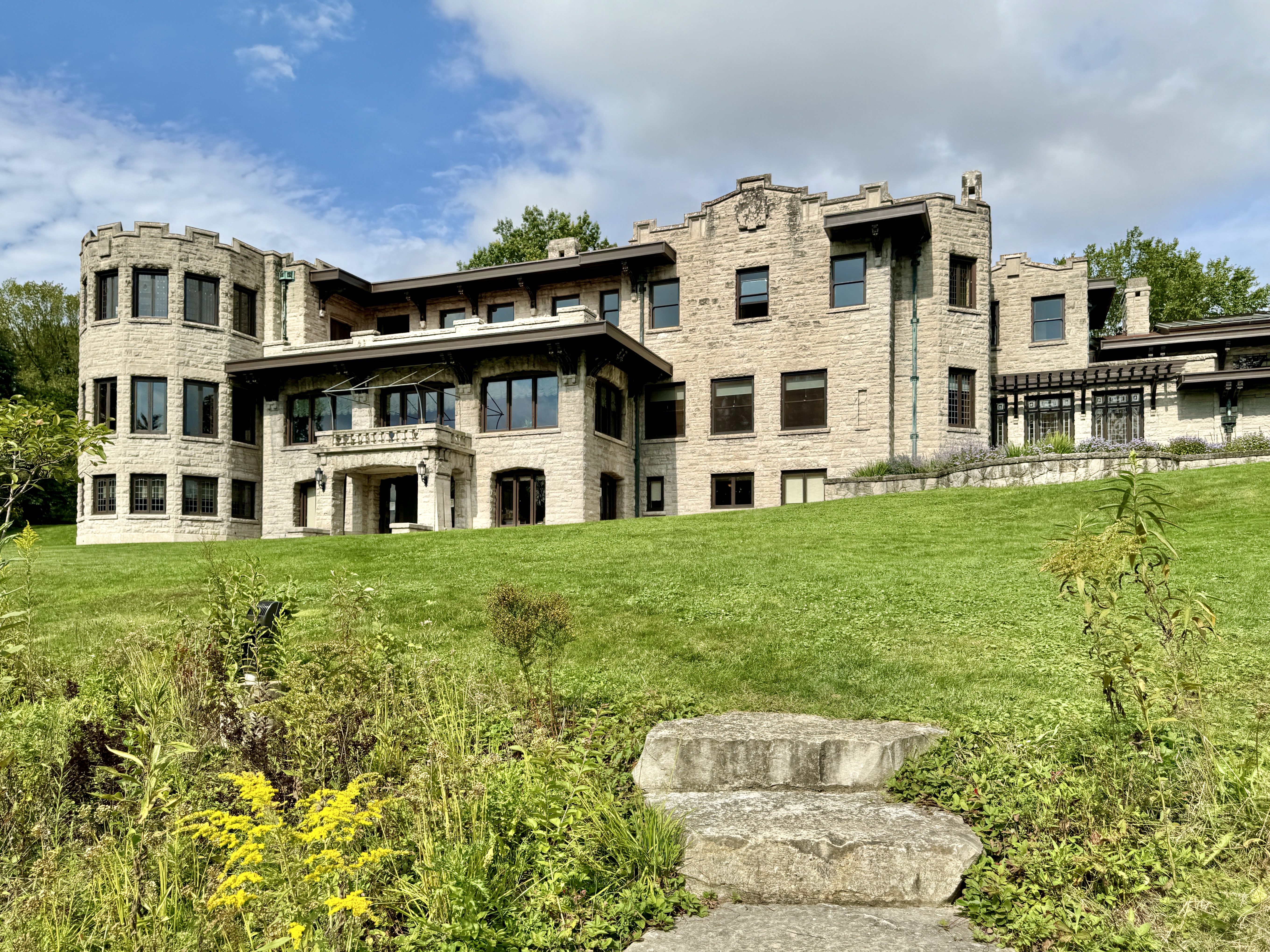
At Fair Lane, Henry Ford's 56-room mansion in Dearborn, Michigan, staff and visitors keep meeting a ghost who follows them through the rooms. It isn't Henry. It's a former butler, still tidying up after the living decades after his death.
Fair Lane, in Dearborn, Michigan, is the 56-room riverside mansion Henry Ford built, and the ghost people meet there is not the man who built it. Staff and visitors keep running into a butler instead, formally dressed, hurrying through the hallways and following groups from room to room before vanishing in front of them.
What gives him away is what he does. He cleans. Employees say the apparition picks up after careless guests, gathering gum wrappers, paper, and dirt tracked in off the grounds. As one local account puts it, "the butler cleans it all up." He turns up in mirrors and window reflections behind visitors, surfaces as a misty shape in photographs, and has been reported sitting inside cars parked on the estate. Doors and windows in the house open and close with no one near them. A Michigan paranormal team that investigated the property says it recorded floating orbs and drifting mist; the old gift shop once sold a tape of an investigation said to show the same.
No source names him. Every telling calls him only "the butler," with no death date and no employment record to pin him to. When people point at old photographs and say "that's him," the figure they pick is never Henry or Clara Ford. It's the servant.
There was plenty of house to keep. Fair Lane is a roughly 31,000-square-foot Prairie-Style mansion on about 1,300 acres along the River Rouge, built between 1913 and 1915 by a parade of architects that began with Frank Lloyd Wright and passed through Marion Mahony Griffin, one of the first women architects in America. The estate ran on its own limestone powerhouse, a hydroelectric plant whose cornerstone Thomas Edison laid.
That powerhouse is part of how Ford himself died here, on April 7, 1947, at 83. The Rouge River had flooded two to four feet higher than ever recorded, knocking the plant out. So the man who electrified American industry died in a dark, unheated house lit by candles and kerosene lamps. As Clara called out "Henry, speak to me," the chauffeur said quietly, "I think, Mr. Ford will be leaving us."
The Fords donated the estate to the University of Michigan in 1957. The university closed it to the public in 2010, and a non-profit took over stewardship in 2013, launching a long restoration to return the Main House to its 1919 look. It stays closed now, open only for member events and concerts. And by every account, the one who stayed behind to keep it tidy was never the master of the house.