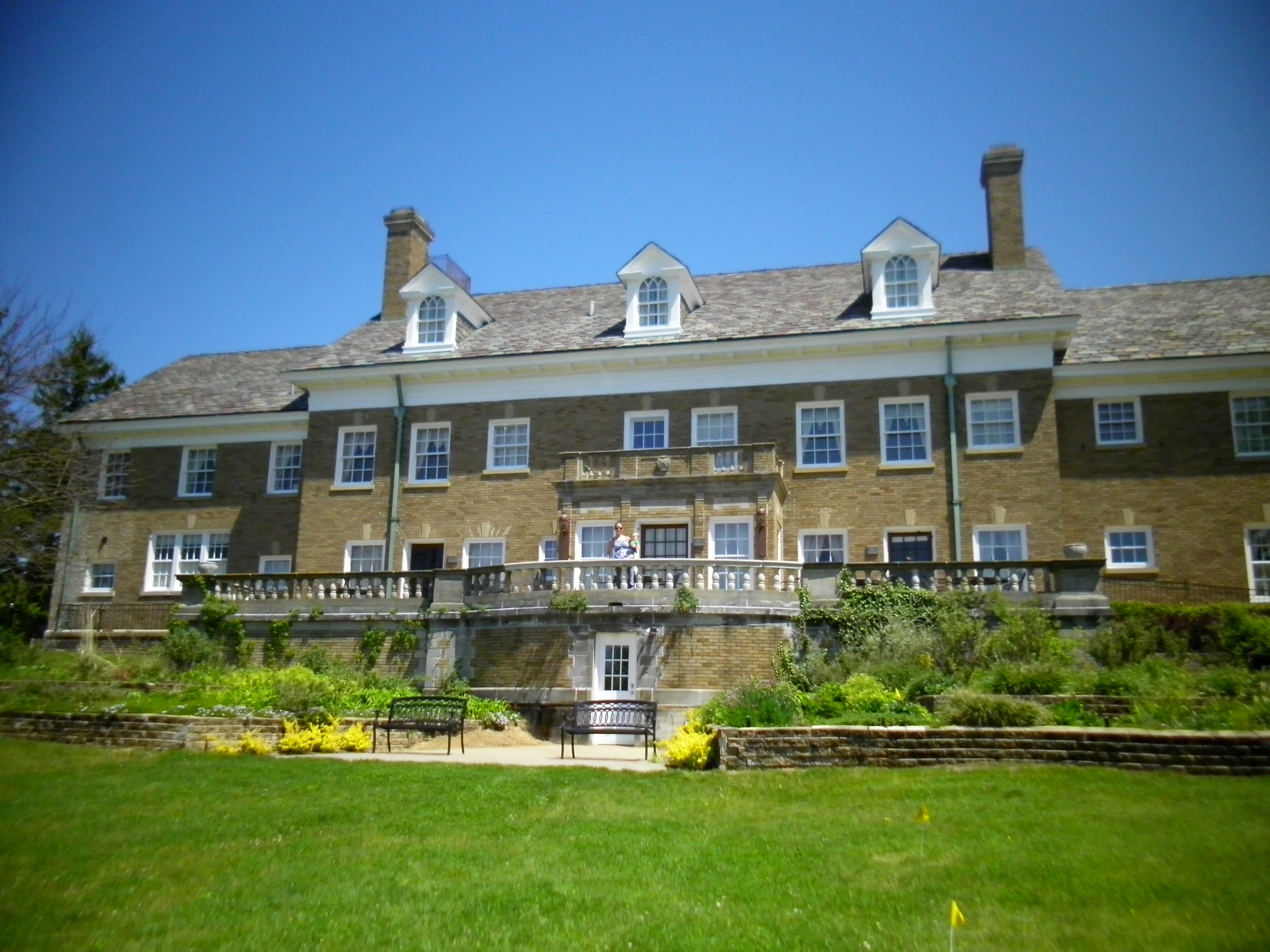
At the Felt Mansion near Saugatuck, Michigan, the ghosts people report most are Dorr and Agnes Felt themselves. They designed the yellow-brick estate for years, moved in, and died within two years — and visitors say they never quite left the upstairs rooms.
At the Felt Mansion near Saugatuck, Michigan, the two ghosts people report most are the couple who built the house. They drift through the upstairs rooms, the story goes, as if they're still finishing the time they didn't get.
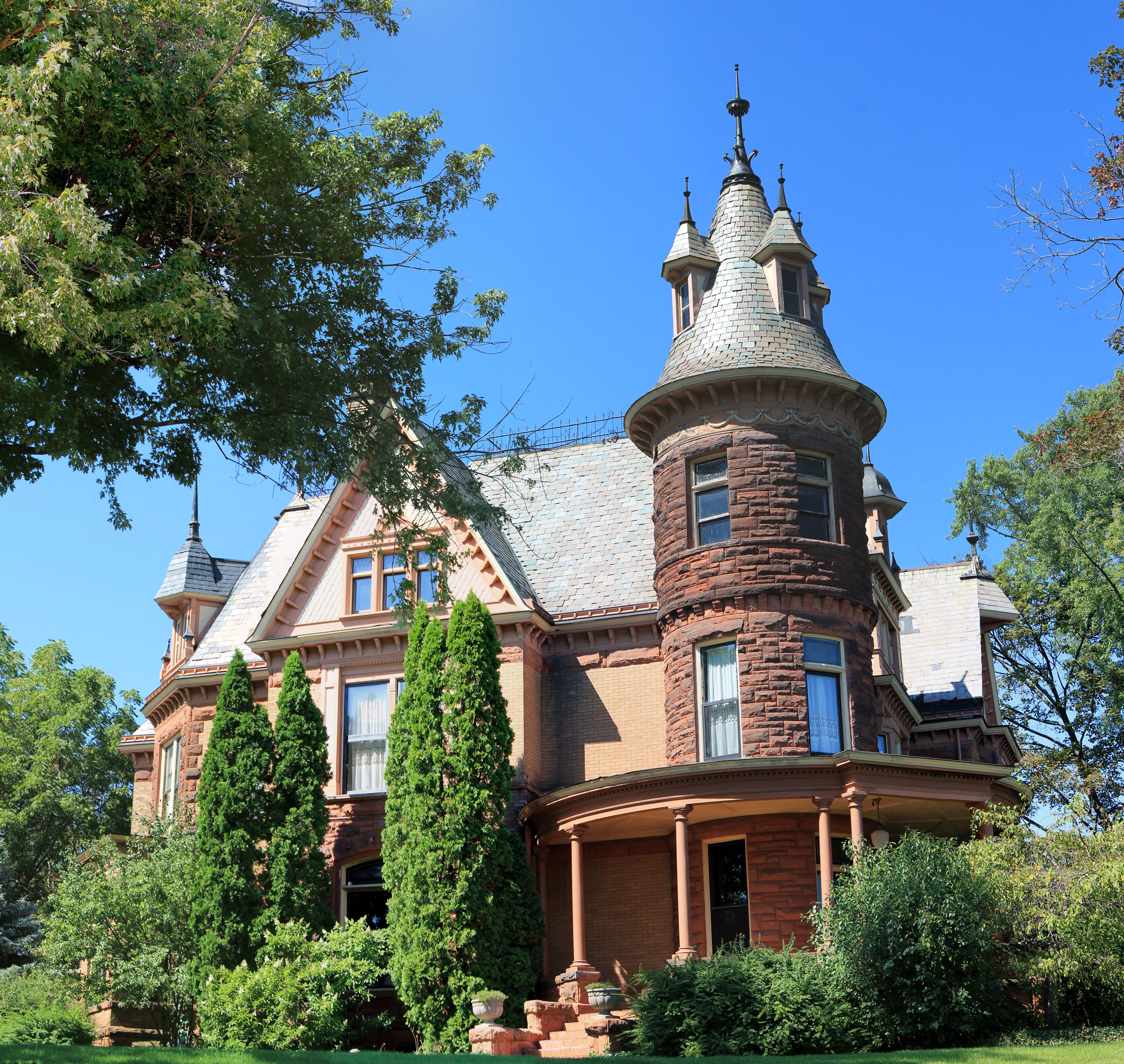
Dorr Felt made his fortune inventing the Comptometer, the first commercially successful key-driven calculating machine, sold to banks and government offices around the world. He spent the money on a yellow-brick summer estate for his wife, Agnes — a three-story Classical Revival house on a farm near Lake Michigan. They finished it in 1928 and moved in.
Agnes died at the estate that August, about six weeks after the move. Dorr died two years later, in August 1930. The couple who'd spent years planning the place barely lived in it.
The most-cited phenomenon is in Agnes's bedroom: the double French doors that open and close on their own. In 2001, when the West Michigan Ghost Hunters Society ran ghost tours there to raise restoration money, investigator Jason Bouchard said he caught it on film, the doors swinging with no one near them.
Up in the third-floor ballroom, visitors report dark figures with no source, shapes that move like shadows but not against the walls. Some appear to sway, as if dancing. One looks like it's sweeping the floor. The ghost hunters narrowed the activity to three rooms: the library, the ballroom, and Agnes's bedroom. They called it the most paranormally active building they'd ever investigated.
The house didn't stay a home for long. After the Felts, it became a Catholic seminary high school, and one of its students was Robert Prevost, the future Pope Leo XIV. Then cloistered nuns. Then, through the 1970s and '80s, a prison, with the mansion itself used as a state police post. Laketown Township bought it in 1995 for one dollar, and volunteers have been restoring it ever since.
There's older lore here too, the kind that lives along the road instead of inside the walls. For decades, locals around the estate have told of the melon heads, big-headed figures said to lurk in the surrounding forest, supposedly escaped from a "Junction Insane Asylum" that the county historical society insists never existed. One township manager remembered hearing the tales as a teenager. His friends, he said, called the creatures wobbleheads.
But the asylum legend stays out in the trees. The reports inside the house are quieter, and stranger for it. Because the residents people keep describing aren't the seminarians or the inmates or the troopers. They're the first two, the couple who designed every room, moved in, and were gone within two years. By every account, they're the ones who stayed.