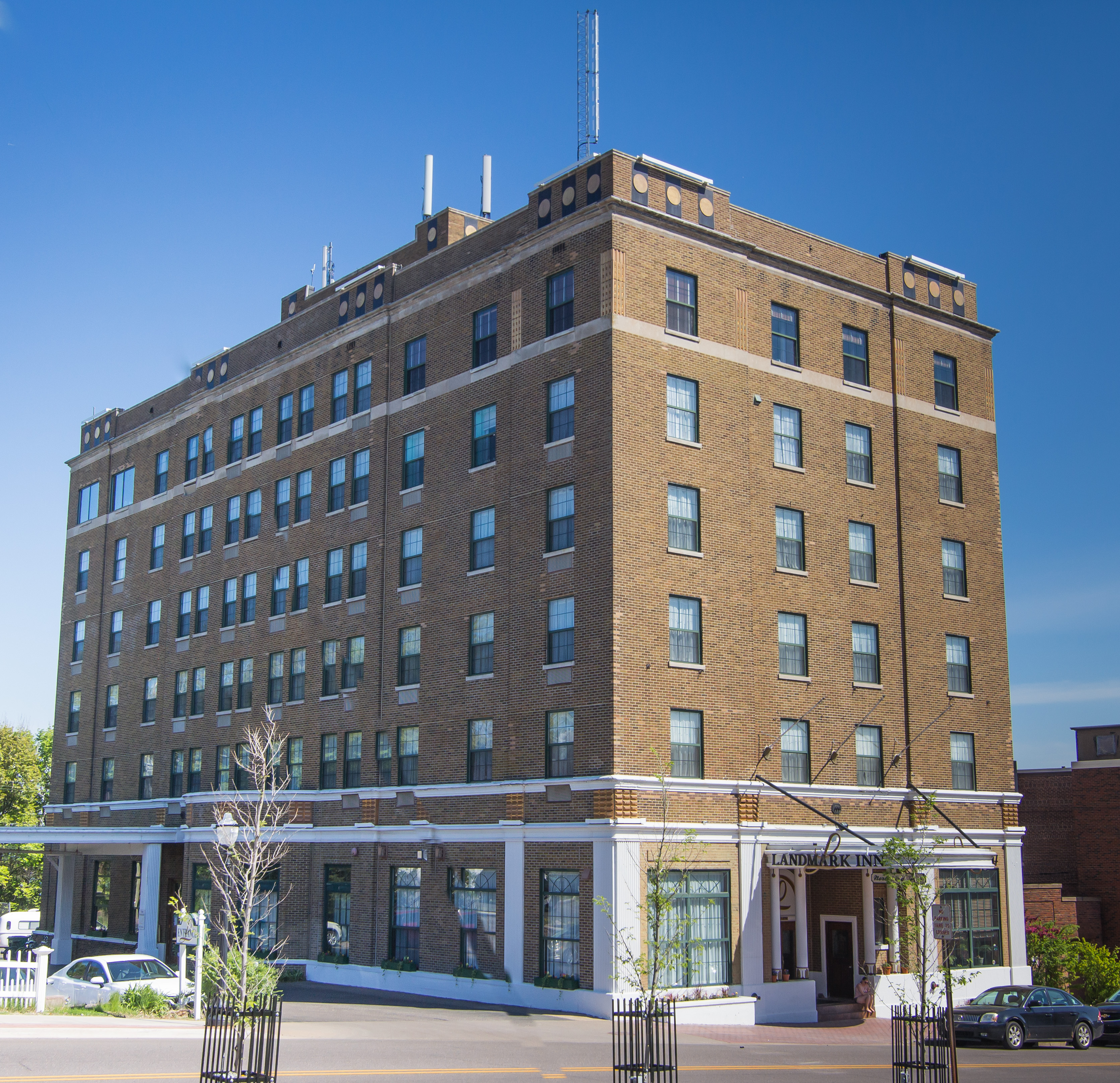
At the Landmark Inn in Marquette, Michigan, the sixth-floor corner room belongs to the Lilac Lady. Staff say she paces and weeps at the window, waiting on a sailor lost to Lake Superior. The front desk still gets calls from that room when no one is checked in.
The Landmark Inn in Marquette, Michigan keeps a ghost in a corner room on the sixth floor. They call her the Lilac Lady, and the front desk knows her best by her phone calls. The line lights up from the Lilac Room — when the room is empty, when the door is locked, when no one is checked in.
The story behind her is a love story that ends the way Lake Superior tends to end them. In the 1930s, when the place was the Hotel Northland, a spinster librarian fell for a crewman off the ships. His vessel went down on the lake with all hands. She never recovered. By some accounts she died soon after of a broken heart; others say she took her own life in that room. The record settles none of it — no obituary, no name, no shipwreck anyone can date.
The hotel opened January 2, 1930, a six-story art deco stack built on Marquette iron money. Amelia Earhart slept in Room 502 in 1932; the room carries her name now. The building declined through the 1970s, closed in 1982, and sat dark until Christine and Bruce Pesola bought it in 1995 and restored it. In 1997 it became the first Michigan hotel in Historic Hotels of America.
The Lilac Lady stayed through all of it. Guests and staff report her at the window of the Lilac Room, lying on the bed, standing at its foot, gliding through in a floral gown. Haunted Rooms tells it plainly: "she looks out from the Lilac room on the 6th floor, waiting for her lover to return." One guest complained of screws turning up in the bedsheets. They changed the linens. The screws came back. Down the sixth-floor hall, by Room 604, one visitor watched the lights switch on, then off, then drop to two flickering bulbs.
She isn't the only story the building tells about itself. The other one goes underground. During construction, the legend has it, a man killed his girlfriend in a jealous rage and buried her in the unfinished basement. Workmen later said they heard weeping down there, and a woman's voice whispering. No victim, no name, no date attaches to any of it — it's a told tale, never a documented one, the kind that follows a grand old building the way the wind does.
The Crow's Nest, the cocktail lounge, sits up on that same sixth floor, the top of the building and the Lilac Lady's floor. You can have a drink there tonight, a few doors down from the corner room that calls the front desk on its own.