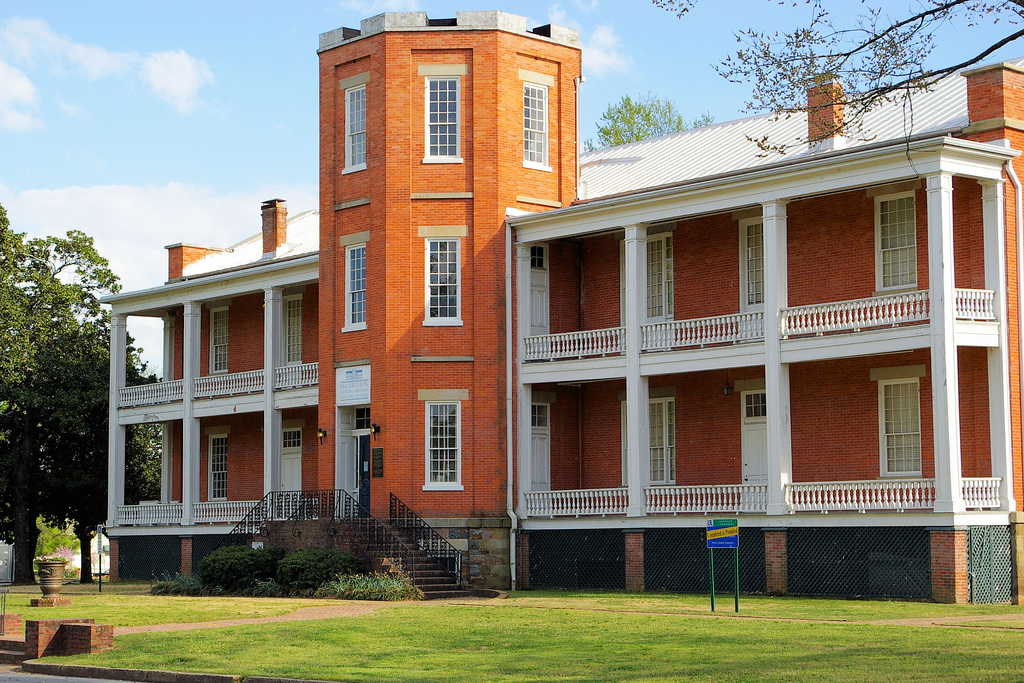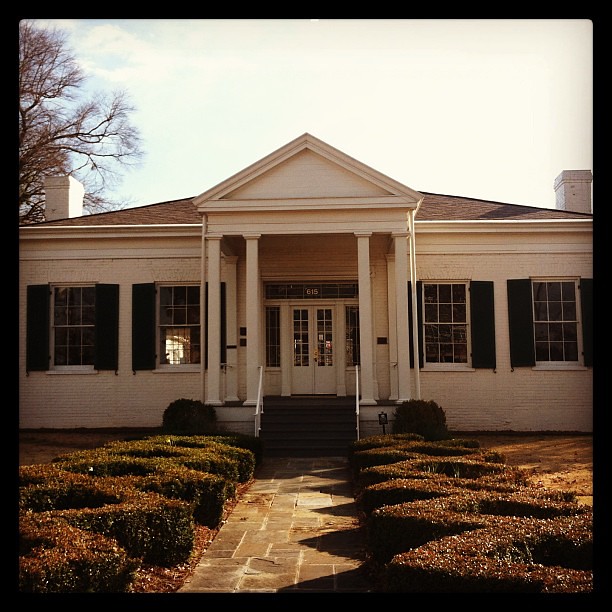
Curran Hall in Little Rock, Arkansas was built in 1842 for Mary Starbuck Walters, who died before it was finished. It's the city's visitor center now, and the staff say she never left — a man once painted the kitchen black to see her, and a recorder caught a voice naming itself Mary.
Curran Hall in Little Rock, Arkansas was built for a bride who died before she could move in, and the people who run it now will tell you she never left.
Colonel Ebenezer Walters put up the house in 1842 as a home for his wife, Mary Starbuck Walters, who was pregnant at the time. The brick walls ran three courses thick; the place was made to last for them. But Mary died in the summer of 1843, before it was finished — in childbirth, by most accounts. Her husband sold the house and left Arkansas. The rooms built for her had never held her at all.
She started turning up anyway. By the 1880s the house belonged to the family that had founded the Arkansas Gazette, and one of them, Alden Woodruff, moved in after his own home burned down. While his sister was away traveling, he became convinced Mary's ghost was in the kitchen — and he painted the walls and the floor of that room solid black, certain that against the dark he'd finally be able to see her. There's no newspaper for it; the story comes down through the local preservation society as family lore. It's the first thing the staff still tell you.
The house was nearly torn down in 1996. Instead the city spent six years restoring it, and in 2002 it reopened as Little Rock's visitor center — the only antebellum home in the city open to the public every day. Walk in for a map of downtown and the people at the desk will tell you, plainly, that it's haunted.
They have a list. A rocking chair on the back porch that moves with no one in it. A coffee pot that runs while it's unplugged. The alarm going off at night with no one inside and no way in that the alarm company could ever find.
And the one a local ghost-tour guide swears to: a recorder left running in these rooms came back with a woman's voice on it, giving her own name. "Mary, that's who I am." The bride the house was built for, and never got to live in, saying her name inside it at last.