TLDR
Jacob Wolf built the oldest public building in Arkansas himself in 1829, and in 1838 approximately 1,100 Cherokee walked past it on the Trail of Tears. Visitors hear gavel cracks from the empty upstairs courtroom and see frontier figures in the breezeway, while a heavier, quieter grief lingers near the river path where the Cherokee marched.
The Full Story
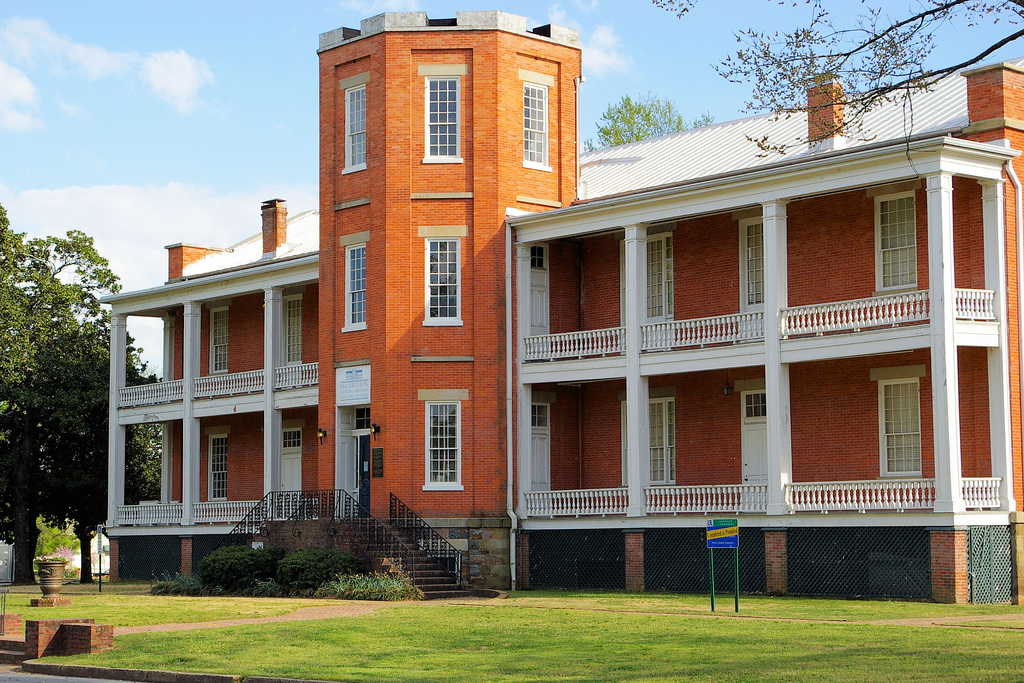
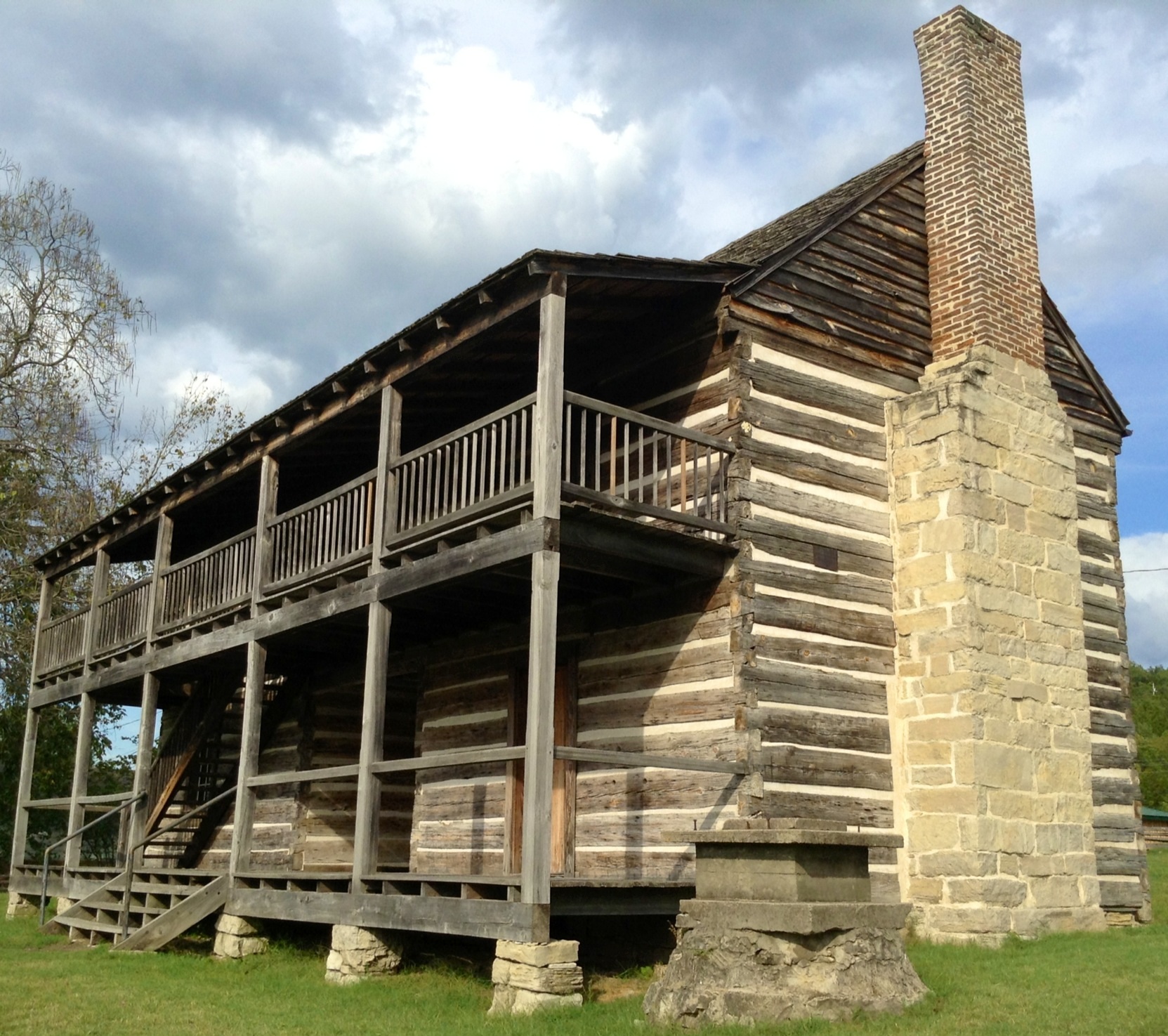
Jacob Wolf built the courthouse himself. In October 1829, he pushed legislation through the Arkansas Territory General Assembly to locate the permanent Izard County courthouse on land he donated, then constructed a two-story dogtrot log building overlooking the junction where the North Fork River meets the White River in what was then called Liberty. The central open breezeway on the first level let air pass through during brutal Ozark summers. The upper floor extending over the breezeway became the courtroom where territorial judges traveled from distant parts of the territory to conduct business. John P. Houston, brother of the legendary Sam Houston, served as county clerk downstairs.
Wolf was a man of German ancestry who arrived in the Arkansas Ozarks around 1820. By 1824 he'd staked a homestead at the mouth of the North Fork. He was a merchant, carpenter, blacksmith, and builder of log structures, the kind of frontier operator who becomes indispensable to everyone within a day's ride. In 1825 he got a license to operate ferries across both rivers. In 1826 he was elected to the territorial General Assembly. He fathered sixteen children plus five stepchildren before dying on January 1, 1863.
In December 1838, approximately 1,100 Cherokee men, women, and children marched past this building. They were walking the Benge Route of the Trail of Tears under Captain John Benge, crossing the Ozark Mountains in winter on their way to Oklahoma. Wolf repaired some of their carriages and wagons as they passed through. The building they walked past still stands. In 2022, the National Park Service certified the Wolf House as a Cherokee Trail of Tears Interpretive Center, one of only two "witness sites" in Arkansas.
The courthouse functioned until 1835, when the county seat moved to Athens. Wolf moved his family into the building. It's the last remaining two-story dogtrot public building in the United States and was listed on the National Register of Historic Places on April 13, 1973. A 1999 restoration grant funded its return to territorial courthouse appearance, completed in 2002.
Visitors hear the crack of a gavel from the empty courtroom upstairs. The sound is sharp and specific, echoing through the log walls as though a judge is calling the frontier court to order in a room where no one is sitting. Figures in buckskin appear in doorways and at the edges of the breezeway, dressed in 1830s frontier clothing, vanishing when noticed. Muffled voices carry from the second floor, as though deliberation is happening behind closed doors. Boots cross wooden floors overhead.
A family who lived in the house during the 1920s and 1930s later recalled hearing sounds in the stairways after the household had retired for the night. The sounds were distinct enough to remember decades later but impossible to explain.
Some visitors describe a different kind of weight near the ground floor and along the river path. It's not a figure or a sound. It's a heaviness that arrives without warning and lifts when you move away. Local interpreters associate this with the Cherokee who passed through in winter 1838, losing elders and children to exposure and disease on the march. That grief is a quieter thing than gavel cracks and buckskin figures. It doesn't announce itself.
The site is at 13775 Highway 5 South in Norfork and is open Tuesday through Saturday. The Arkansas Historic Preservation Program took over management after a 2016 ownership transfer. The oldest public building in Arkansas still sits at the junction of two rivers, in the same spot where Wolf built it nearly two hundred years ago.
Researched from 8 verified sources. How we research.