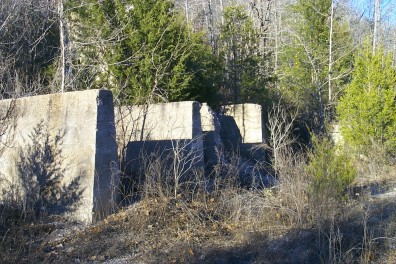
Rush Ghost Town

Rush Ghost Town

👻 other

Rush, Arkansas

About This Location

This 1,300-acre historic zinc mining district on the Buffalo National River boomed during WWI and collapsed when zinc prices crashed. The entire population vanished by the 1950s.

👻

The Ghost Story

In the early 1880s, prospectors came to the Rush Creek valley in the Arkansas Ozarks searching for lost silver mines from Native American legends. When a rock smelter was built along Rush Creek in 1886 and tested in January 1887, green zinc oxide fumes erupted in a spectacular display instead of the expected silver. The discovery transformed the valley. Morning Star Mine, founded in 1885 and destined to become the largest mining operation in the district, produced a six-ton zinc nugget called Jumbo that was displayed at Chicago's 1893 World's Columbian Exposition, with another specimen earning recognition at the 1904 St. Louis World Fair. Ten mining companies eventually operated fourteen mines within the district, employing room-and-pillar methods with gravity-fed tramways transporting ore from mines to mills. During World War I, increased demand for brass drove a zinc boom that swelled Rush's population to as many as five thousand residents. The settlement was incorporated as a city in 1916 and was recognized as the most prosperous city per capita in Arkansas.

The collapse came swiftly. When the war ended in 1918, zinc prices plummeted and the town emptied as fast as it had grown. By 1920, only 344 residents remained. The last Morning Star Mine closed in 1931. The post office shuttered in the mid-1950s. In 1972, Congress established the Buffalo National River, and Rush was officially recognized as a ghost town, its ruins absorbed into federal lands. The Rush Historic District was listed on the National Register of Historic Places on February 27, 1987. Today, the Taylor-Medley General Store, the Rush Blacksmith Shop built in 1925 and stabilized in 1989, the remains of the 1886 smelter, and the simple wooden houses of House Row circa 1899 still stand along the creek, their metal roofs rusting above open porches. Waste rock piles from the mines remain visible throughout the landscape, and several mine shafts stand caged but accessible to view.

The paranormal activity at Rush appears primarily residual, as though the intense energy of five thousand miners, merchants, and families left an imprint on the valley that replays itself decades later. Visitors walking the trails near Morning Star Mine report hearing mining sounds -- pickaxes striking rock, the rattle of ore carts on rails, and the distant rumble of dynamite detonations -- emanating from shafts that have been sealed for nearly a century. Shadowy figures in period work clothes have been seen emerging from mine entrances before vanishing. Some encounters suggest intelligent spirits rather than simple replays, particularly miners who seem unaware that the operations ceased over a hundred years ago.

The town site itself generates reports from multiple locations. Shadow figures appear in the windows of the general store, accompanied by sounds of commerce from an era long past. In the residential areas where miners' families once lived, visitors describe hearing children playing and glimpsing domestic scenes that fade when approached directly. The smell of cooking fires and period foods manifests near former home sites where only foundations remain.

Rush Cemetery, perched on a hillside overlooking the ghost town, contains the graves of miners, their families, and victims of the town's sometimes violent past. Apparitions of mourners have been seen standing at graves. Children's laughter echoes through sections with young burials, and visitors report waves of profound sadness, particularly around the graves of those who died young or violently in the mines. A bridge near Rush is associated with a woman who reportedly jumped to her death during the town's decline, despondent over financial ruin and personal loss. Her ghost has been seen on the bridge, always looking down into the water below, and some witnesses report hearing a sound of a splash, as though her death replays endlessly.

The site is managed by the National Park Service as part of Buffalo National River and remains open to visitors year-round. The NPS has stabilized structures, improved roads, and built fences around mine tunnels for safety. A self-guided walking trail leads through the mining district, and the Buffalo River itself offers canoeing access to the ghost town from put-ins upstream.

Researched from 8 verified sources including historical records, local archives, and paranormal research organizations. Learn about our research process.

More Haunted Places in Arkansas

🏨

Capital Hotel

Little Rock

🏨

Queen Anne House Bed & Breakfast

Harrison

👻

Old Redfield Road

Sheridan

🏚️

Curran Hall

Little Rock

🏛️

Mountain Village 1890

Bull Shoals

⛓️

Fort Smith National Historic Site

Fort Smith

View all haunted places in Arkansas

More Haunted Others Across America

The Bandage Man of Cannon Beach

Cannon Beach, Oregon

22 Mine Road

Holden, West Virginia

H.H. Holmes Murder Castle Site

Chicago, Illinois

Point Lookout Lighthouse

Scotland, Maryland