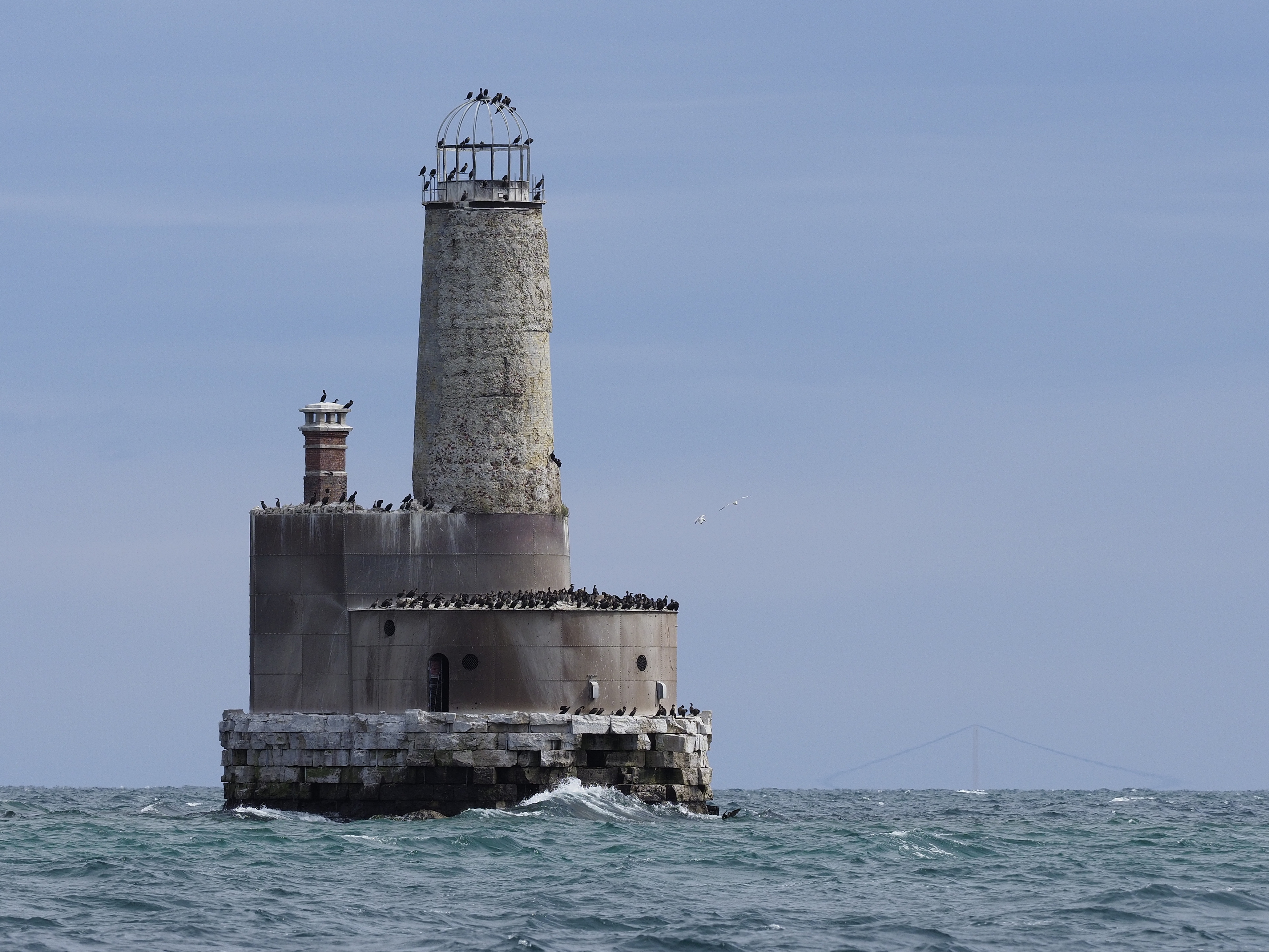
Waugoshance Lighthouse, a fire-gutted shell on a Lake Michigan shoal near the Straits of Mackinac, is blamed on keeper John Herman, who vanished one night in 1900. Later keepers kept finding chairs kicked out and chores already done.
Waugoshance Lighthouse stands alone on a shoal off the Straits of Mackinac, a fire-gutted brick shell with no caretaker, and the keepers who worked it used to blame John Herman for the chairs that moved.
Herman was the head keeper. He'd worked the station since the late 1880s and had it to himself by the 1890s, and he was known for two things: his drinking and his jokes. The legend has him locking an assistant up in the lantern room one night as a prank around 1900. When the man finally got free, Herman was gone. He was never found, and the men there decided he'd gone off the edge of the pier into the lake.
After that, everything that went wrong got his name on it. Later keepers reported chairs kicked out from under them, and one account describes coal buckets filling by themselves and furniture moved about the room as if by a poltergeist. Chores got done that no one had done. As another telling puts it, unexplained events were "forever after attributed to the ghost of John Herman." The station got hard to staff, and the reputation was bad enough that when the larger White Shoal Light went up two miles north, the men were content to leave Waugoshance, as the story goes, to the ghost.
That left a lonely thing on the water. The lighthouse first lit in 1851, the first on the Great Lakes built completely surrounded by water — no land, no town, no neighbors, the keeper's quarters built right into the brick-and-iron tower. It was decommissioned in 1912. There is no electricity here to misfire and no living keeper to misremember.
And the man it's named for may not have drowned at all. The legend has him gone off the pier into the lake, his body never recovered. But recent research holds that Herman, 41 and under a doctor's care, was on Mackinac Island that same October and died there of a heart attack, buried on the island in a grave no one can now point to. The vanishing keeper at the heart of the story may simply have been a sick man who died on land.
What did happen here is on the record, and it's worse than the prank. In 1943 the Navy took the empty tower as a bombing target. Radio-controlled drones flown from a trailing mother plane dropped 2,000-pound bombs on it, and one strike set the fire that gutted the interior and left the shell that stands today.
The ghost outlasted the man. The shell outlasted the war.