Historic Fort Wayne is a star-shaped fortress on the Detroit River that never fired a shot in combat. The dying happened anyway — and the most-told story has a Civil War soldier walking out of a solid stone wall.
At Historic Fort Wayne in Detroit, the most-told story belongs to the gun tunnel. Workers on a lunch break, the way it's passed down, watched a Civil War soldier in full uniform step out of the solid stone wall, walk past them down the tunnel without a sound, and disappear into the stone on the other side. It traces back to tour-guide retelling rather than any named, dated witness, but it's the story people come for.
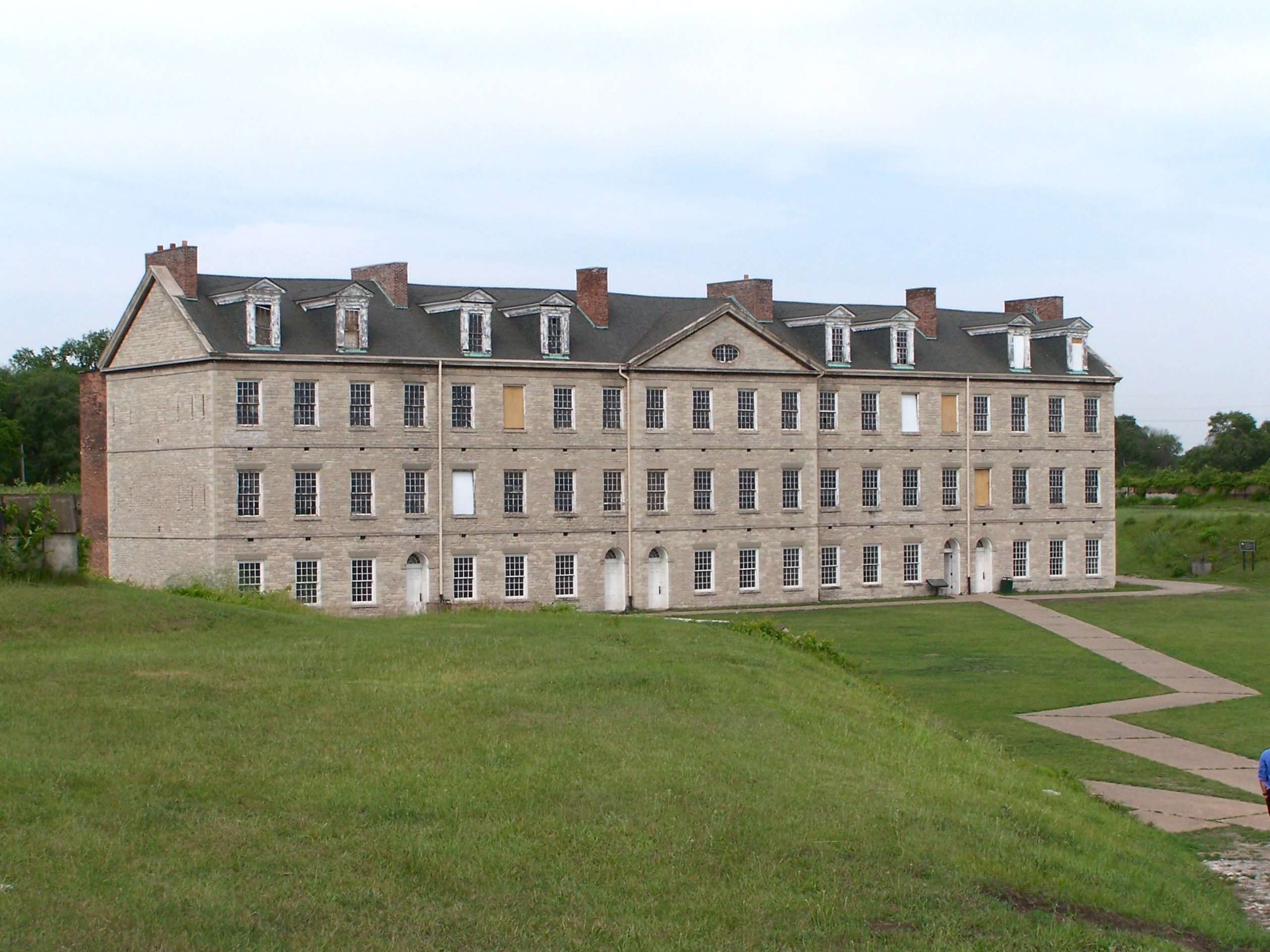
The strange part is that nothing here was ever attacked. Construction began in 1842 to defend against a British attack from Canada, a mile across the river, and the place was named for the Revolutionary War general "Mad" Anthony Wayne. The five-point star fort was built to fire its best cannon clear to the Canadian shore — you can still see Canada from the ramparts on a clear day. By the time the limestone barracks were finished around 1850, the diplomatic crisis had cooled. Not a shot has ever been fired from its walls in combat.
The dying still came. For a century the fort mustered Michigan troops into every American conflict from the Civil War through Vietnam, garrisoned through both world wars. By various accounts roughly 1,500 soldiers died here over that span, almost all of disease rather than battle, though no primary record pins the figure down.
And the fort was built on top of something far older. The land was a Late Woodland burial ground as early as 1000 CE, part of a complex of around 19 earthwork mounds at the confluence of the Detroit and Rouge rivers. In 1944, an archaeologist named Carl Holmquist excavated the mound and recovered 23 burials and a distinctive pottery type found nowhere else, since named "Wayne Ware." Only one mound survives, near Officers' Row, and it's still treated as sacred — in recent years the site was deeded to the Nottawaseppi Huron Band of the Potawatomi.
So the haunting isn't the residue of a fight. Multiple sources log bodiless footsteps, doors that open on their own, dark human-shaped shadows, and voices before dawn. Investigators say they've photographed a period soldier on the ramparts and a shadow crossing the parade yard. The visitor restrooms, the women's especially, get flagged by paranormal groups as one of the more uncomfortable spots, which is a strange thing to say about a tiled room.
One of those investigators, Wayne Miracle, described a ball of light at the sally port and an unidentified male voice calling his own name after a session that ran past 4 a.m. He won't claim it was a ghost. "I cannot say the light or the voice was a ghost," he said — but, he added, things like this do happen.
A fort that never saw combat, built over a thousand-year-old grave, and the soldiers in it died of fever and stayed.