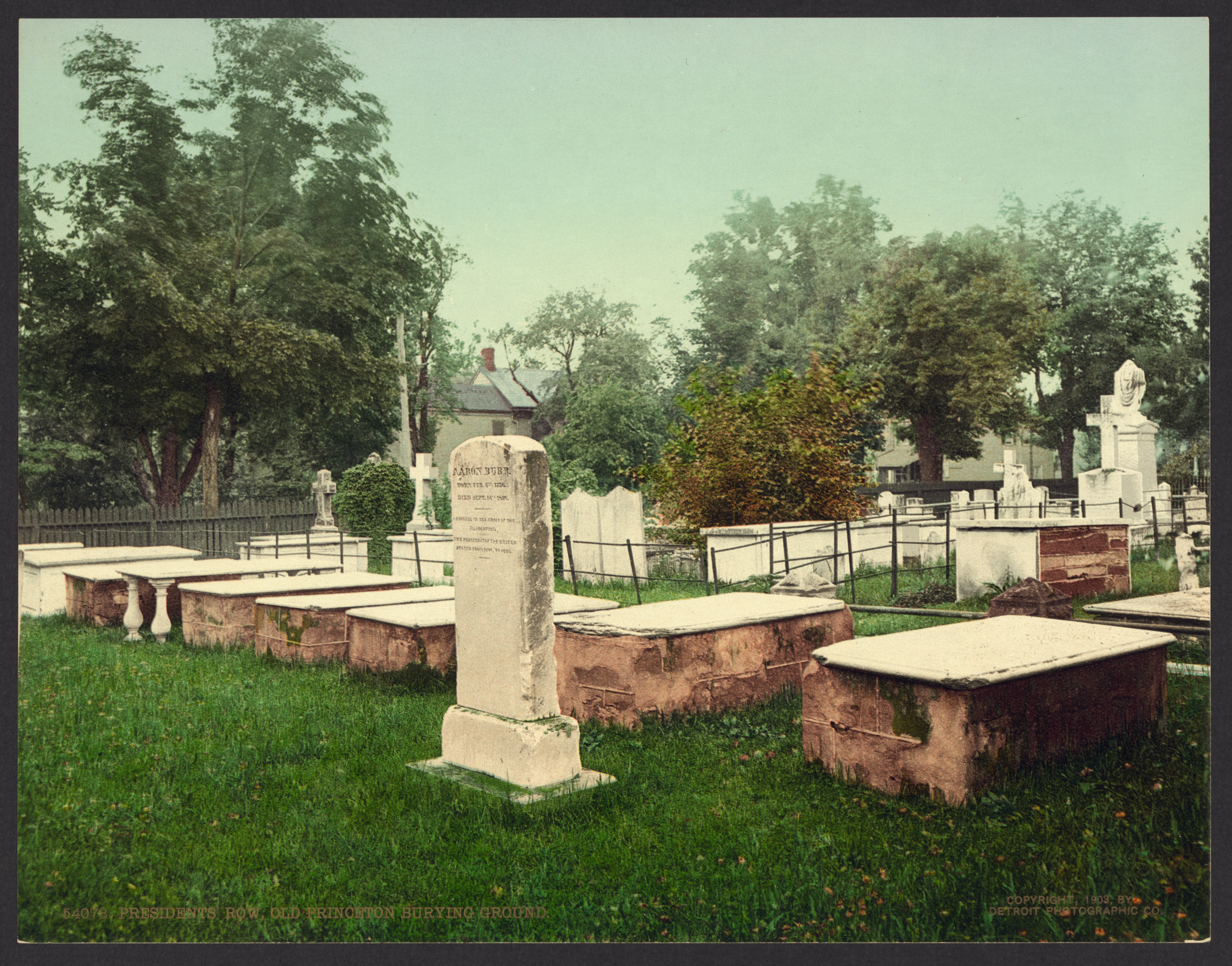
For more than a century, Princeton students called up the same ghost on purpose at Princeton Cemetery in New Jersey. They didn't pick a stranger. They picked Aaron Burr, the vice president who shot Alexander Hamilton, buried there at the foot of his father's grave.
Of all the dead at Princeton Cemetery in Princeton, New Jersey, the one the students kept calling up was Aaron Burr. Not a stranger, not some restless nobody. The vice president who shot Alexander Hamilton, buried here at the foot of his father's grave after a funeral held in Nassau Hall in September 1836.
By the late 1800s they'd built him into a rite. The way it was told, on the first rainy night of fall term a group of sophomores would herd the first-year students down Witherspoon Street "to see Aaron Burr arise from the goodly company of great Americans which surrounds him and flit about the graveyard." The man everyone else in the country had spent a century trying to forget was the one Princeton went out in the rain to summon.
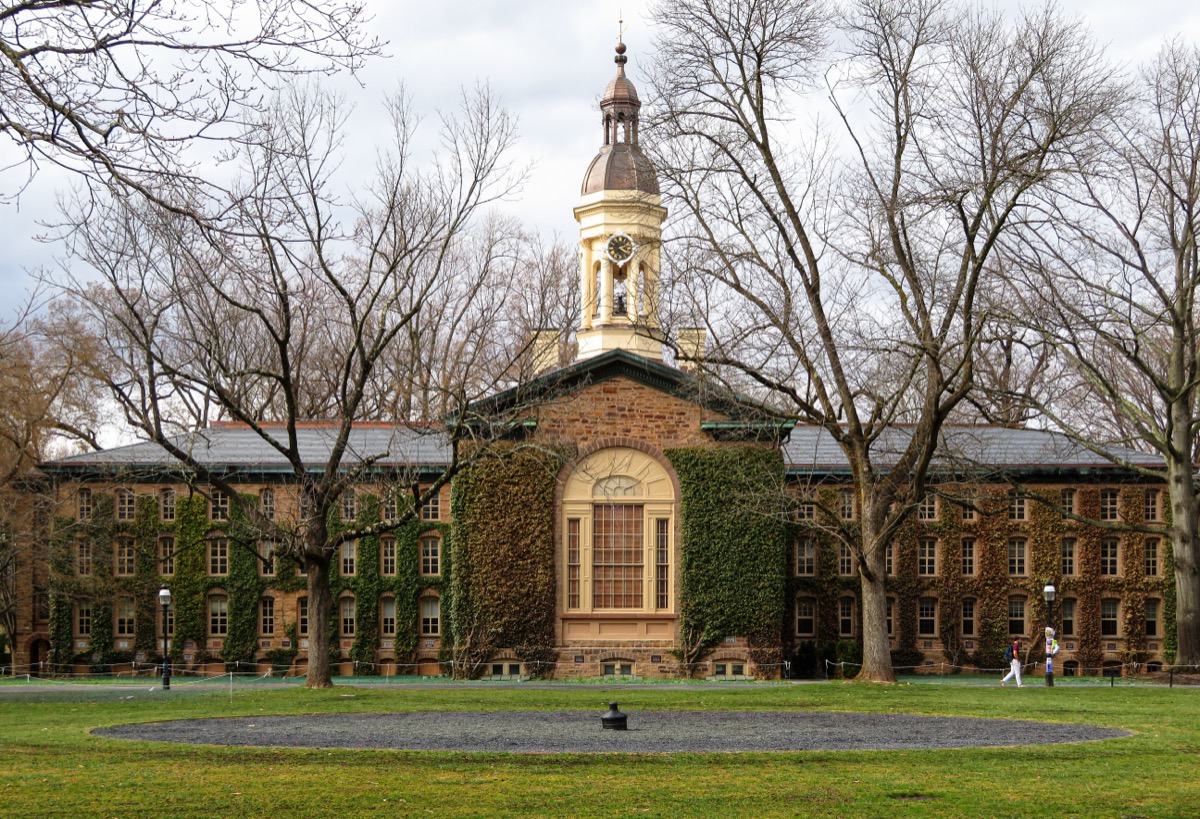
He turned up on campus, too, or so the story went. In 1892 a student wrote in the Nassau Literary Review of meeting Burr's ghost while walking McCosh Walk "during the moony time of evening," and asking him a question. The ghost answered that he was "always in Princeton for a while before examinations and during them."
The cemetery has reason to hold the dead it does. Founded in 1757, it became the burial ground of Princeton's presidents, and one historian called it "the Westminster Abbey of the United States." The Presidents' Plot holds Jonathan Edwards, who preached "Sinners in the Hands of an Angry God" and then served as Princeton's president for roughly a month before a smallpox inoculation killed him. Aaron Burr Sr. lies there under the oldest surviving monument. His son rests at his feet. Nearby, near the Witherspoon Street entrance, Grover Cleveland is buried with his wife Frances and their daughter Ruth, who died at twelve. The mathematicians Kurt Gödel and John von Neumann are here too.
A ghost tour still walks the graves of Burr and Cleveland today. But its guide, Mimi Omiecinski, draws a line at the gate. "Outside is the ghost hunting and the paranormal and the historical background," she says, and then once you're inside, "it's a final resting place." The summoning, the apparition on McCosh Walk, the rite in the rain, all of it happens around Burr, never at his grave.
On campus, the vice president is barely marked. Aaron Burr Hall is named for the father. So the one they kept calling up was the one the school itself had quietly written out, the family disgrace at the bottom of the family plot, summoned the rainy night before exams to flit among the great men he was never allowed to join.