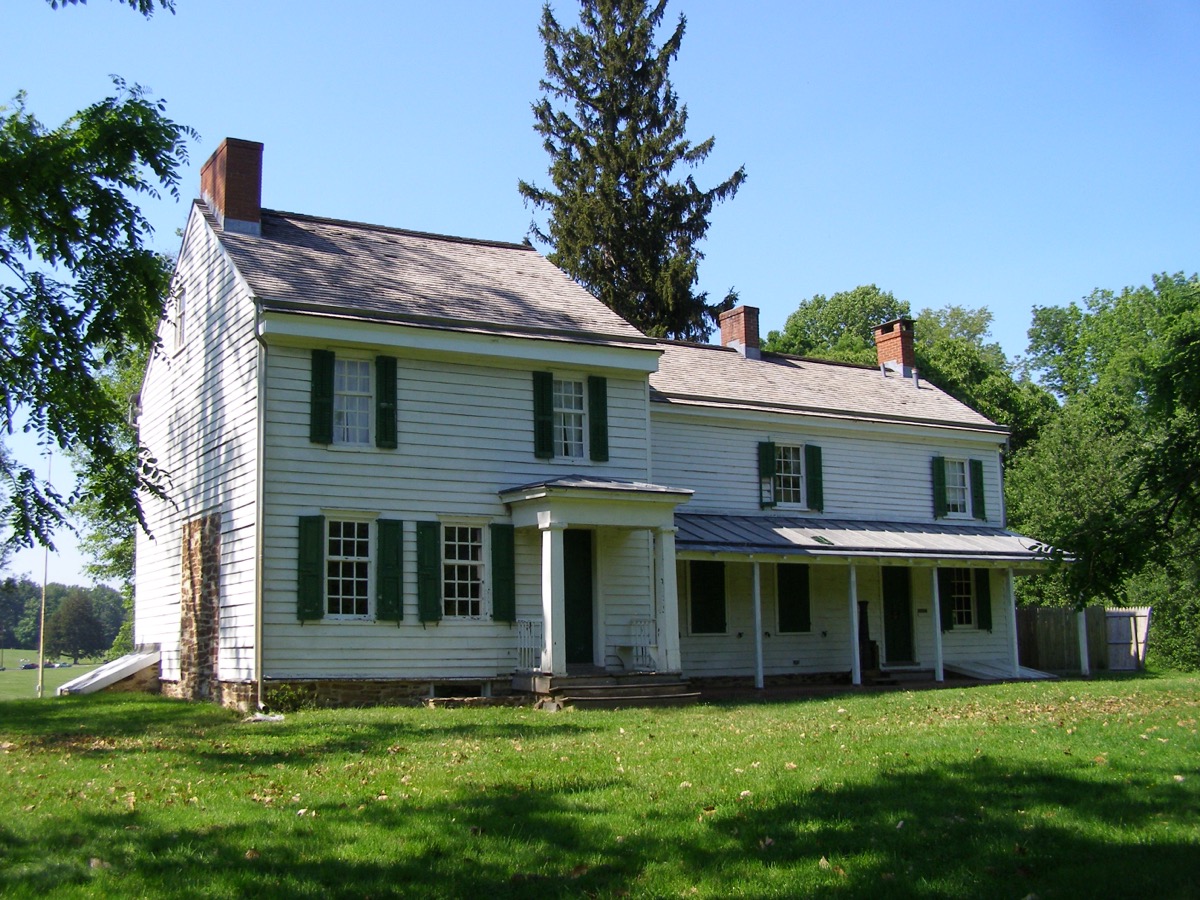
The Thomas Clarke House in Princeton, New Jersey is the only building left from the Battle of Princeton. Upstairs, where a bayoneted general spent 9 days dying, custodians and a visitor report the same thing: an odd tightness around the neck.
The Thomas Clarke House in Princeton, New Jersey keeps one strange report. Custodians and at least one visitor have come down the stairs describing the same thing: an unusual feeling around their necks, in an upstairs bedroom where a man once spent nine days dying.
The house was a modest white clapboard Quaker farmhouse, built in 1772 at the center of a 200-acre farm. On January 3, 1777, the Battle of Princeton was fought around it, and afterward the Clarke family turned their home into a field hospital for the wounded of both armies. It is the only structure from that battle still standing.
One of the wounded was Brigadier General Hugh Mercer, a Scottish-born physician and one of Washington's closest friends from the Seven Years' War. The British had mistaken him for Washington and ordered him to surrender; outnumbered, he drew his saber instead. They shot his horse out from under him, clubbed his head with a musket butt, bayoneted him seven times, and left him for dead. Continental soldiers carried him to the Clarke House, where Dr. Benjamin Rush, a signer of the Declaration of Independence, worked to save him. Washington sent his own nephew, George Lewis, under a flag of truce to sit with the general. Lewis stayed with him to the end.
Mercer was a physician himself, trained at the University of Aberdeen. A British surgeon thought he might recover. Mercer disagreed. He pointed to a single bayonet wound beneath his arm and told them that was the one that would kill him. He was right. He died on January 12, nine days after the battle. Mercer County, New Jersey was later named in his honor.
Rush's own letters lost track of him in those days. On January 6 he wrote that Mercer's death "cannot be too much lamented." The next day, January 7, he wrote again that Mercer was "considerably better, and that there are reasonable hopes of his recovery." Mercer was neither dead nor recovering. He had five days left.
As they treated him, the cravat was removed from his throat. The staff who feel that tightness around their necks connect it to the cloth taken from Mercer's — though they offer it as a guess, not an answer. No one reports seeing him. Only the feeling, in the room where the doctor told them which wound would finish him, and was proven right.