The Devil's Tower in Alpine, New Jersey draws teenagers who circle it in reverse to summon a widow who jumped. But Harriet Rionda died of a stroke in a hospital, and the building isn't a tower at all. It's a water tank.
The Devil's Tower in Alpine, New Jersey has a ritual attached to it, and teenagers have been driving out to test it for fifty years. The way it's told, you circle the stone tower in reverse, then cut your engine and your headlights, and a woman's ghost approaches your car. People who've tried it describe cold gusts, a white figure glowing in the windows, growls and banging from inside the sealed walls, the smell of dirt and flowers, video gear that quietly dies in their hands.
The woman is supposed to be Harriet Rionda. The story has her jumping from the top of the tower after she caught her husband with another woman, and the telling repeated itself so many times it got accepted as fact.
Harriet didn't jump. She died in a New York hospital in 1922, of the after-effects of a stroke. Natural, quiet, the opposite of the legend. For about twenty years her remains stayed on the estate, kept in a chapel built into the grounds, before they moved to Brookside Cemetery in Englewood, where her husband was later buried beside her.
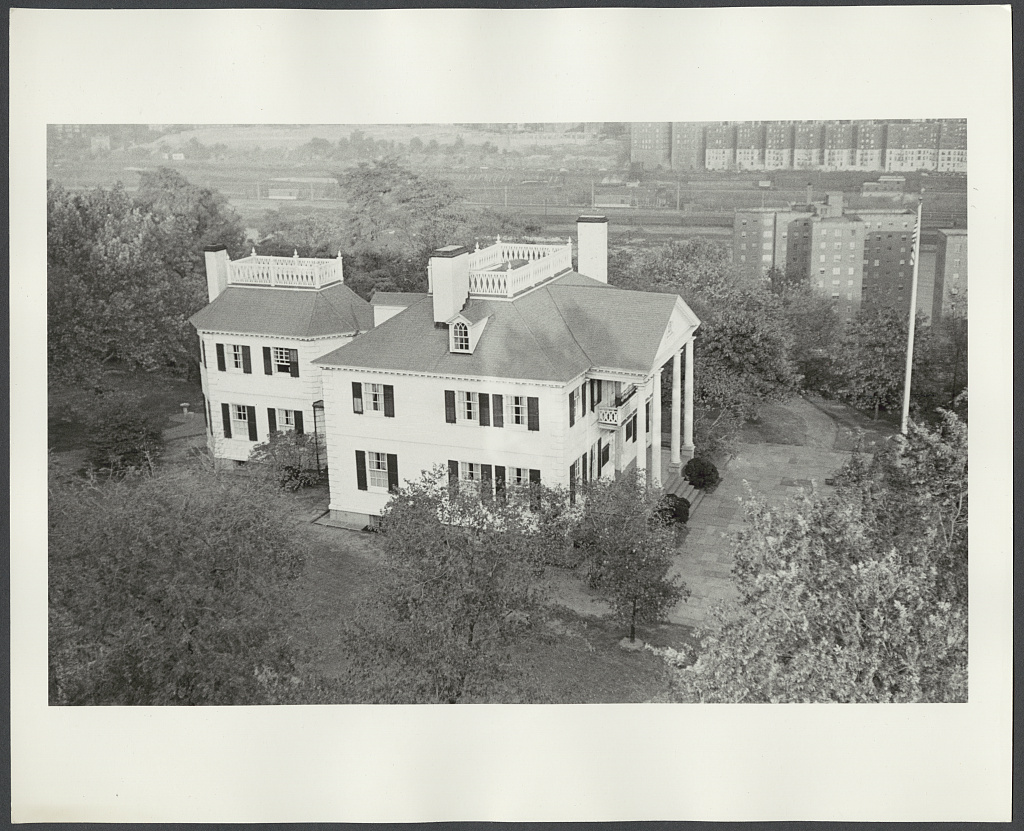
The husband was Manuel Rionda, a Spanish-born sugar magnate who made his fortune in the Cuban trade, selling something like 40% of Cuba's sugar before the 1930s. He built the place in 1910 as part of an estate called Rio Vista, roughly 300 acres of New Jersey bluff, and hired architect Charles Rollinson Lamb to design it. Lamb came from a family of stained-glass makers and had designed New York's Dewey Arch. For Rionda he gave the building a library wing, a chapel wing, and a Gothic stone face, with an office at the very top that Rionda reached by a small elevator.
What it actually was, underneath all of that, is a water tower. A wooden tank inside provided the pressure for the estate's plumbing. The most haunted landmark in Bergen County is, structurally, infrastructure.
The legend came later, and it came backwards. The name "Devil's Tower" only surfaced in the 1970s, when teenagers broke in to party and left Satanic graffiti on the walls. The pentagrams and the fake seances came first. The widow who jumped was backfilled afterward, because a Gothic tower standing empty on private land needed a reason to feel haunted, and a real death by stroke wasn't it.
The ritual never even settled on its own rules. Some tell it as three laps in reverse to summon Mrs. Rionda; others say six laps summons the Devil himself. The tower sits sealed now, its doors and windows blocked, inside a gated community that still carries the estate's old name. You can't legally walk up to it. The circling never stopped.