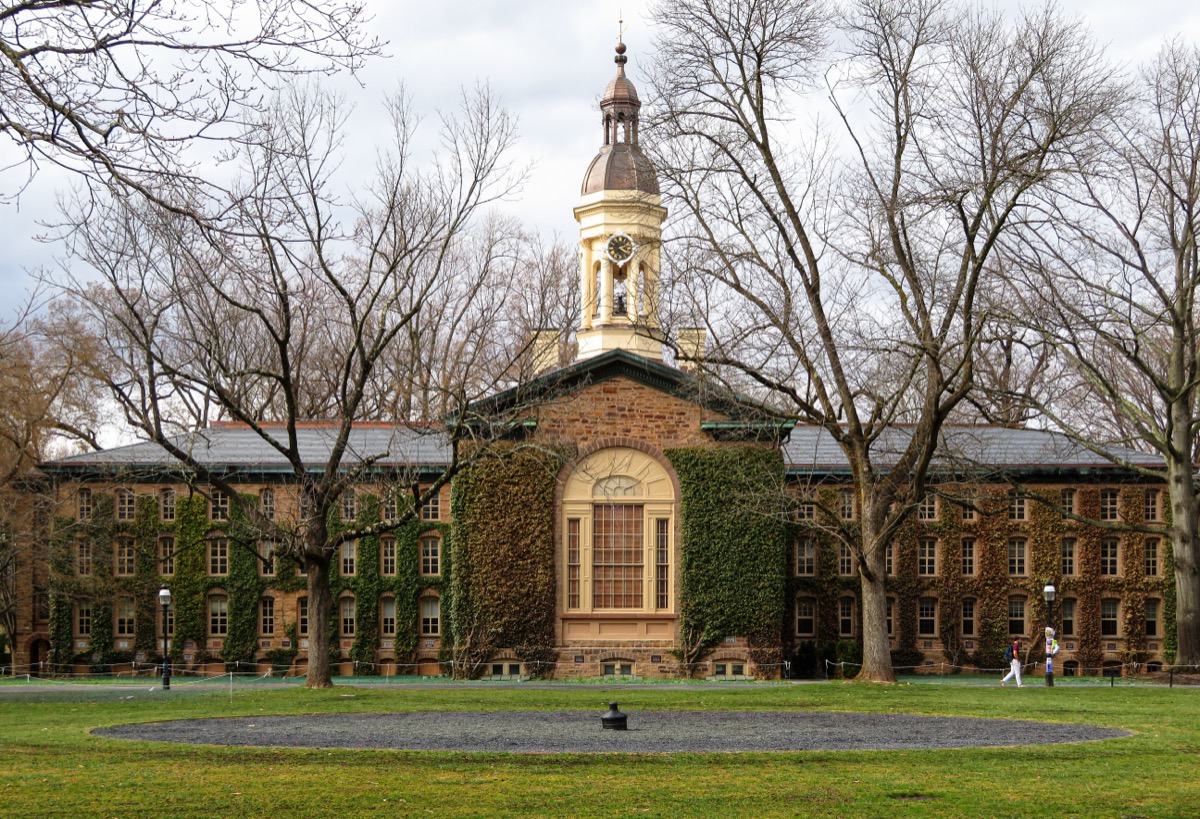
Nassau Hall in Princeton, New Jersey holds a portrait frame that has outlived two men. A 1777 cannonball tore the head off King George II inside it. The college's second president, dead since 1757, is said to walk the building still.
There is a portrait frame inside Nassau Hall in Princeton, New Jersey that has outlived the two men who hung in it. The first was King George II. A life-size portrait of him arrived at the college in January 1761 and hung in what is now the Faculty Room. Sixteen years later, almost to the month, a cannonball came through a window and destroyed it.
That was January 3, 1777, the Battle of Princeton. British troops were holding the building when George Washington's forces opened fire. One ball glanced off the south wall, where the damage is still visible. Another found the window and the king's portrait behind it. The 1783 Trustees minutes record the canvas plainly as "the picture of the late king of Great Britain, which was torn away from the American artillery in the battle of Princeton." Tradition adds that the ball took the painted head clean off, though that detail belongs to the legend's telling, not the record.
Tradition also hands the shot to Alexander Hamilton's artillery company. Princeton's own archivists say the story is "impossible to fully confirm or refute" from surviving records. What is certain is the frame. The trustees commissioned Charles Willson Peale to paint Washington, and they hung the new portrait in the very same gilded frame the king had occupied. The empty frame outlived the king inside it.
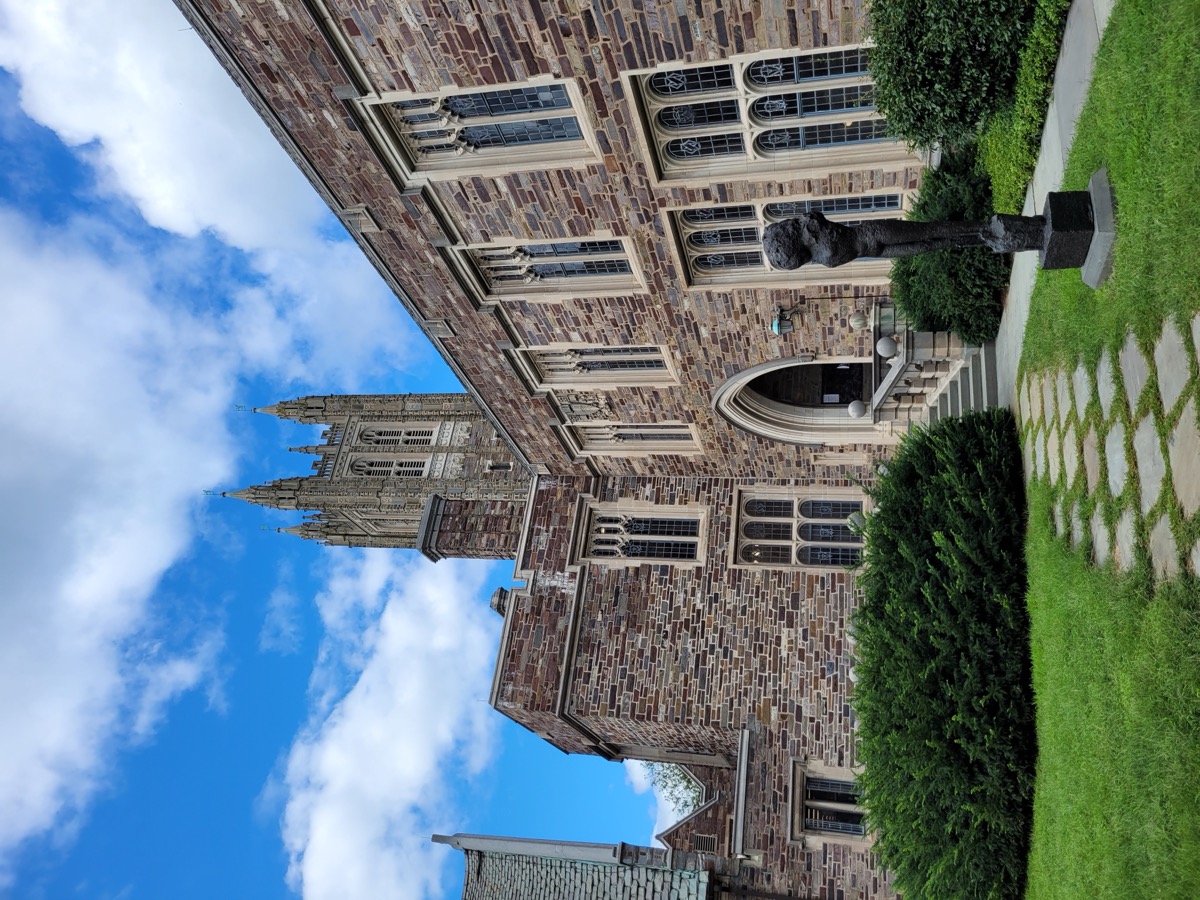
The building has carried a great deal. It was the largest stone building in the colonies when it was finished in 1756, and for four months in 1783 it was the seat of the United States government, after a mutiny over back pay drove Congress out of Philadelphia. Congress met in the second-floor library, received the final peace treaty with Britain there, and formally thanked Washington for his service. The building burned twice after that, in 1802 and again in 1855, and was rebuilt both times. The stone walls held.
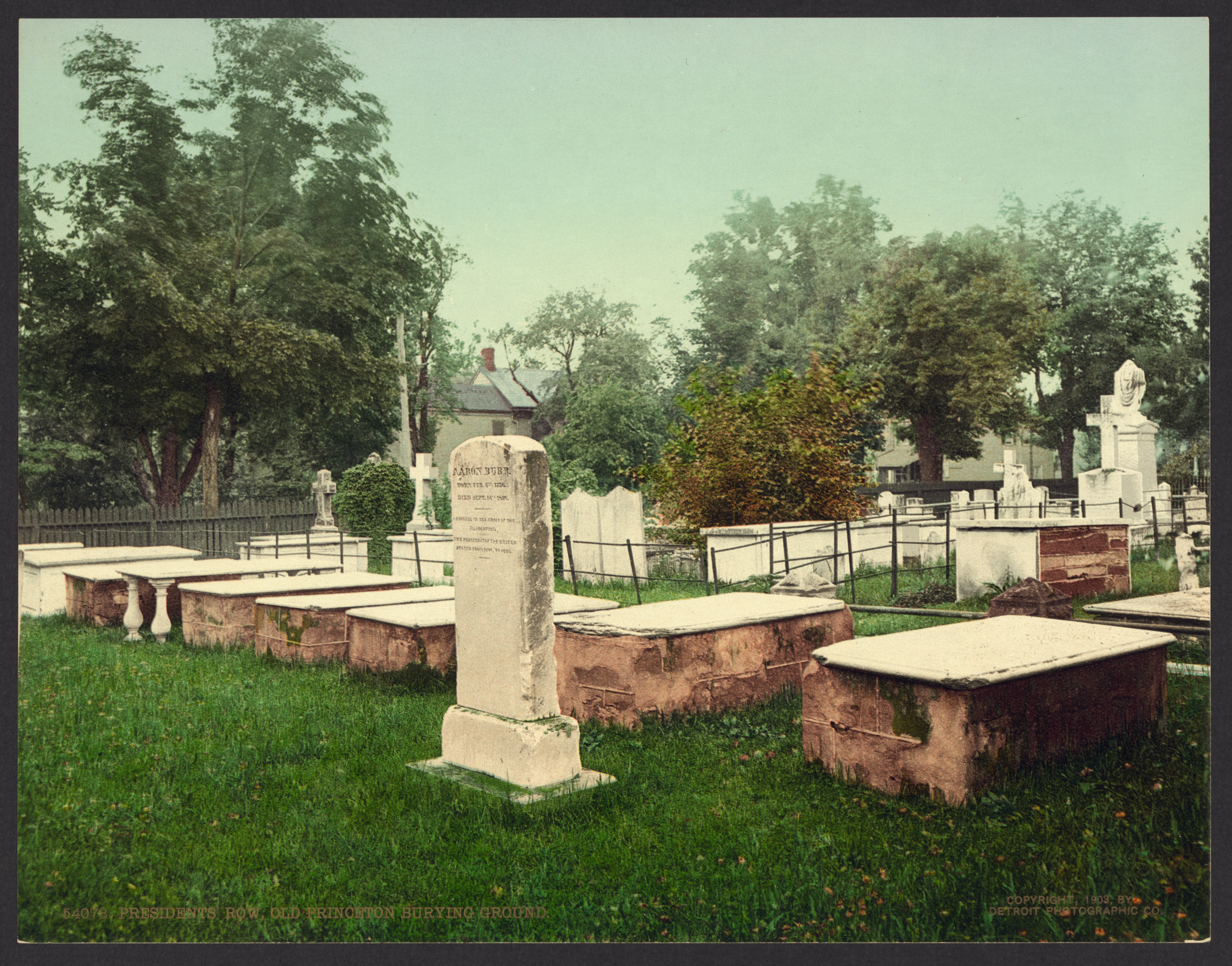
So did at least one of its tenants. Aaron Burr Sr., the college's second president, supervised Nassau Hall's construction and died in 1757 at 41, before he could see what it became. Princeton Alumni Weekly reports that his ghost "keeps mostly to the site of his old office, haunting Nassau Hall and checking up on the progress of his beloved college." His son, the future vice president, has his own older campus legend, one centered on the cemetery rather than these halls.
No named witness survives for any of it. Burr Sr. once described the building he raised as made "in the plainest and cheapest manner." He never moved out.