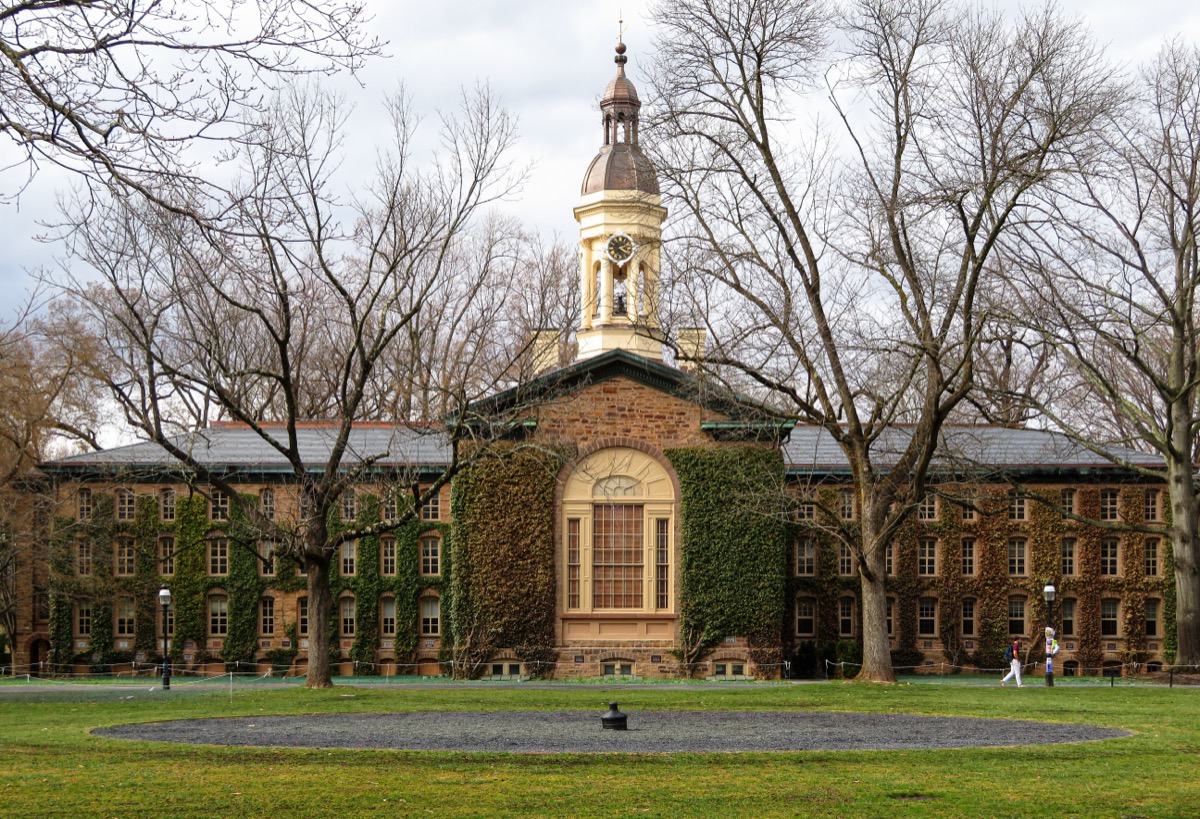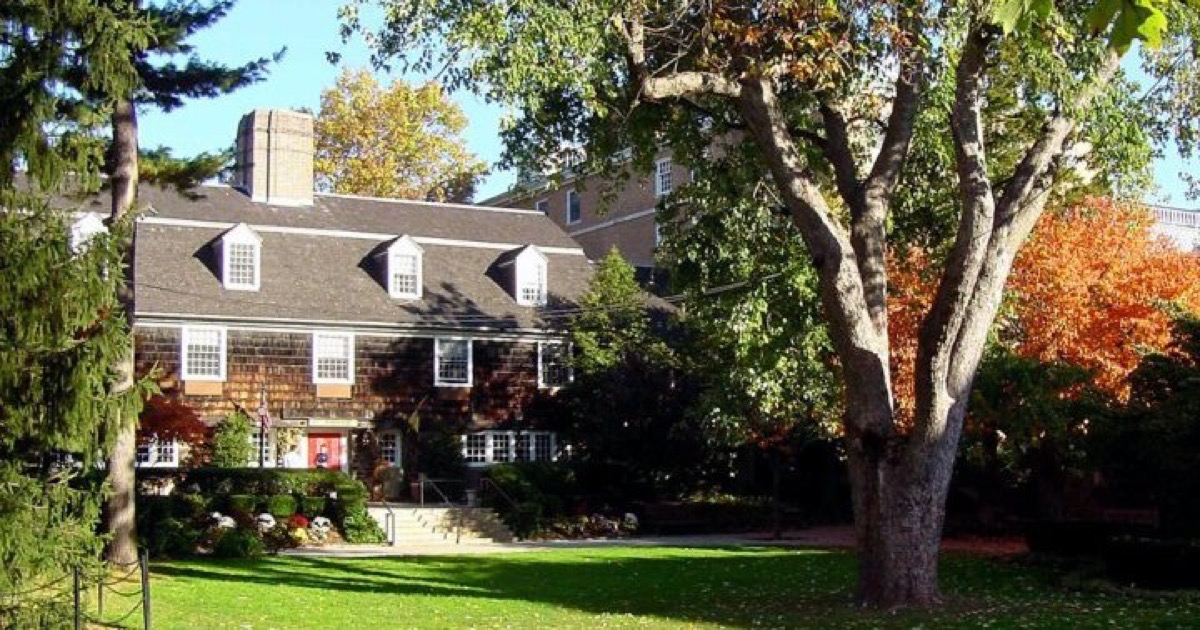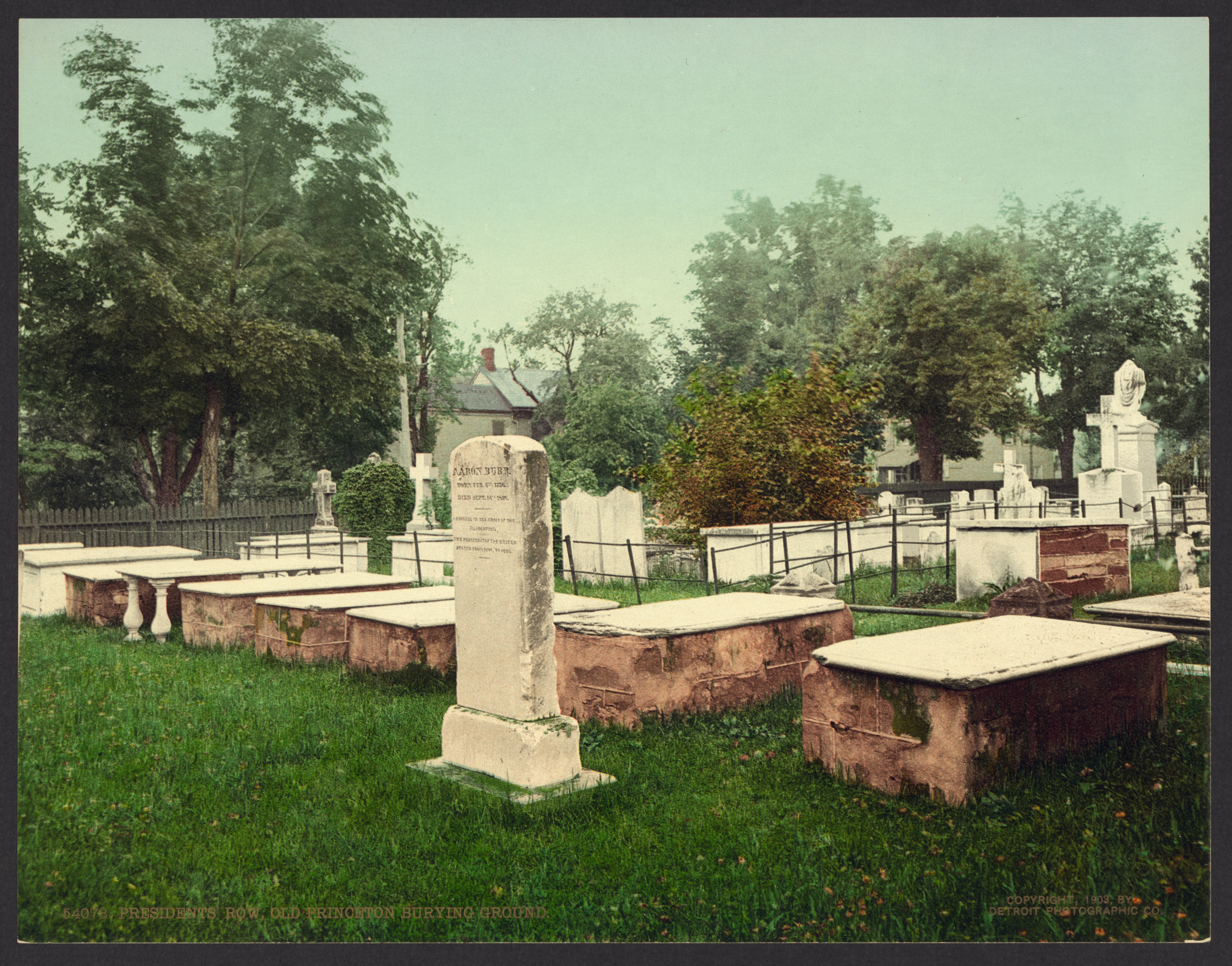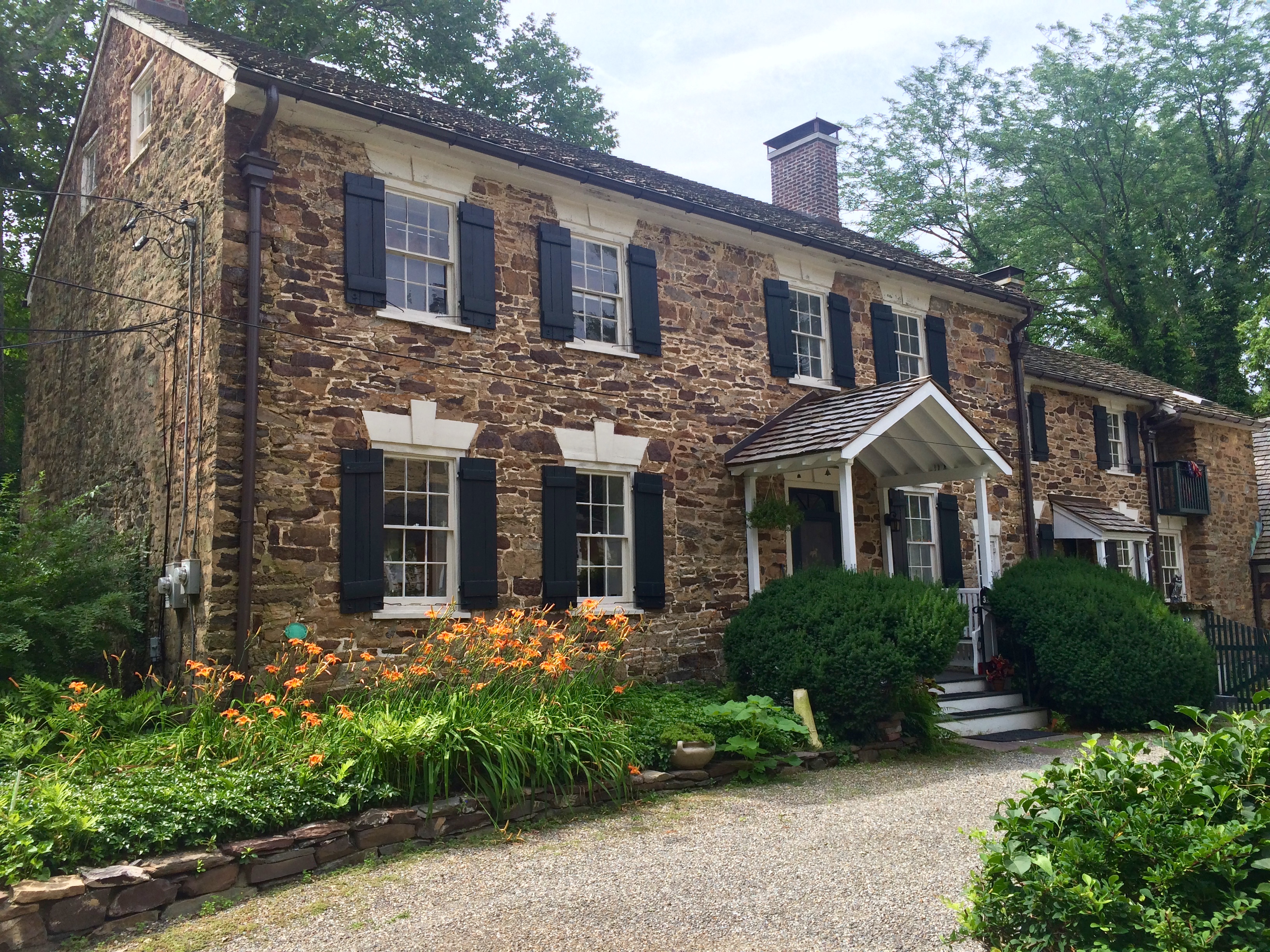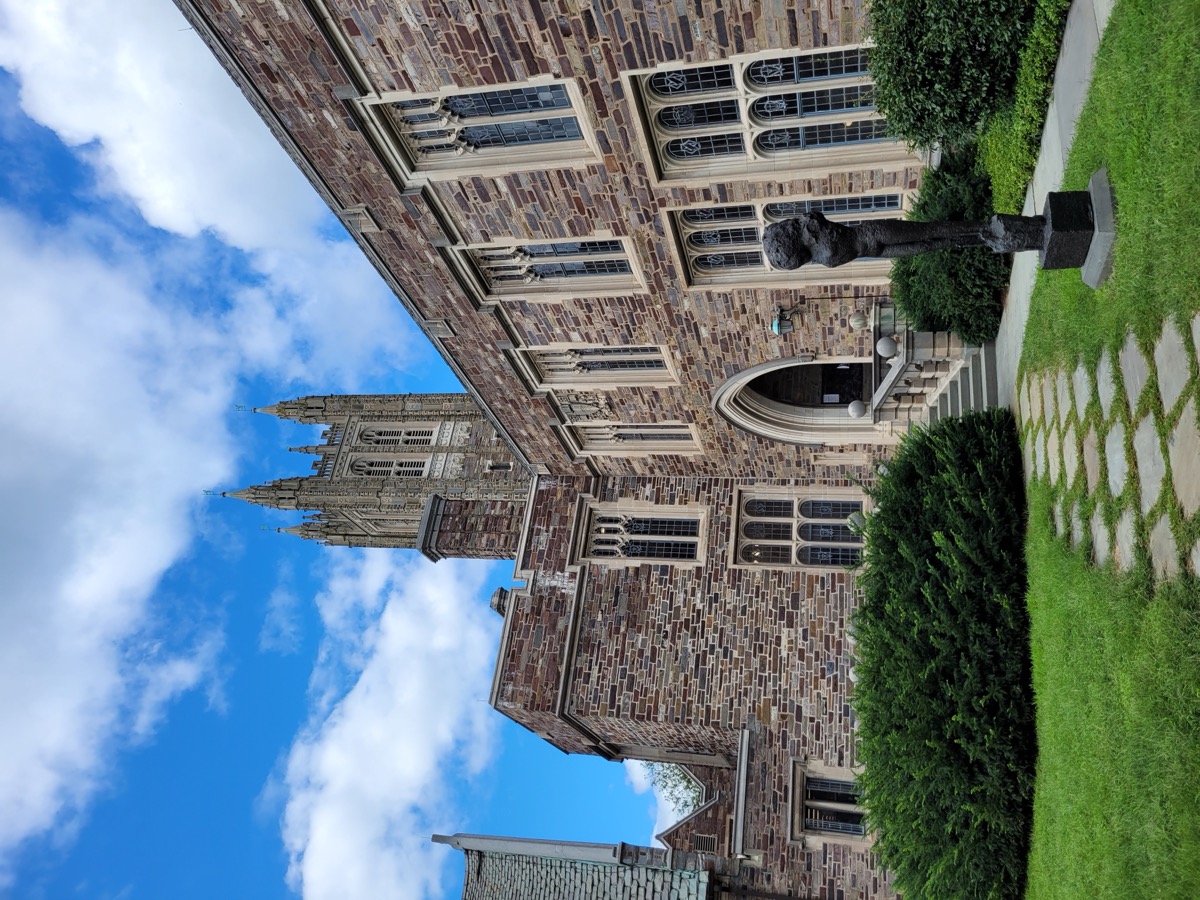
At Rockefeller College in Princeton, New Jersey, students live around a gothic quad built over a family burial ground. Workmen hit 32 graves digging the foundations in 1909, and the remains were reinterred under the arch everyone still walks through.
At Rockefeller College in Princeton, New Jersey, the ghost tours stop at a stone archway and tell you what is sealed behind it. Holder Hall's eastern arch holds a memorial tablet, and behind that tablet lie the remains of 32 people. Students pass under it on the way to class.
The graves were a surprise. In 1909, workmen digging the foundations for Holder Hall hit 32 old, unmarked graves: the family burial ground of Nathaniel FitzRandolph, the Quaker farmer who gave Princeton its land. He donated the 4½ acres where Nassau Hall stands, helped raise the money to move the college to Princeton in 1756, and was buried on his own ground in 1780. More than a century later, the campus dug straight into him. The retellings sharpen the moment into Italian stonemasons turning up skeletons in the dirt; the original records just say workmen, excavating, finding bones where bones were not supposed to be.
The university did not move the graves off the site. At the direction of the president at the time, Woodrow Wilson, the contents of all 32 were boxed up separately and reinterred under the eastern arch of the new dormitory, with a tablet set into the stone. The English inscription reads: "Near this spot lie the remains of Nathaniel FitzRandolph, the generous giver of the land upon which the original buildings of this university were erected." The arch carries a Latin line too: "In our ground he sleeps, nay, rather in his own."
Holder Hall went up that same year, given by Margaret Olivia Sage and built by the firm Day & Klauder in a Gothic that the critic Ralph Adams Cram called the highest point of its kind, a living style in stone. Rockefeller College, "Rocky," was built around those dormitories in 1982. The people who live in the quad live above a relocated graveyard, and the daily walk to the entrance runs straight under it.
The ghosts are the part the record can't reach. There is no named figure, no lady in white, no documented sighting with a room number on it. The October ghost tour cites residents' stories, and one tour-told account has a married couple in a room atop the archway watching a couch and a painting move on their own. Princeton Magazine ranks the quad second on its list of the town's most haunted places.
What the record does hold is the harder fact. The man who gave Princeton its ground is still on it, sealed in a wall students walk through without looking up.