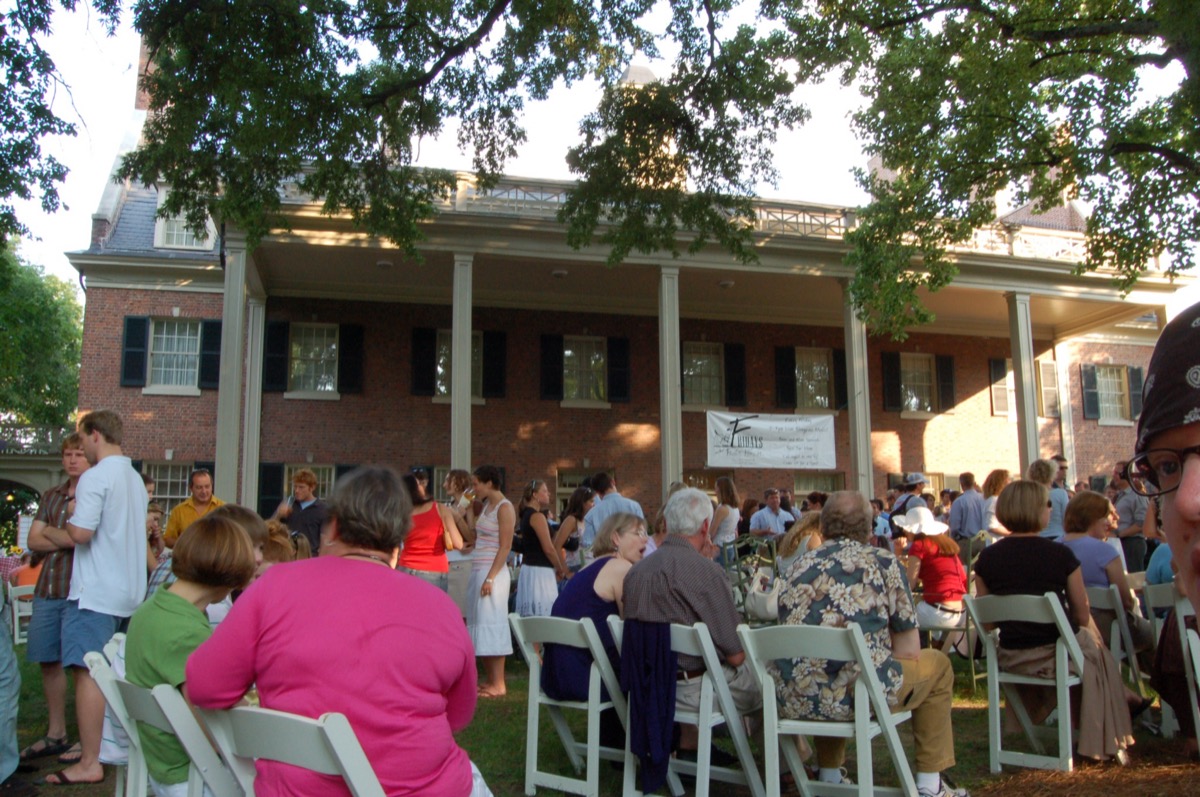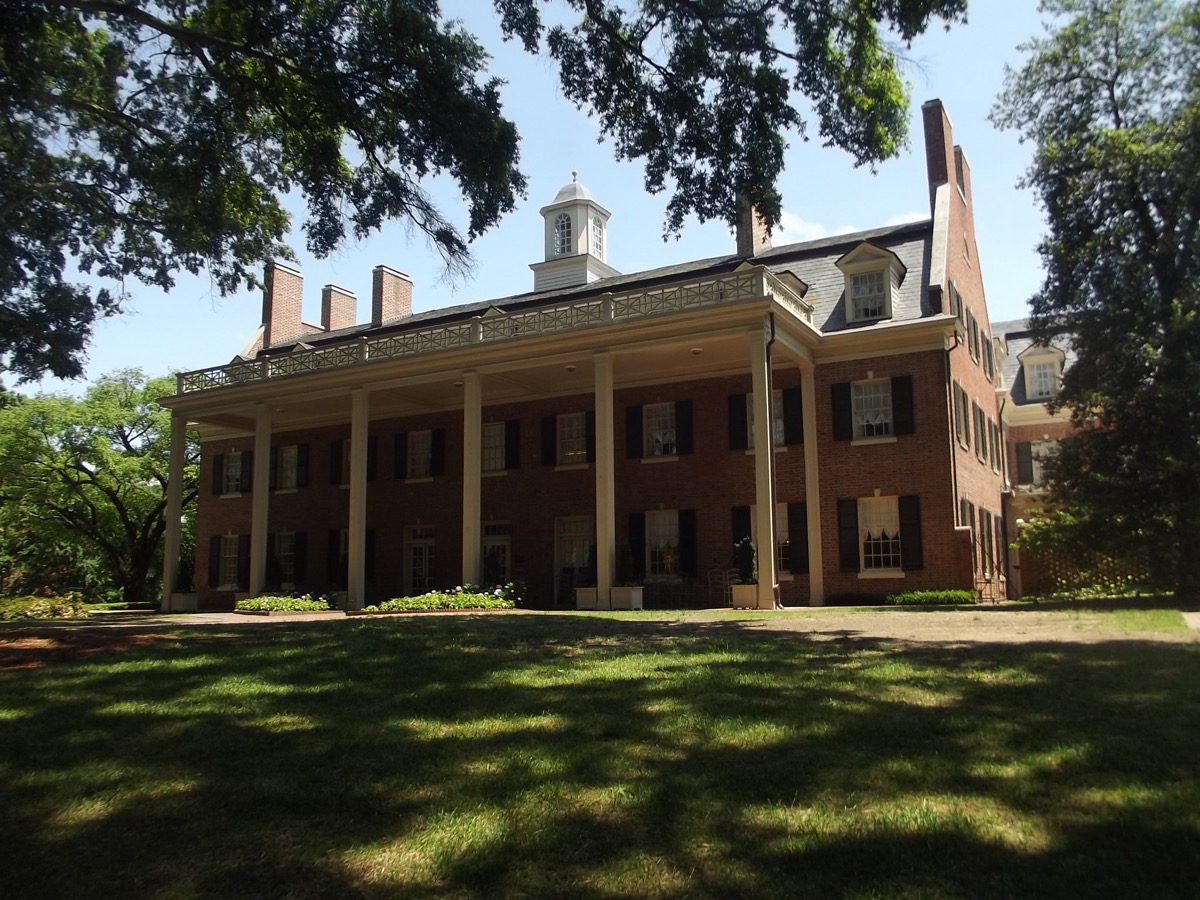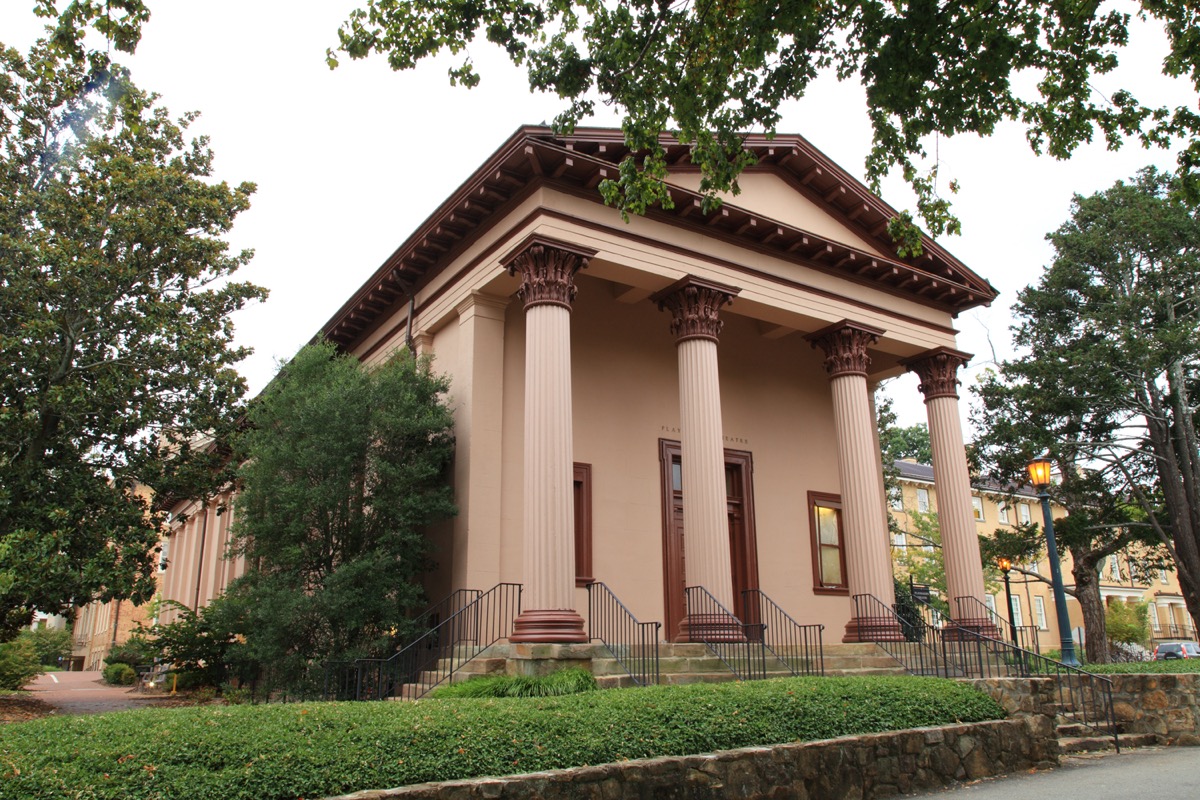
PlayMakers Theatre on the UNC Chapel Hill campus is a Greek Revival temple carved with corn instead of acanthus leaves. Chapel Hill ghost walks stop here for flickering lights and disembodied voices, in a building that was everything but a theater for seventy years.
PlayMakers Theatre, on the University of North Carolina campus in Chapel Hill, is a Greek temple with the wrong leaves. Chapel Hill ghost walks stop outside it after dark, and the thing they tell you about it is small and nameless: flickering lights and voices with no one behind them, inside one of the oldest theater buildings standing on any American campus.
The ghost has no name, no date, no story anyone can point to. That part is honest. Nobody who has reported the place has put a person to the voices, and no newspaper or record carries the haunting at all. What carries it is the tour stop, and the strangeness of the building it stops at.
Start with the leaves. A New York architect named Alexander Jackson Davis designed the place in 1850 as Smith Hall, for a little over $10,300, and when he reached the tops of the front columns he left off the acanthus leaves a Greek temple is supposed to wear. In their place he carved North Carolina's crops: ears of corn, and stalks of either wheat or tobacco depending on who is describing them. A building meant to echo Athens ended up sprouting a harvest, the leaves swapped out for the things the state actually grew.
Then there is what happened inside it. For seventy years the building was everything but a theater. It opened as a ballroom and library, became a law school, then an agricultural chemistry department, then a laboratory, and at one point a bath house. The Carolina Playmakers finally turned it into a stage in the early 1920s. Thomas Wolfe and Andy Griffith both stood on it. The country named it a National Historic Landmark in 1973.
The building has gone dark since, too. It closed from 2006 to 2010 as it fell apart, and reopened only after roughly $225,000 in emergency funding bought it new seats, new lighting, and fresh paint. The lights work again now. The tours say they still flicker on their own.
It is worth knowing what the haunting is not. Tour-goers sometimes hear about UNC's named theater ghosts, the figure called Evan and President David Swain, who was thrown from a buggy in 1868 by a horse General Sherman had given him. Both of them belong to Memorial Hall, a different building down the way. PlayMakers keeps only the lights that flicker, the voices, and the corn growing where leaves should be.