A man in a top hat walks the Springer Opera House in Columbus, Georgia, and the staff are fairly sure who he is. Edwin Booth played Hamlet here in 1876, and the legend says he loved the stage so much he never left it.
A tall man in a top hat walks the Springer Opera House in Columbus, Georgia — across the third-floor balcony, around the building, gone before anyone reaches him. The staff are fairly sure who he is. They think it's Edwin Booth, and the legend says he never left.
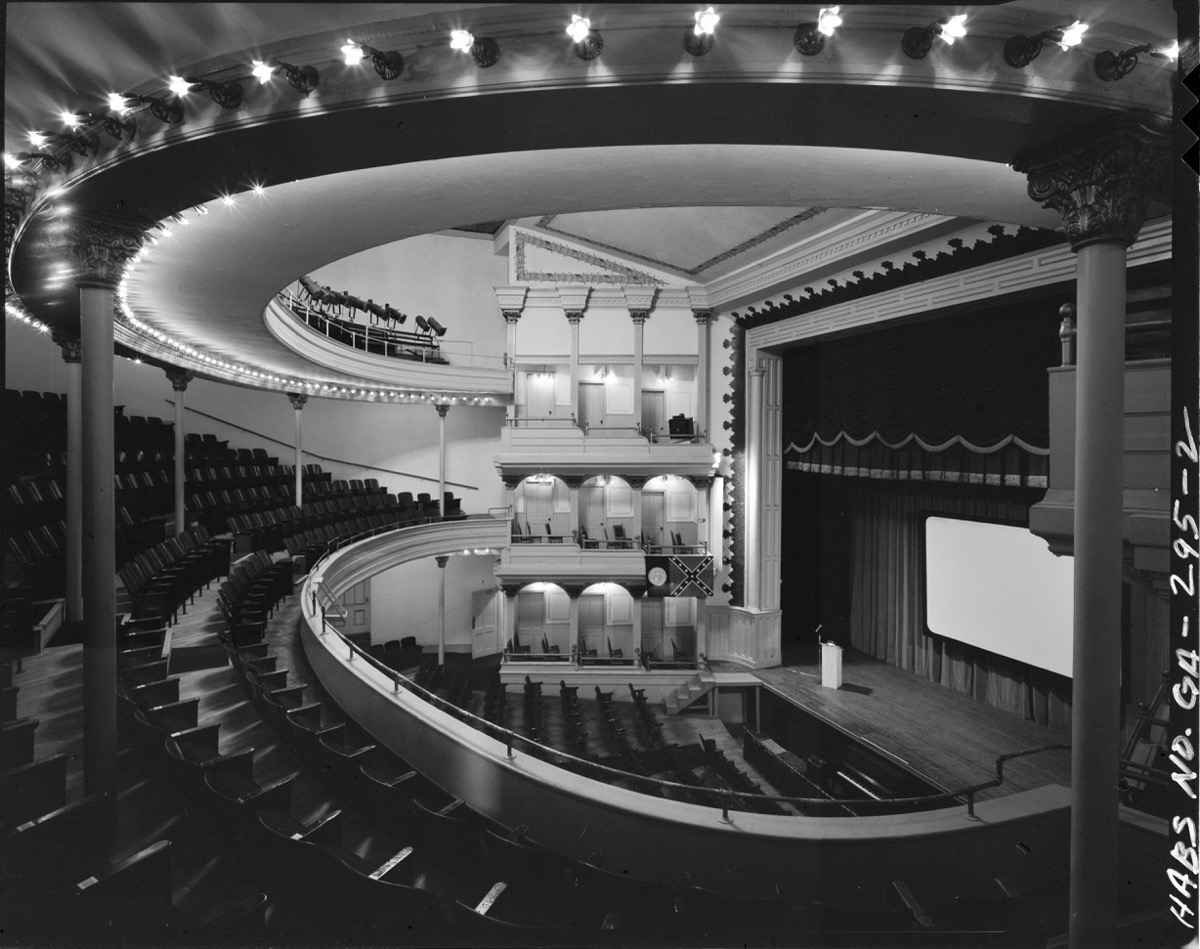
Booth was the finest Shakespearean actor in America, and the brother of the man who shot Abraham Lincoln. The assassination wrecked his career, and he spent years rebuilding it. On February 15, 1876, on his first Southern tour after the war, he stood on the Springer's stage and played Hamlet. Columbus tells it that he loved the room so much he stayed — and that his ghost will linger until Hamlet is staged there again.
It's a strange thing to be haunted by. He didn't die here; he died elsewhere in 1893. The story isn't grief or violence. It's affection. A man who came back for the room.
The activity people report fits the man. It's playful, and it tends to gather around the women in the cast and crew — most of it in the prop room, where things move. A tour guide named Aileen Fowles said she watched the top-hat figure cross the third-floor balcony and then vanish.
A second set of footsteps belongs to someone much smaller. The Springer began as Francis Springer's open-air grocery, and the older story holds that a young girl was killed by a horse in the foyer in those market days. Guides report her giggling and playing dress-up in the costume rooms. Some accounts give her a name and point to a stained tile in the lobby as her blood — but no one has found her in the record. A researcher combed the Columbus papers from 1870 to 1890 and turned up no child trampled by a horse. The name is tour lore, not a fact.
The Springer opened on February 21, 1871, and it's the State Theatre of Georgia now, working year-round. Booth's been waiting since 1876 for one particular play to come back.