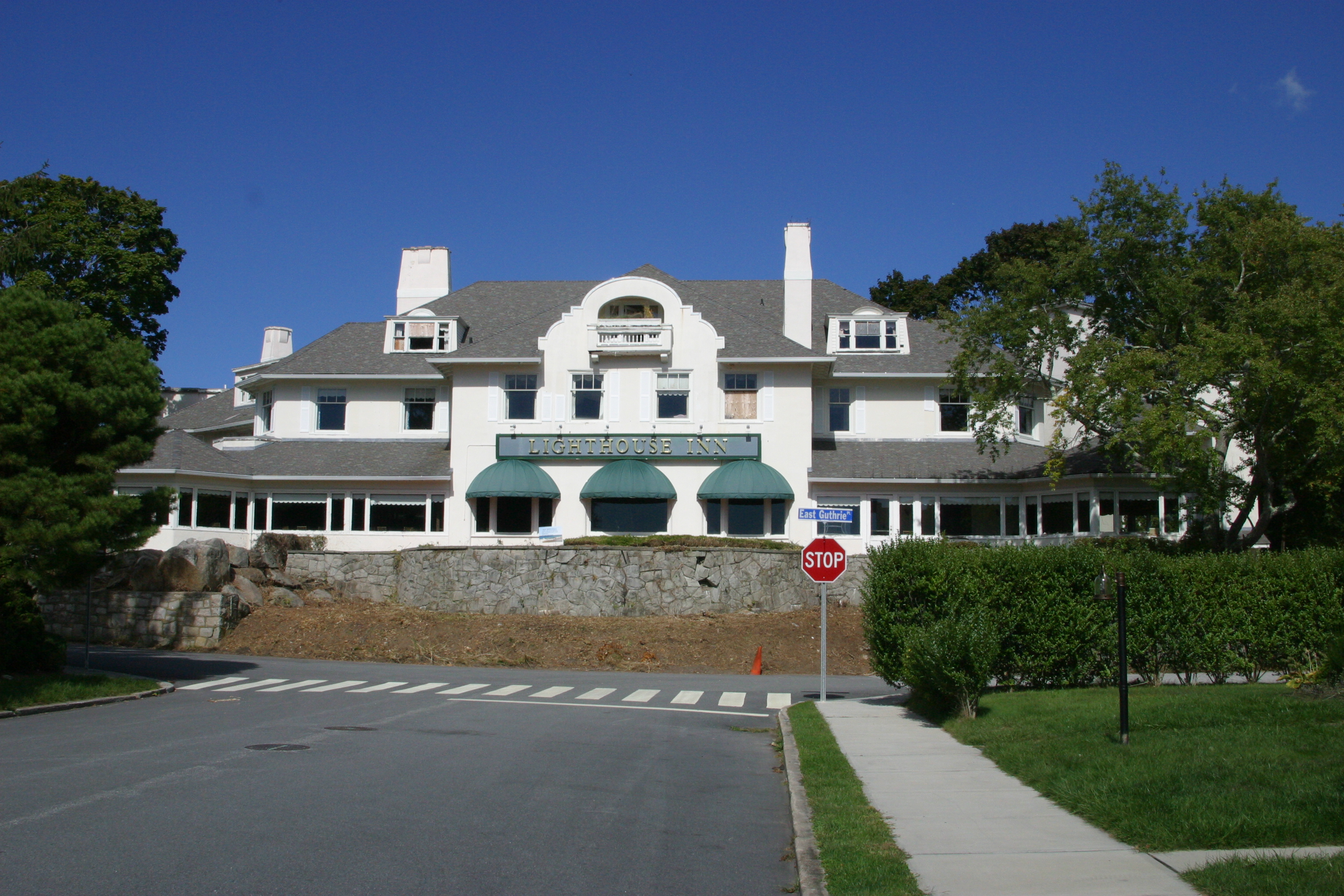
The Lighthouse Inn

The Lighthouse Inn

🏨 hotel

New London, Connecticut · Est. 1902

TLDR

The ghost of a bride who allegedly fell down the staircase during her 1930 wedding reception haunts the Lighthouse Inn, a former steel magnate's estate designed by William Ralph Emerson in 1902. A city historian says there's no record of the death, but guests keep reporting the same white-gowned figure, and Ghost Hunters' Season 1 investigation captured a 20-to-30-degree temperature drop in the tunnels beneath the inn.

The Full Story

The most popular story at the Lighthouse Inn — and one of the most widely repeated ghost legends in Connecticut — is the tale of a bride on the staircase. According to the inn's lore, in 1930, three years after the mansion became a hotel, a bride descended the ornate winding staircase during her wedding reception. She tripped. She fell. She died at the bottom, at the feet of her groom, still in her white dress. A New London city historian has noted there's no death certificate, newspaper obituary, or coroner's report to confirm the story. Whether or not it happened, guests and staff have been reporting the same woman for decades. A figure in a white gown drifting through hallways. Doors opening and closing with no one near them. The faint scent of perfume lingering near that same staircase, then gone.

The building started as Meadow Court, a summer estate for steel magnate Charles S. Guthrie. He was president of the Republic Iron and Steel Corporation, and in 1901 he and his wife Frances bought 12 acres on a rock promontory overlooking Long Island Sound. They hired architect William Ralph Emerson to design a Mission-style Colonial Revival mansion with a broad hipped roof, stucco walls, and enclosed porches flanking a central wing. The Olmsted Brothers (yes, those Olmsteds, the firm that designed Central Park) laid out the grounds. It was the kind of place where everything was done right.

Charles died unexpectedly in 1906, only four years after the house was finished. Frances eventually drifted to Long Island, started selling off parcels of the estate in 1925, and the main house became a hotel in 1927. Harbor lights visible from the property gave it the new name. By the 1940s, Hollywood stars were regular guests.

Room 26 is the trouble spot. The door opens on its own. One guest reported her bed shaking violently while an invisible force held it. She blamed the jealous bride. TVs and the electronic beds flick on and off without explanation. Staff have learned not to be startled by it, which is maybe the most telling detail: when the weirdness becomes routine, something real is going on (or everyone's committed to the bit at a pretty impressive level).

Beneath the inn, tunnels run through the foundation. Staff working down there have reported being physically touched by something they couldn't see. During the Ghost Hunters investigation (Season 1, Episode 3, making this one of the earliest locations the show ever featured), TAPS investigator Steve felt roughly 15 pounds of pressure applied to his back by an unseen force while standing in the tunnels. His teammate Kristin monitored a sudden temperature plunge of 20 to 30 degrees in the same area. The team also captured an orb on recording and a flash of light, though lead investigators Jason Hawes and Grant Wilson considered both inconclusive. The official verdict was inconclusive too, which is the most honest result a paranormal investigation can give.

The property earned a spot on the National Register of Historic Places on August 1, 1996. It sits at 6 Guthrie Place (the street named for Charles), on what used to be 12 acres of landscaped grounds with native wildflowers. The inn closed for a stretch after years of operation, sitting empty and deteriorating, before eventually reopening.

Here's what makes the Lighthouse Inn interesting as a haunting. The bride legend is one of the most widely repeated ghost stories in Connecticut. Multiple independent sources tell it. Guests who've never heard the story report the same details: white gown, perfume, the staircase. But no official record has ever confirmed it. That gap between the legend and the historical record is part of what keeps the story alive. If someone proved the bride was real, the story would actually lose something. The not-knowing is what keeps people talking about a woman on a staircase almost a century later.

Researched from 9 verified sources. How we research.