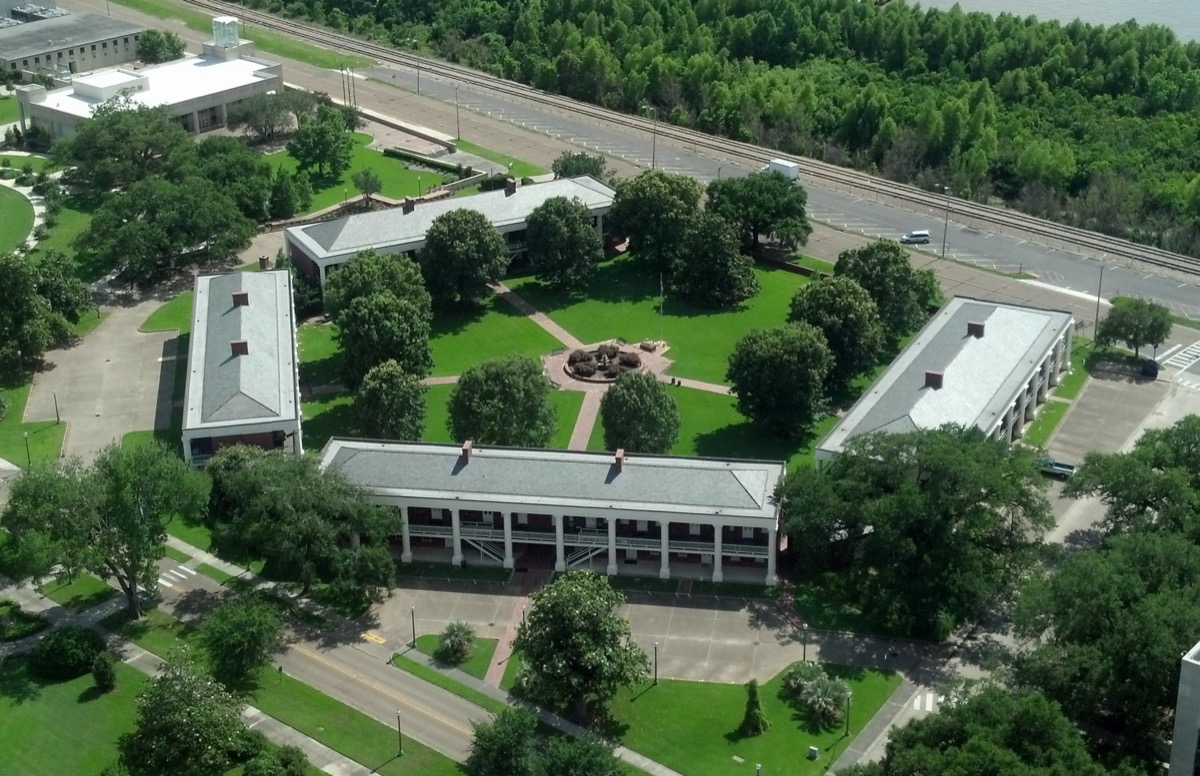
The Pentagon Barracks in Baton Rouge are working state offices and legislator apartments. The maintenance workers who unlock them describe a black, featureless figure they call the Shadow Man, and some legislators have refused to move in at all.
The Pentagon Barracks in Baton Rouge, Louisiana aren't a haunted attraction. They're working state offices and private apartments for legislators, closed to the public. But the people who unlock the buildings each morning describe something the state never put in a brochure: a black mass in the shape of a man, with no visible features, that moves through the apartments while they make repairs.
The maintenance workers call it the Shadow Man. Some say they came face-to-face with it. Some say they felt that it meant to do them harm. The lore never spread through marketing, because there is none here. It spread through the staff who open the doors each morning and the lawmakers who sleep behind them, and it spread far enough that some legislators have chosen to move out, or refused to move into the apartments at all.
The buildings were old before any of this. Soldiers finished four identical two-story brick buildings by 1825, set as four sides of a regular pentagon on the bluff above the Mississippi, fronted by Tuscan columns and two-story galleries around a central courtyard. The geometry is where the name comes from. The names that passed through read like a textbook: Zachary Taylor commanded the post when he was elected president, and Lee, Grant, Davis, Custer, and Lincoln all moved through at one point or another.
Then the war. Louisiana militia seized the post in January 1861. Union forces took it back in 1862 and held it through the rest of the fighting, and the Battle of Baton Rouge that August left hundreds dead on both sides. The barracks are also said to be haunted by phantom soldiers of both armies, Union and Confederate, tied to those casualties.
The army left in 1879. LSU leased the buildings in 1886 and housed cadets, and later co-eds, here until the mid-1920s, before the state took ownership in 1951. Today they hold a small museum, the Lieutenant Governor's offices, and the private apartments, with the interiors closed to the public. Among the oldest standing structures from the country's military presence in the Louisiana Purchase territory, and nobody outside the building was ever meant to know what walks the halls inside it.
Paranormal author Bud Steed traced the whole legend to one conversation, more than twenty years before his 2013 book. A retired grounds maintenance man in Baton Rouge told him the barracks were "haunted and quite spooky, especially at night." He'd worked there. He'd have been one of the people who unlocked the doors.