On a stretch of Highland Road south of LSU in Baton Rouge, drivers report ragged Confederate soldiers crossing the road, most often in early fall. They never reach the other side, and the battle people blame was fought miles away.
On Highland Road in Baton Rouge, on the stretch that runs south of LSU's campus from around Lee Drive down to Gardere Lane, drivers keep seeing men cross the asphalt who aren't there when they look again. They're described the same way each time: ragged, bloody, in Confederate uniforms, walking like men who never made it to the other side. The sightings cluster in a narrow window every year, late September into early October.
The official Baton Rouge tourism office tells it plainly. "Around late September to early October, locals have reported seeing men in Confederate soldier uniforms walking across Highland Road near Lee Drive close to LSU's campus."
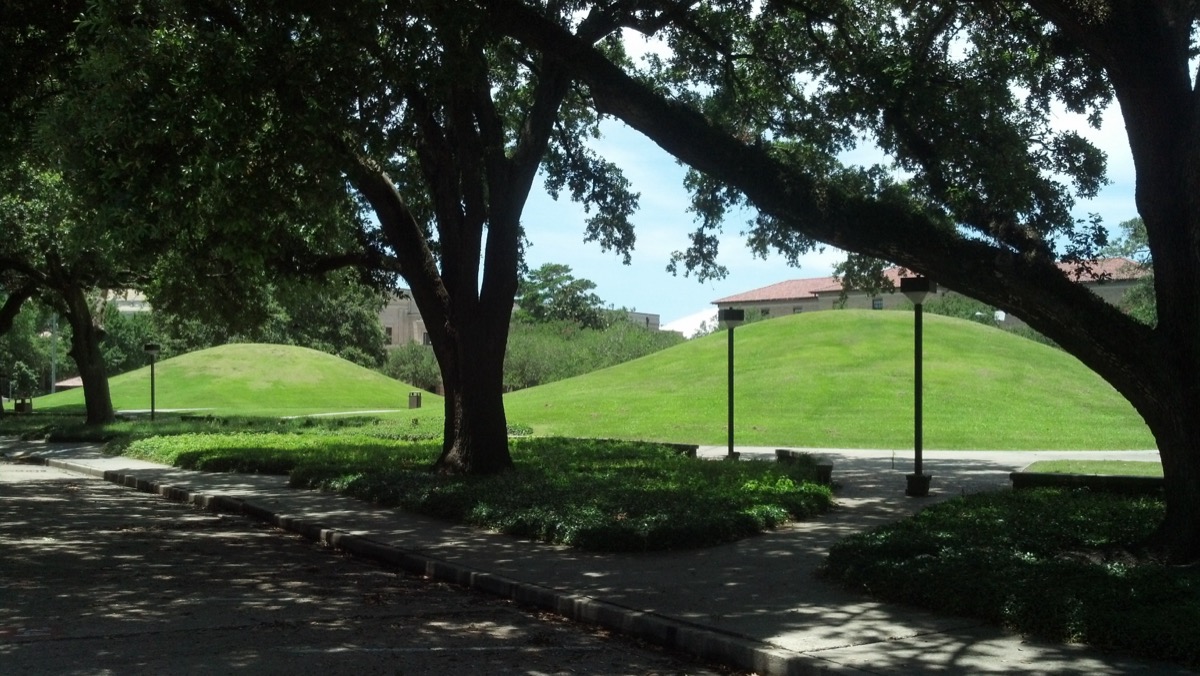
There's no building here to point to. Most haunted places give you a room, a hotel, a cemetery you can walk into. This one is four miles of oak-shaded road, and the figures appear on the pavement and then they don't.
The most-repeated version is a single call. The story goes that someone phoned the police to report a bloody, filthy man in a uniform staggering across the street, and when officers arrived they found no one. That account is the one that gets the legend told and retold. It's also the one nobody can stand behind. It comes from a 2013 book, *Haunted Baton Rouge* by Bud Steed, which says the sightings were called in. When the local magazine [225] went looking for a news record of it, they came up empty, and said so: they hadn't found anything to corroborate it. No named witness exists for any of it. The accounts are all "locals," "drivers," people who saw something on the way home and told someone else.
People tie the figures to the Battle of Baton Rouge, fought August 5, 1862. That part is real, and it was a bad one. Confederate General John C. Breckinridge marched on the city with over 5,000 men, but heat and illness cut his force almost in half before he attacked. The Union commander, Brigadier General Thomas Williams, was killed in the fighting. Out on the river, the Confederate ironclad CSS Arkansas lost her engines, and her own crew set her afire rather than let her be taken. Breckinridge was driven back. The dead are in the ground at Magnolia Cemetery and the Baton Rouge National Cemetery.
Except the fighting happened downtown, several miles north of this road. The heaviest combat ran through the cemeteries off Florida Street, nowhere near the Lee Drive corridor. No record connects the 1862 battle to this stretch of Highland Road at all.
So the soldiers keep crossing a road they never fought on, in a season nobody can explain, in a story the one source who told it couldn't prove.