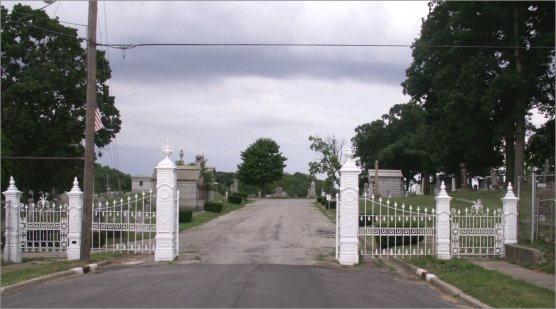
A bride in a wedding gown drifts the headstones of Greenwood Cemetery in Decatur, Illinois, weeping, reading the names as if she's looking for someone. She's the most-seen of the dead here, at a place whose haunted fame partly started as a newspaper hoax.
At Greenwood Cemetery in Decatur, Illinois, the figure people see most often is a bride. She drifts between the headstones in a white wedding gown, weeping, leaning toward the markers and reading the names, as if she's searching for one she can't find.
The story goes that she planned to elope in the early 1930s — one last delivery, and then her bootlegger fiance would take her away. A rival killed him first and dumped his body in the Sangamon River, which runs near the cemetery. She broke down in public, and not long after she was pulled from the same river. They buried her in her wedding dress. No record names her, and the whole account is told as legend rather than history.
At Greenwood you can't always tell which dark thing is true. Some of it plainly is. During the Civil War, a prison train of Confederates carrying yellow fever passed near here, and the dead were hauled by wagon to a mass grave on a hillside — buried so fast that, as one account puts it, "it is believed that some of those soldiers may not have actually been dead." Years later spring flooding collapsed the hill in a mudslide and mixed the remains together. What could be recovered was reburied under stones reading "Unknown U.S. Soldier." People still report lights flickering in those southeastern hills.
And then there's the part that was simply invented. In 1936 a Chicago reporter named Robey Parks and a farmhand named John Barker made up a gang of cutthroats they called the "Hounds of Hell's Hollow" and printed it as fact. The hoax was eventually exposed. But the local paper says the spookiness proved "hard to bury," and Greenwood's reputation as one of central Illinois's most haunted spots only grew.
So it sits there at the dead end of Church Street, the oldest cemetery left in Decatur: part documented tragedy, part fabrication, and the bride moving headstone to headstone, reading every name.