At Fort William Henry in Lake George, New York, the archaeology keeps confirming the ghost stories. Staff named a dragging-footstep ghost the Limper. Then a 1954 dig pulled a human scalp off the side of an unexploded mortar shell.
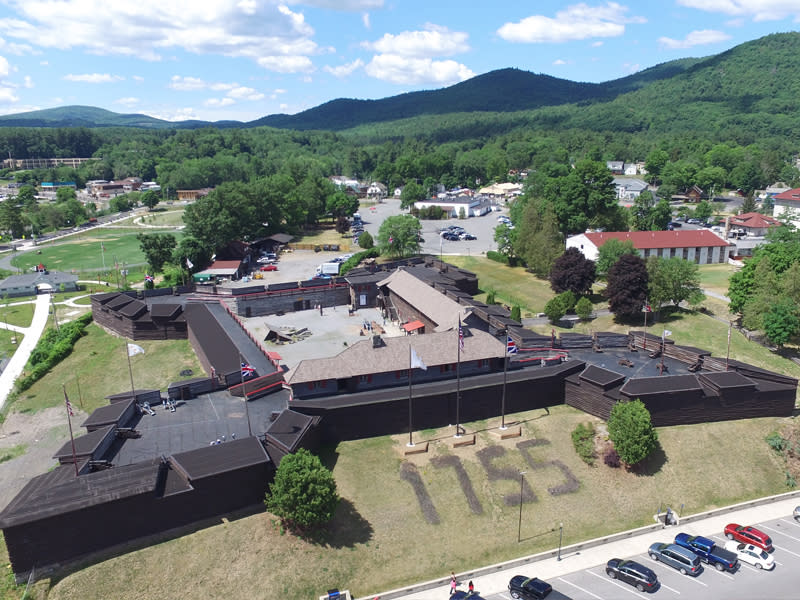
At Fort William Henry in Lake George, New York, the guides heard him for years before they ever named him. An uneven, dragging footstep crossing rooms with no one in them. They call him the Limper. The story they tell is that a skeleton with an amputated leg turned up under the fort during the reconstruction, though no dig report confirms it, and the name stuck anyway.
He isn't the only one with a name. There's the Slammer, who shuts doors in guides' faces, and Mary, who leans in close on the staircase and whispers the same three words. "Hurry up, hurry up, hurry up." Down in the Dungeon, the underground room that served as the field hospital during the siege, people report a shadow that doesn't belong to anyone standing there. In the powder magazine, a voice tells visitors to leave, and guides describe unseen officers reprimanding them for stepping into rooms that were once their own. SyFy's Ghost Hunters spent a 2010 episode chasing all of it, and the fort leans in now, with after-dark tours, overnight investigations, and a place on New York's official Haunted History Trail.
The fort earned its dead. Sir William Johnson ordered it built in September 1755, and in early August 1757 the French general Montcalm arrived with roughly 8,000 troops and laid siege. The British garrison surrendered after six days. The terms were generous, full honors of war and a safe march to Fort Edward. But Montcalm's Native allies had been promised the spoils and got nothing, and when the British column retreated, they attacked it. How many died is still argued, with estimates ranging from under 200 to as many as 1,500. James Fenimore Cooper turned that massacre into *The Last of the Mohicans*.
Then the dead started coming up out of the ground. When archaeologists excavated the ruins in 1953 and 1954, one crew pulled a never-exploded mortar shell from a barracks foundation, and stuck to its side was a piece of human scalp, black hair still attached. Inside the fort they opened a mass grave of five men, the sick and wounded who couldn't make the march. Three had been shot in the knee. One had been decapitated. All five bore axe and knife marks.
The archaeologist David Starbuck has said hundreds more skeletons likely still lie under the modern parking lot. Ground-penetrating radar has never been allowed to go looking.