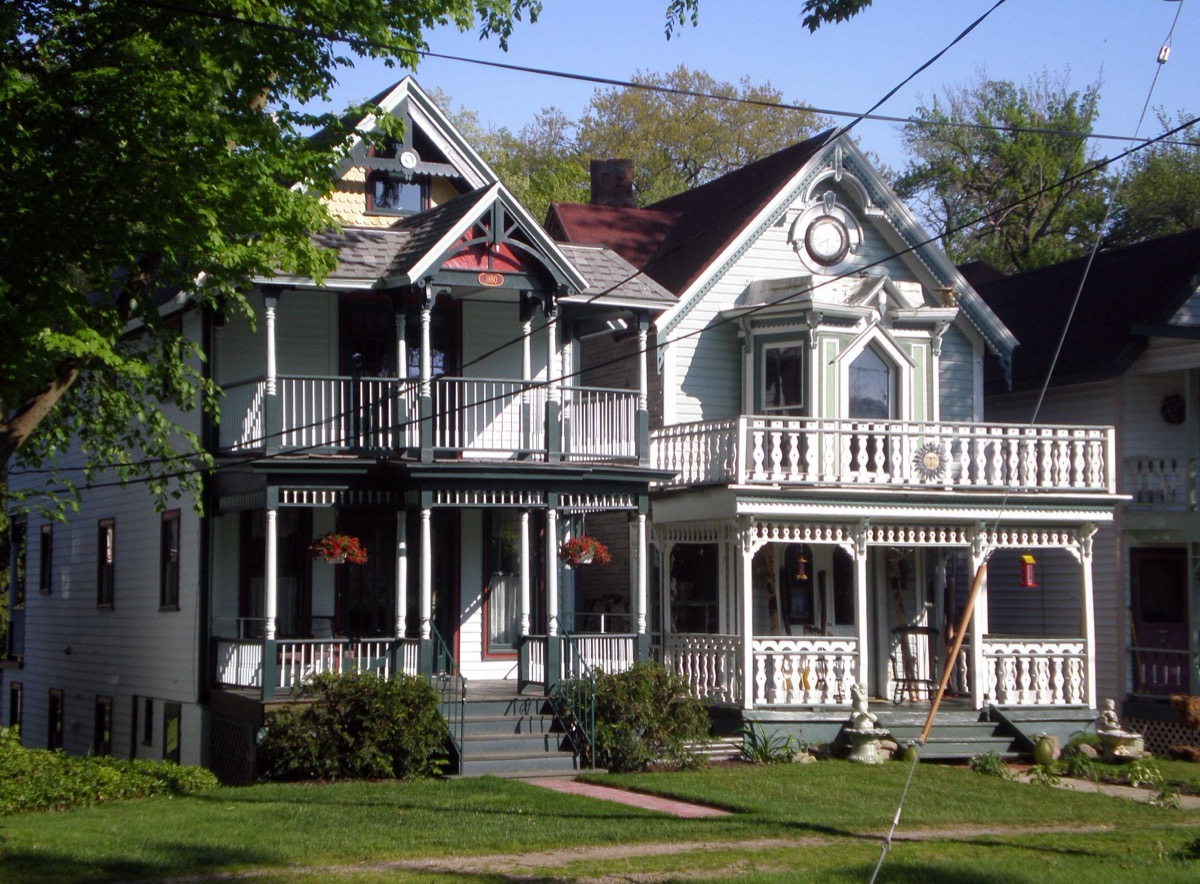
Lily Dale, New York is the oldest Spiritualist village in the world, a town where mediums audition for the right to speak to the dead. Inside its Assembly Hall, visitors keep seeing a bespectacled man in Victorian clothing standing near the podium. Nobody knows who he is.
In the Assembly Hall at Lily Dale, in Chautauqua County, New York, visitors keep seeing a man near the podium. He wears Victorian clothing and a pair of spectacles, and he walks the front of the hall as if he has business there. People describe cold spots around him, a sense of someone present in a room they thought was empty. The ghost-lore tellings agree on the picture but not on much else, and on one point they go silent: no one can say who he is. There is no name, no death record, no documented figure the village can tie him to.
What there is, instead, is the town. Lily Dale is the largest and oldest continuously operating Spiritualist community in the world, founded in 1879 on the shore of Cassadaga Lake, and roughly 275 people live there year-round. Several dozen of them are working mediums who make their living talking to the dead. None of them got to hang out a shingle on faith. To register at Lily Dale, a medium clears a vetting process the Smithsonian clocked at about two years: public outdoor message services, small Monday Night Circles of mini-readings, and private sittings, all judged by the Assembly board and the Mediums League, with re-registration every year.
The whole faith traces to two girls. In 1848, in Hydesville, New York, sisters Maggie and Kate Fox said they were rapping out messages with a dead peddler. The country believed them. Forty years on, Margaret stood before a crowd and confessed she had made the raps by cracking her own joints, then took the confession back within the year. The cottage where it started was hauled to Lily Dale in 1916 and kept as a shrine until it burned in 1955. A monument marks the spot now, and the village museum, set in an old one-room schoolhouse, still keeps Fox sisters memorabilia behind glass.
The town leaned all the way into it. The National Spiritualist Association of Churches, founded in 1893, sits on the grounds, and the Marion H. Skidmore Library holds the largest collection of Spiritualist books in the world. In summer, roughly 22,000 visitors come through for readings and demonstrations. Out past the village, a trail runs through Leolyn Woods to the Inspiration Stump, a wide flat tree stump where mediums deliver public messages twice a day in season. The pines around it are old, some of them four hundred years.
A town built on a confession that was taken back, certifying people to carry messages from the dead. And in its main hall, a dead man nobody can identify keeps showing up to listen.