Drivers on the parkway above the Holston River report a white figure on the bluff at Rotherwood Mansion. For generations she's been called Rowena Ross, a grieving bride. The physician who has owned the house for thirty years has a stranger idea about who it is.
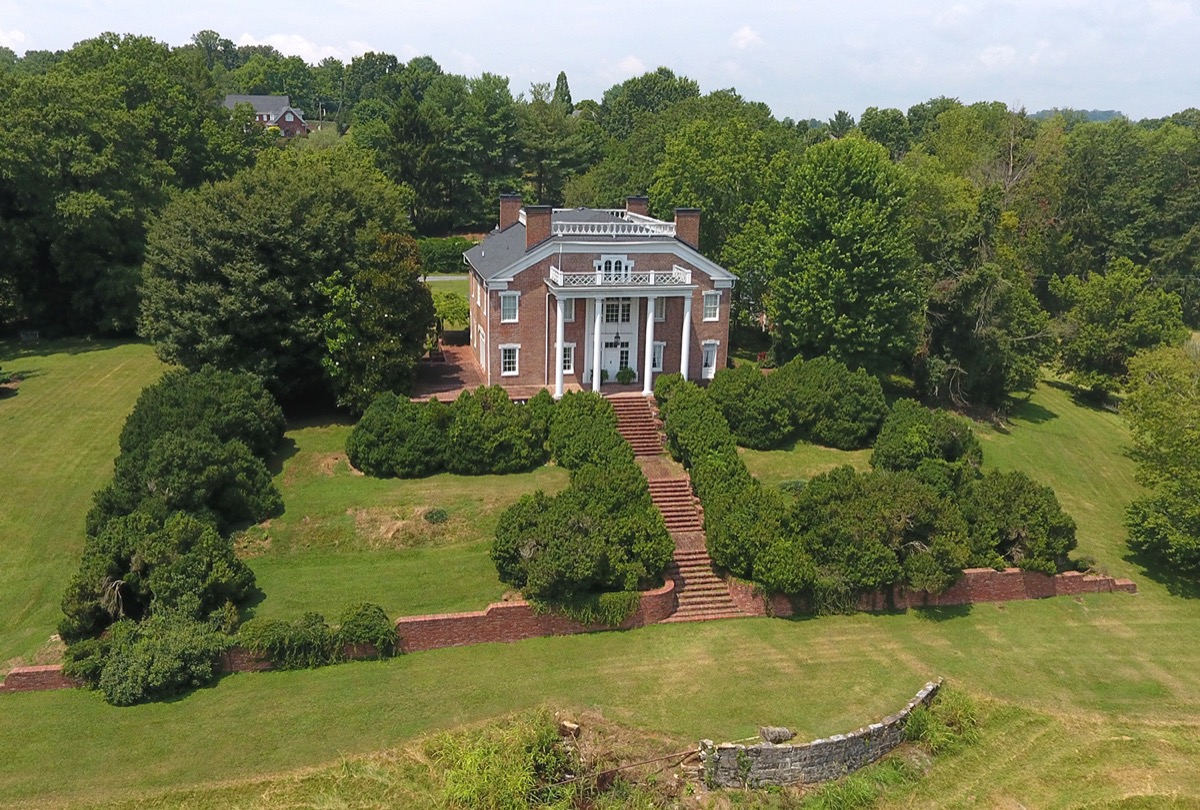
Late at night, drivers on the parkway above the Holston River, just outside Kingsport, Tennessee, have reported a white figure standing alone on the bluff below. It's the Lady in White, the oldest ghost at Rotherwood Mansion, and for generations people have given her a name: Rowena Ross.
Rowena was the builder's daughter. Reverend Frederick Ross began the house in 1818, on the bluff where the north and south forks of the Holston meet, and named it after Cedric the Saxon's estate in Sir Walter Scott's *Ivanhoe*. The legend says Rowena's first love drowned in that river when his boat capsized before they could marry, and that grief has kept her at the water's edge ever since, searching for him in the dark.
The strangest version of the story doesn't come from a ghost hunter. It comes from the physician who has owned Rotherwood for roughly thirty years, and who calls herself a skeptic and has never once seen a figure. Her favorite telling flips the legend inside out. The Lady in White, she thinks, may not be the grieving bride at all. It might be the drowned man, climbing back up the riverbank, leaving wet footprints up the front steps to the door, still looking for the woman who once answered him. "It could be the fiancée that actually drowned in the river come looking for his lost love," she said. She doubts Rowena is even the ghost. Rowena, she points out, never actually lived in the house.
The family didn't keep it. Ross went bankrupt when his mills failed, and around mid-century Rotherwood passed to Joshua Phipps, who worked it as a plantation and is remembered, in every account, as a cruel and violent slaveholder. Phipps died in 1861. The legend, traced to the testimony of an enslaved boy at his deathbed, says a thick swarm of flies descended on him, filled his mouth and nostrils, and suffocated him. At his funeral, the story goes, a black dog leapt from the open casket and bolted down the hill. A black dog is still reported roaming the grounds, howling on stormy nights. And of all the spirits people place inside the walls, Phipps is the restless one, said to yank the covers off beds and stand at the foot of them, laughing.
The one person who could settle any of it is the skeptic who has lived above the river for three decades. She's watched the whole time and come away with nothing she'd call a ghost. "I've not had anything that definitely says to me that this is a ghost," she said. What she has instead is a better version of the story than the one she was handed. The woman most able to bury the Lady in White has spent thirty years making her more interesting.