Fort Ticonderoga in upstate New York keeps a ghost named Nancy Coates, a widow who walked into Lake Champlain over a general who jilted her. People report her on the lakeside paths to this day. No record says she ever lived.
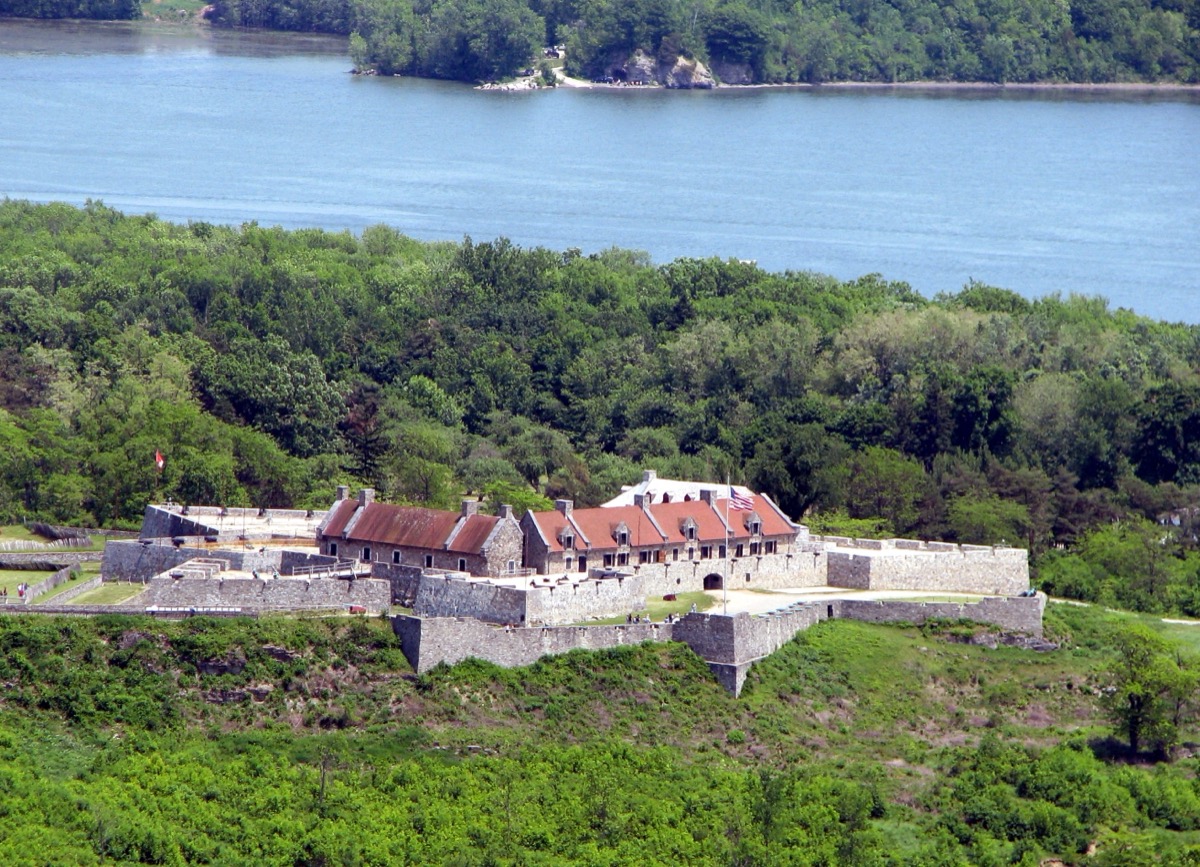
The ghost everyone at Fort Ticonderoga tells you about is a woman named Nancy Coates, and the story is that she walked into Lake Champlain at dawn and never came out. People have reported her ever since, running the footpaths along the water, waiting at the fort gate, floating among the reeds. A sobbing carries up from the lake. The fort sits on a bluff above the water at the southern narrows of Lake Champlain, in upstate New York, and the water below is where the story puts her.
The way it's told, Nancy was a local widow who served meals to the soldiers and fell in love with the post's commandant, General Anthony Wayne, the Revolutionary officer they called Mad Anthony for how recklessly he fought. Wayne, the legend says, was chasing a wealthy young guest named Penelope Haynes. When Nancy heard a rumor he was bringing home a bride, she went down to the lake and waited until morning, then walked into it. Fishermen found her floating face-up.
She may never have existed.
There is no parish record, no court record, no newspaper line for a widow named Nancy Coates at the fort. The real Anthony Wayne was married. His command here came during the Revolution, not the year the legend keeps repeating, and he died years later in Pennsylvania, far from any of this. The most-told ghost story at Ticonderoga is the one with nothing behind it.
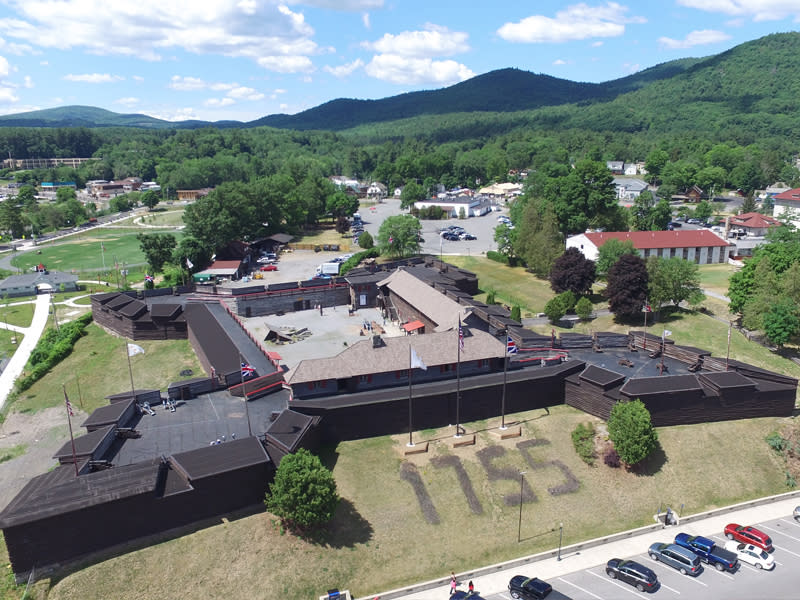
What the fort has on the record is older and bloodier. The French built it in 1755 and called it Carillon, for the chime-like sound of a nearby cascade. In 1758, roughly 4,000 French defenders held it against about 16,000 British attackers, one of the most lopsided defeats of the French and Indian War. On May 10, 1775, Ethan Allen and Benedict Arnold took it at dawn for the Revolution. Three nations fought over this ground, and people report the dead of all three. Soldiers in 18th-century uniforms turn up in the barracks windows and along the walls. There's a second ghost too, told as folklore: a young Native woman said to have jumped from the high fortifications in the 1750s rather than be taken by a man she didn't love, walking the tops of the walls ever since.
In 2010, the Ghost Hunters crew spent a night here with the fort's own curator, Chris Fox, working the barracks, the attic, and a cemetery of unmarked graves. The moment people still cite came in the open courtyard: a bright flash that the team, standing apart across the parade ground, all saw at once, with no source ever found. A bench rocked on its own. They left believing the fort was active.
But the ghost people drive out to find isn't the soldiers or the flash. It's the woman by the lake, the one no record can place here at all.