Pea Ridge National Military Park

Pea Ridge National Military Park

⚔️ battlefield

Garfield, Arkansas

About This Location

On March 7-8, 1862, over 23,000 soldiers fought here in a turning point of the Civil War in the Trans-Mississippi. Nearly 3,400 soldiers died on this battlefield.

👻

The Ghost Story

The Battle of Pea Ridge, fought March 7-8, 1862, was the decisive engagement that secured Missouri for the Union and opened Arkansas to Federal occupation. Approximately 16,000 Confederate troops under Major General Earl Van Dorn attacked roughly 10,250 Union soldiers commanded by Major General Samuel R. Curtis in the rolling hills of Benton County, near the small community that would become Garfield. Van Dorn split his army into two divisions in a bold flanking maneuver along the Bentonville Detour, but the plan unraveled catastrophically when General Benjamin McCulloch was killed while reconnoitering Federal positions and his second-in-command, Brigadier General James McIntosh, was gunned down shortly after -- leaving an entire wing of the Confederate army leaderless. The battle also marked the first time American Indian troops engaged in combat outside Indian Territory, with Cherokee soldiers fighting alongside the Confederates. Against the odds, Curtis held off the attack on the first day and drove Van Dorn's forces from the battlefield on the second. Combined casualties numbered roughly 3,400 men -- 1,384 Union and approximately 2,000 Confederate.

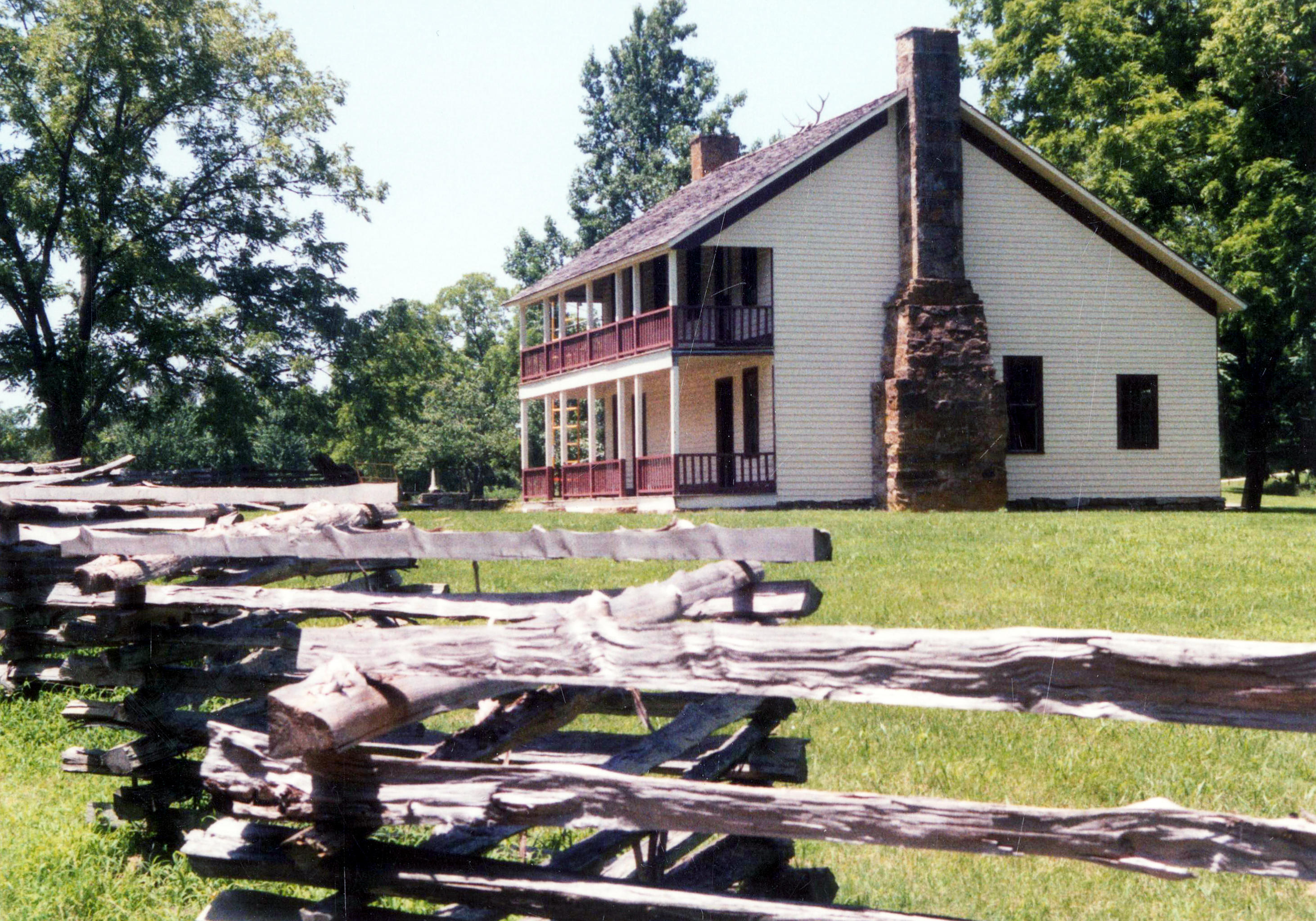
At the physical center of the battlefield stood Elkhorn Tavern, a two-story log structure originally built by William Ruddick in 1833. The tavern got its name in 1858 when neighbors gifted elk horns to new owners Jesse and Polly Cox, who mounted them atop the building. The first post office in Benton County had been established there in 1837. During the battle, Union forces under Major Eli Weston initially occupied the tavern as a headquarters and prisoner camp. On March 7, Confederates seized the building and converted it into a field hospital, where surgeons performed amputations and treated horrific wounds with crude instruments and no anesthesia. Wounded soldiers screamed through surgical procedures or died waiting for treatment on the tavern's floors. Confederate leaders including Van Dorn and General Sterling Price held a council of war at the site. Guerrillas burned the tavern in 1863, but Joseph Cox rebuilt it on the same foundation in 1865. The Cox family donated the building to the federal government in 1956, and the National Park Service assumed control on March 7, 1960 -- the ninety-eighth anniversary of the battle -- restoring it to approximate its wartime appearance.

The 4,300-acre Pea Ridge National Military Park preserves one of the most intact Civil War battlefields in the nation, and visitors have been reporting encounters with the men who fought there since the park's establishment. The most commonly reported phenomena are auditory. Visitors hear cannon fire echoing across the fields and rifle volleys in rapid succession, sounding exactly as period black-powder weapons would. Drum rolls carry across the landscape. These phantom battle sounds typically manifest near dawn or dusk, and park rangers acknowledge receiving numerous reports concentrated around the battle's anniversary dates in early March. The sounds of shouting -- orders being given, men calling for help -- have been heard by visitors on otherwise silent evenings.

Along the tree line at the battlefield's edges, apparitions of soldiers in period uniforms have been seen standing in formation. They vanish when approached, as if the act of acknowledgment breaks whatever loop holds them in place. Visitors walking the tour road and trails report the persistent sensation of being followed, turning to find no one behind them. Along Telegraph Road, the historic route that ran through the battlefield, witnesses have reported seeing what appear to be entire formations of soldiers marching toward the battle, their movements silent despite the numbers involved.

Elkhorn Tavern itself is the most concentrated site of paranormal activity, which is unsurprising given its use as a field hospital where untold numbers of soldiers suffered and died. The rocking chair on the tavern's porch has been observed rocking on its own by numerous witnesses across different visits and seasons. A ghost soldier associated with the tavern has a particular affinity for appearing to children -- a pattern reported years ago that continues to the present, with young visitors describing encounters with a man in old military clothing that adults standing nearby do not see. Objects inside the tavern have been reported moving by themselves. The building carries an atmosphere that visitors consistently describe as heavy or charged, a quality that intensifies during overcast weather and near the anniversary of the battle. The park offers a seven-mile tour road with ten interpretive stops, but it is the ground itself -- where thousands of men fought and hundreds died over two days in March 1862 -- that seems to retain the strongest imprint of what happened here.

Researched from 9 verified sources including historical records, local archives, and paranormal research organizations. Learn about our research process.

More Haunted Places in Arkansas

🏛️

Old State House Museum

Little Rock

👻

Wolf House

Norfork

🏚️

Curran Hall

Little Rock

🪦

Avon Cemetery

DeQueen

🏛️

MacArthur Museum of Arkansas Military History

Little Rock

👻

Crossett Light

Crossett

View all haunted places in Arkansas

More Haunted Battlefields Across America

Cowpens National Battlefield

Gaffney, South Carolina

Lookout Mountain Battlefield

Chattanooga, Tennessee

Fort Stevens State Park

Hammond, Oregon

The Presidio

San Francisco, California