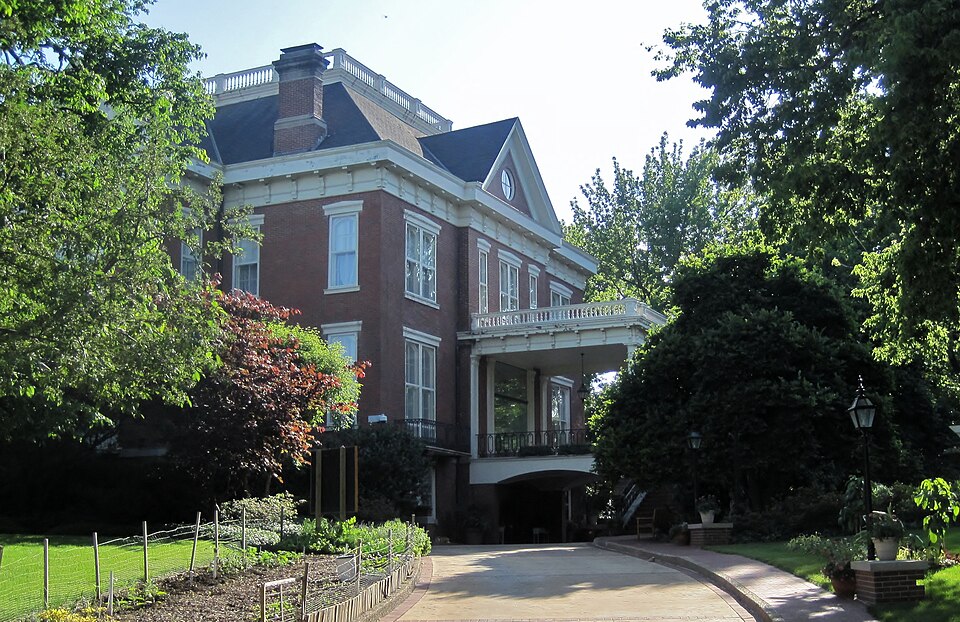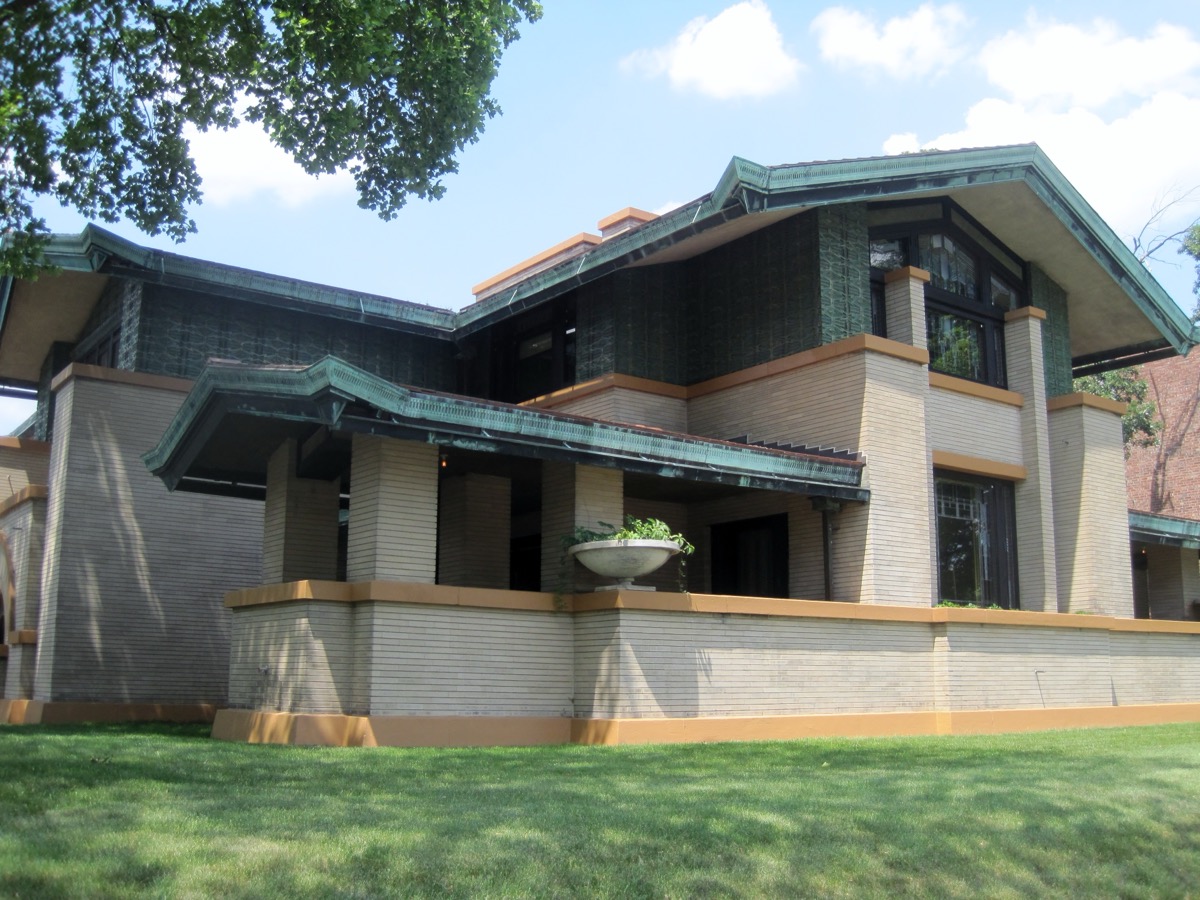
At the Dana-Thomas House in Springfield, Illinois, staff keep a standing joke: that Susan Lawrence Dana still walks the halls. She built the 35-room showplace to hold seances after death took almost everyone she loved, and the woman in black seems to mark her own anniversaries.
At the Dana-Thomas House in Springfield, Illinois, the staff have a standing joke. It's that Susan Lawrence Dana, the heiress who built the place, never left. "Susan still walks the halls," one of them put it, "watching over the house that she loved."
Frank Lloyd Wright built her that house. Susan commissioned it in 1902 and moved in by the summer of 1904 — 35 rooms, roughly 12,600 square feet, a dining hall that seated 40 under chandeliers shaped like butterflies. It's still called the best-preserved of Wright's early Prairie houses. Wright designed it for parties.
Susan used it for seances instead.
The deaths came in a row that's hard to read all at once. Two infant children. Her husband Edwin, killed inspecting a copper mine in 1900, at 36. Her father the next year. A second husband, a young Danish singer she married in 1912, dead about a year after the wedding. A third marriage ended in divorce. So she filled Wright's party rooms with mediums, held seances, and turned to what she called spirit letters — advice from her dead, written down from beyond the veil.
The house outlived her too. She grew reclusive, moved into a small cottage out back, was declared incompetent, and died in 1946 with no family or friends at her side. A publisher bought the place. The state restored it.
And people kept reporting her. A woman in black in the halls. Humming voices, curtains that move on their own, chairs thrown down the stairs. Hands clapping in rooms that are empty. The State of Illinois, which runs the house, officially denies any of it.
What the staff notice is the timing. The reports cluster on the dates that mattered to Susan — her birthday, her mother's death, the funerals held inside these walls. One of those dates is February 20, the anniversary of Susan's own death. On a February 20, the staff say, a light sconce tore itself off the wall and flew across an empty room.