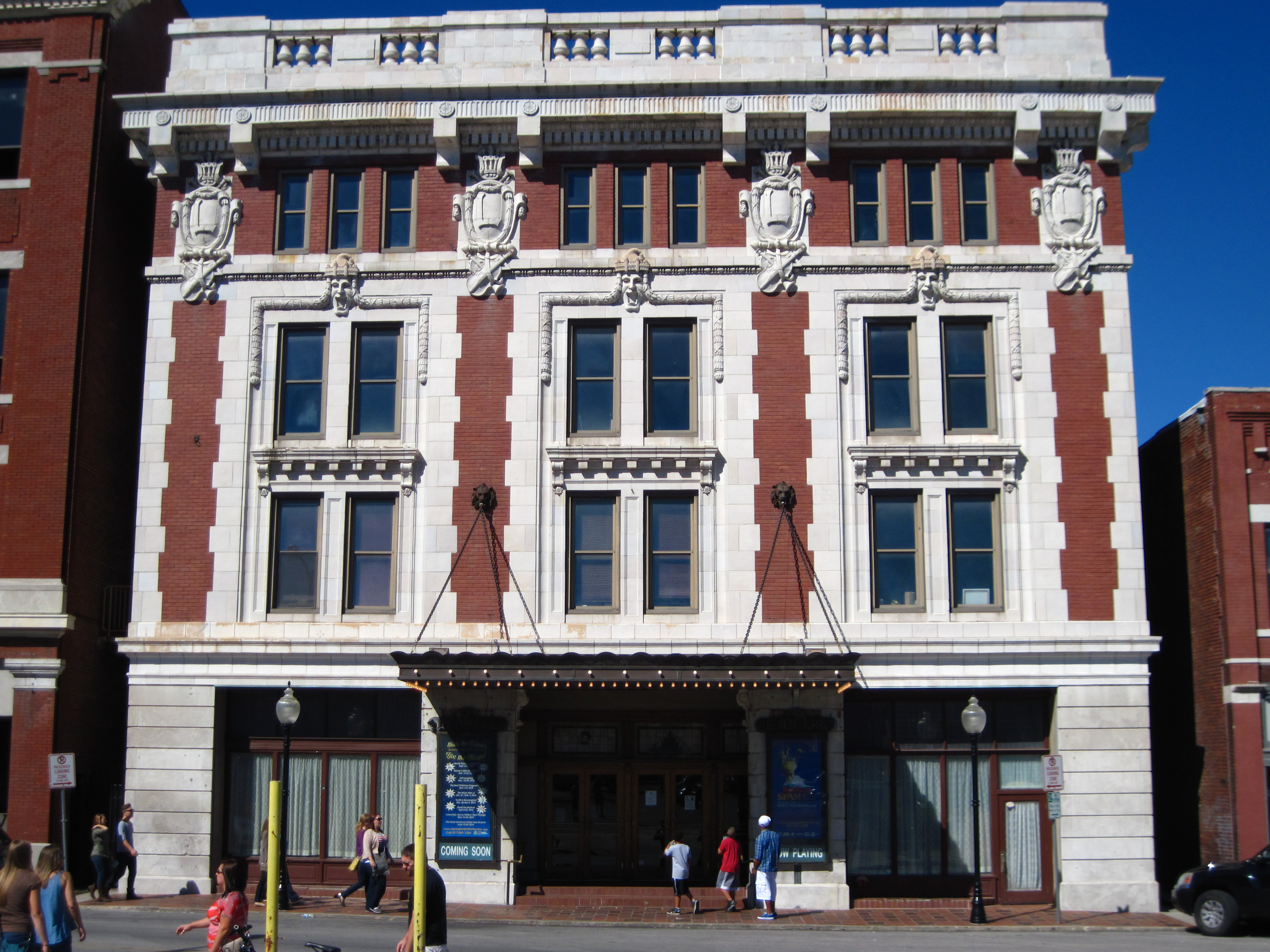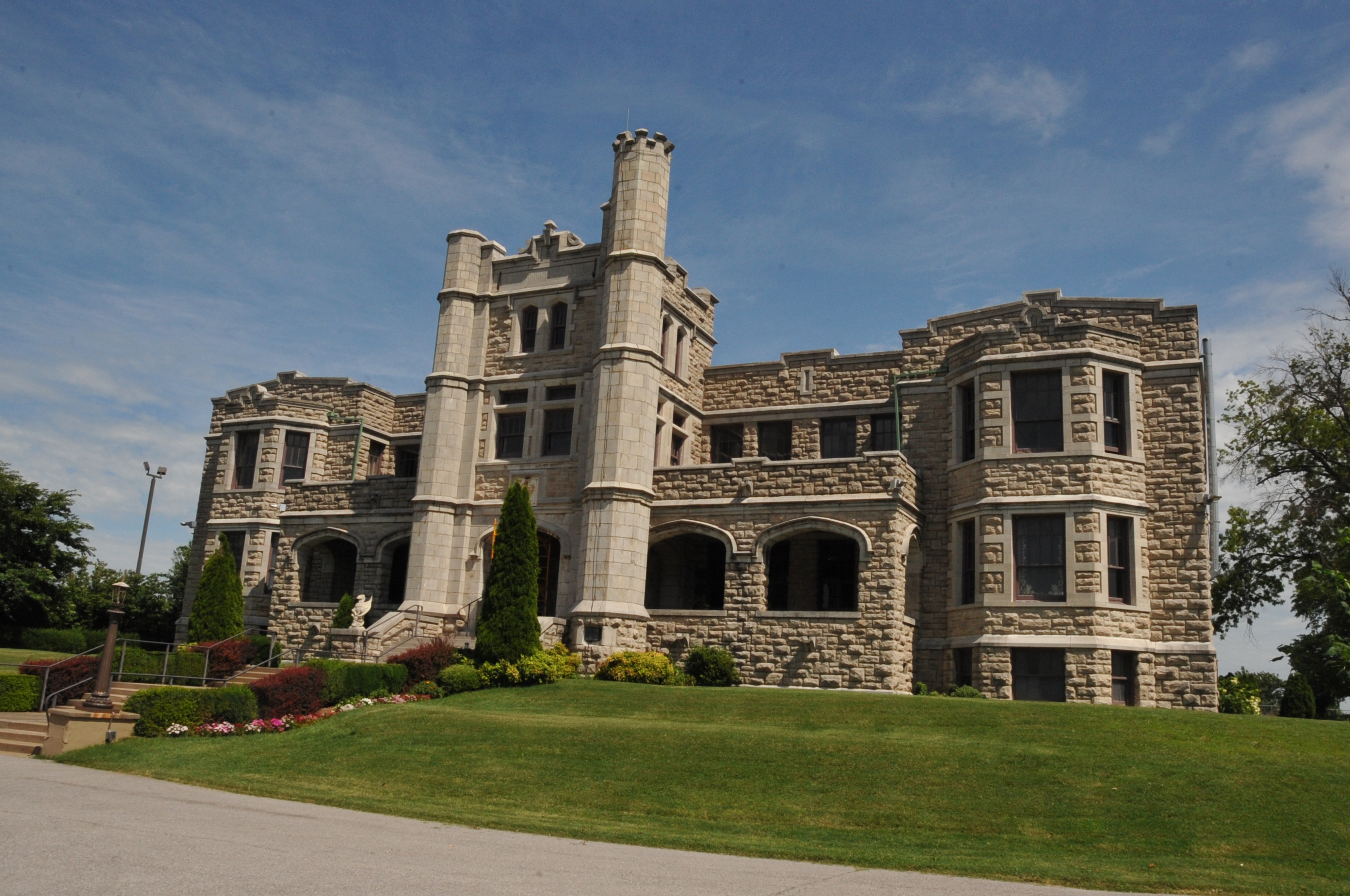
At Pythian Castle in Springfield, Missouri, a woman in a flowing white dress is seen in the tower window, visible from the street below. The other ghosts sort neatly by the building's four lives. She fits none of them, and nobody knows who she is.
Stand on Pythian Street in Springfield, Missouri, look up at the limestone tower, and people will tell you a woman in a long white dress is sometimes looking back. She drifts the upper halls and the staircase inside, and she shows up at that tower window, visible from the sidewalk below. She is the best-known ghost at Pythian Castle, and the one nobody can account for.
The other ghosts here are easier. They sort themselves cleanly by which life the building was living when they arrived.
The Knights of Pythias, a fraternal order, raised the place in 1913 as a home for elderly members and the orphaned children of members, built of hard Ozarks limestone over a steel frame. It held Springfield's first movie theater, silent films on the second floor for five cents. A girl named Mildred Halt Cherry, who lived there in the late 1920s, remembered the children singing from the porch: "people would come to the gates and the fences way down there to hear us sing." Today their footsteps are heard running the halls, and a child-sized shadow keeps to the basement corridors.
In 1942 the U.S. Army seized the castle, paid the Knights $40,625 for it, and turned it into a service club for enlisted men, with a ballroom and a bowling alley. Then they walled off part of the basement into cells. German and Italian prisoners of war who needed medical care were held down there. "The Army came in and built these cells," a local history expert, Tim Piland, said. "We do understand that there were POWs kept here but we don't know how long, don't know for what." Soldiers in uniform are reported in those lower levels now. Ghost hunters' cameras drain their batteries near the old cells.
So the children belong to the orphanage, and the soldiers to the war. Tamara Finocchiaro, who lives in the castle full-time and runs it for tours and events, doesn't pretend otherwise. "There's real people and some not-so-real people," she says. "They know my name." One night, alone in the lobby, she heard a voice clear as day say hello.
The Lady in White answers to no chapter at all. She was here before the war, before the orphanage closed, watching from a window that overlooks a street full of people who can see her. And after a century, no one has worked out who she was.