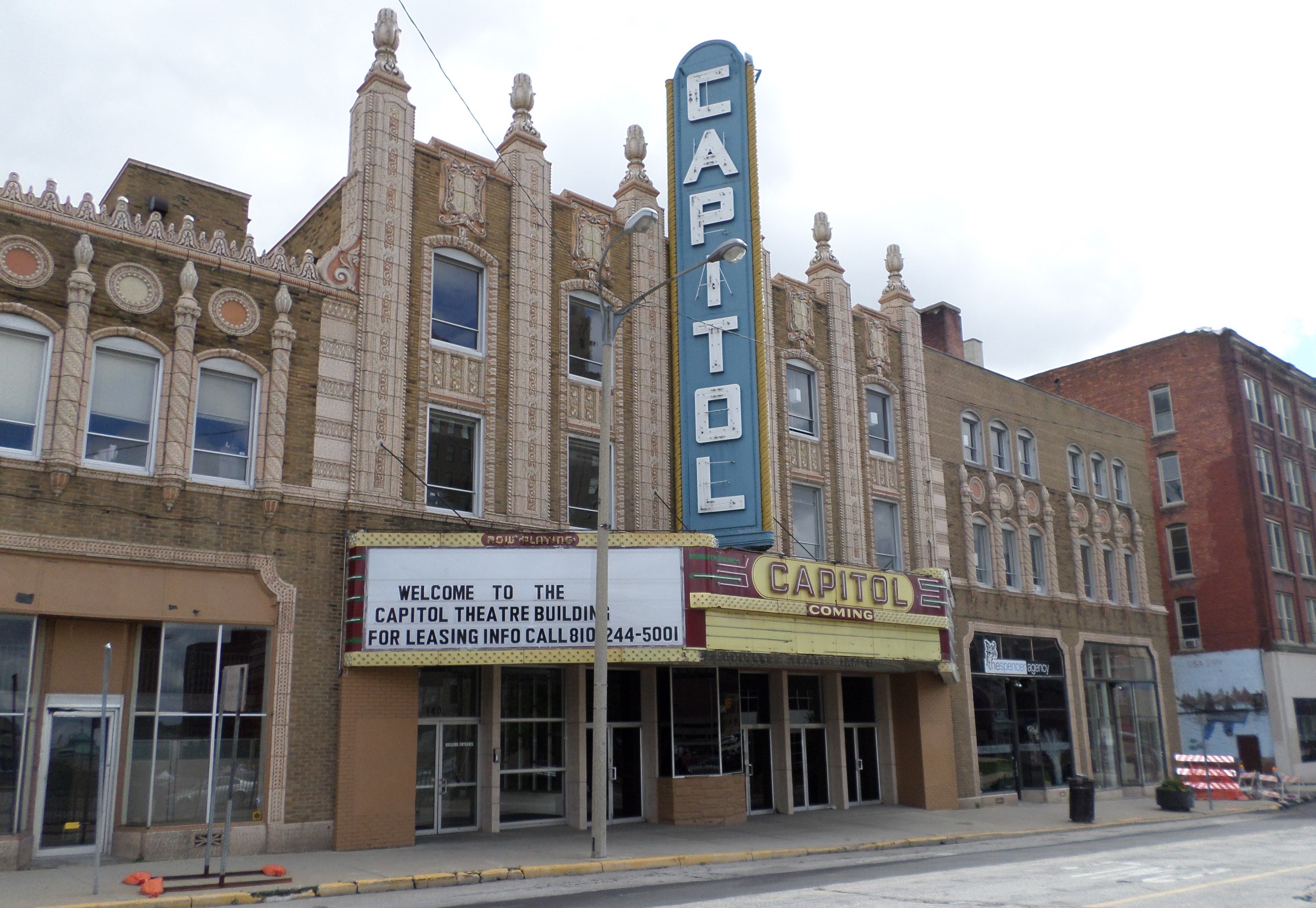
Touring acts have one running complaint about the Capitol Theatre in Flint, Michigan: their gear stops working. Amps cut out, monitors drop audio, equipment goes dead during setup. Then the singing starts, drifting down from a balcony where no one is sitting.
The Capitol Theatre in Flint, Michigan has a problem touring bands keep running into: their gear stops working. Amps cut out. Monitors drop audio and come back. Equipment goes dead during setup for no reason a sound engineer can trace.
And once the equipment goes silent, the story goes, the bands hear something else. Singing, drifting down from the balcony. More than one group has looked up toward it and seen what they describe as the shapes of shadowy people, sitting in seats no one is in. "Once their equipment went silent," one Flint account reports, "they heard ghostly singing coming from the balcony; upon looking upward, they saw the shapes of shadowy people."
The balcony is where it all centers. Apparitions, shadow figures, the singing. Witnesses also report unexplained screams, moans, and tapping on the walls, plus whispering, knocking, doors that slam, and footsteps in the empty house.
It's a fitting place for it. The Capitol opened January 19, 1928, on East Second Street downtown, designed by John Eberson in his "atmospheric" style — an auditorium built to feel like an open-air courtyard, framed by faux-marble columns and ornate plasterwork, under a domed ceiling rigged with tiny lights to mimic a twilight sky. About 1,951 seats sat beneath that fake heaven. The building was a whole little world: an arcade of shops, dozens of offices, and a basement with bowling alleys and billiard tables. Live vaudeville shared the bill with the movies until around 1931.
The W. S. Butterfield chain ran it for nearly fifty years before a local grocer took over in 1977. In the decades before it went dark, the Capitol booked real acts to that stage — Ray Charles, AC/DC, John Mellencamp. Then, in 1996, it closed, and the place sat empty for roughly two decades.
A long restoration preserved Eberson's atmospherics down to the original plasterwork, and the Capitol reopened in December 2017. It runs today as one of the Flint Institute of Music's performing-arts venues, managed by The Whiting — open, active, booked.
No record names whoever is up in the balcony. No fire, no death, no documented tragedy explains the singing. The history is all on paper; the haunting is only ever told, never proven. Just bands setting up, the gear cutting out, and a voice coming down from the dark above the twinkling ceiling — singing to a house that isn't there.