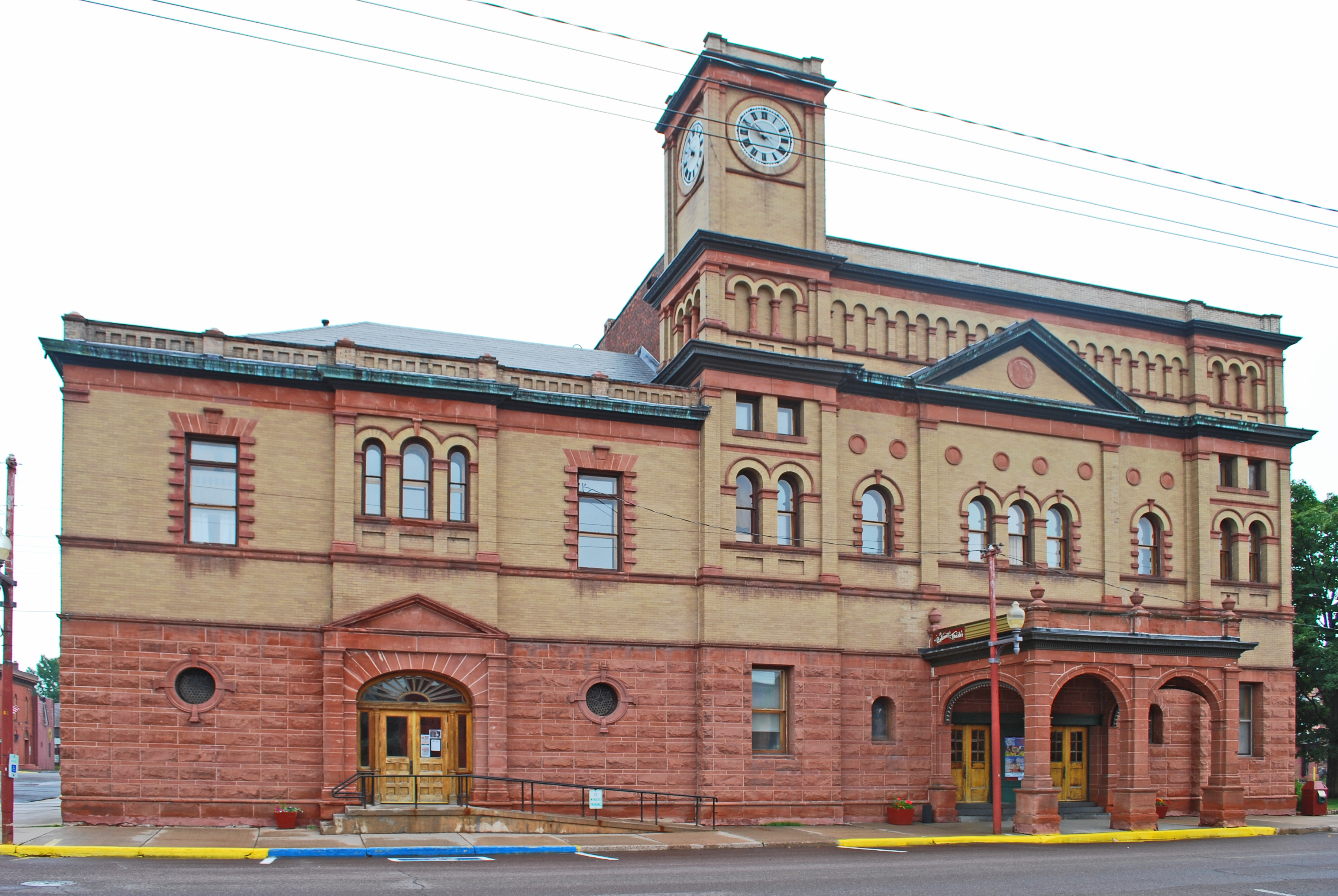
The Calumet Theatre in Calumet, Michigan keeps a ghost who helps the show go on. In 1958, an actress lost her line mid-scene and said a long-dead Polish star reached out and fed her the missing word. People still report her.
The Calumet Theatre in Calumet, Michigan keeps a ghost who works the show rather than haunts it. The story doesn't start with a death. It starts with a save.
On July 22, 1958, an actress named Adysse Lane was on that stage playing Kate, and she lost a line. By one detailed account she was deep in her Act V soliloquy when a light came from the balcony, a hand reached toward hers, and the missing word was spoken into the quiet. Lane finished the scene. She said the spirit who fed her the line was Helena Modjeska, a Polish-born Shakespearean actress who had performed at the Calumet decades earlier and died in 1909. Ever since, people have come hoping to catch a glimpse of her. They report music drifting from nowhere and cold air with no source.
The theater she watches over opened March 20, 1900, back when the town was called Red Jacket and the Calumet and Hecla copper boom was at its height. It was one of the first municipally owned theaters in America, a Renaissance Revival building of yellow-brown brick set on a sandstone foundation, with copper cornices and a copper roof. A mining boom built it, and the building wore the money plainly. The opening was an operetta called *The Highwayman*, and over the decades that followed the stage drew real names: Sarah Bernhardt, John Philip Sousa, Lon Chaney Sr., and Frank Morgan, who would later play the Wizard of Oz.
It is still a working theater. It runs dozens of events a year and gives guided tours each summer as a National Park heritage site, which is the strange thing about the place. The ghost story isn't a relic in a closed-up building. People are reporting the music and the cold air in a theater that's open for business.
That same town carries a darker date than any of its show nights. On Christmas Eve, 1913, someone falsely shouted "fire" at a miners' families' Christmas party in the Italian Hall down the street, and 73 people were crushed to death on the stairway trying to escape. Fifty-nine of them were children. No fire was ever found, and no inquest ever named who shouted. Some accounts say the theater itself served as a temporary morgue afterward, though the disaster records point to the Red Jacket town hall instead.
The ghost at the theater is the gentle one. She came back to give a line, not to take anything. Of all the things that town has to remember, the actress who fed a stranger her missing word is the one it chose to keep telling.