TLDR
In November 1864, 102 refugees were expelled from this Union camp and froze to death. Rangers have seen a Civil War-era family vanish on the grounds.
The Full Story
On November 22, 1864, Brigadier General Speed S. Fry ordered the women, children, and elderly refugees at Camp Nelson expelled from the camp into freezing Kentucky weather. They were the families of United States Colored Troops, enslaved men who had walked out of slavery by enlisting and brought their wives and kids with them because Kentucky's slaves weren't covered by the Emancipation Proclamation. There was nowhere else to send them. Within days, 102 of them were dead from exposure, huddled in mule sheds and frozen woods. An army captain called it "an outrage." A newspaper called Fry's orders "deliberate depravity and cool malignity."
Camp Nelson was established in 1863 on 4,000 acres near Nicholasville. It was named for Union General William "Bull" Nelson, who was murdered by a fellow Union officer the year before. When Kentucky's enslaved men were finally allowed to enlist in 1864, Camp Nelson became the third-largest recruitment center for Black soldiers in the country. The single largest day came on July 25, 1864, when 322 Black men enlisted. By the end of the war, more than 23,000 had signed up through Kentucky, the second-highest contribution of USCT from any state.
The refugee community that grew around them numbered in the thousands. When the expulsion order came, these were the people it hit. Archaeologists working the site later pulled necklace beads and doll parts from the ground, children's things. They also found two protective charms: a button carved with an X, and a pierced silver coin. Both are consistent with African spiritual traditions carried across the Middle Passage. Many of the objects they recovered had been burned.
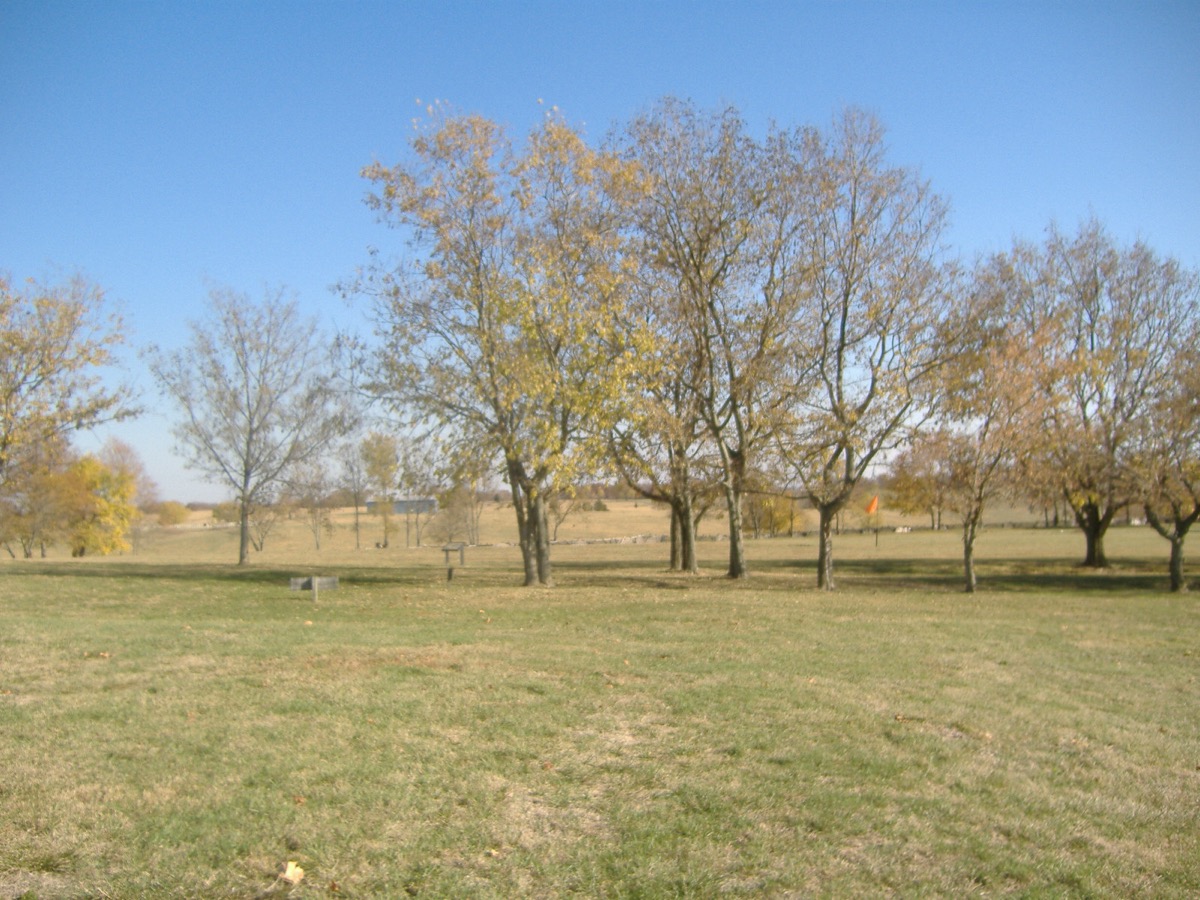
A park ranger once reported watching a Black family in Civil War-era clothing move across a clearing on the park grounds and disappear before his eyes. Other visitors describe the same thing. There's no way to separate whether they're seeing the refugees who died in the expulsion, USCT soldiers who never came home, or families still looking for people who were taken from them. Camp Nelson is too specific a landscape for a generic ghost.
The aftermath of the catastrophe forced Congress to act. In March 1865, it emancipated the wives and children of all enlisted Colored Troops. The Union Army opened the Camp Nelson Home for Colored Refugees in January 1865. When it closed in 1866, about 250 people stayed on the surrounding land and founded a town called Hall, Kentucky. Their descendants still live there.
An obelisk at the refugee cemetery lists roughly 300 people who died at Camp Nelson. The park is a National Monument now, managed by the National Park Service, and the expulsion is central to how rangers tell the story. The children's beads are in the archaeological record. The charms are too. The ghosts don't need to be invented to make the place unbearable to stand on.
Researched from 8 verified sources. How we research.