The Triangular Field at Gettysburg is a shallow slope of open grass below Devil's Den where digital cameras fail often enough that local tour guides have stopped calling it a ghost story. Batteries full at the parking lot read empty halfway down.
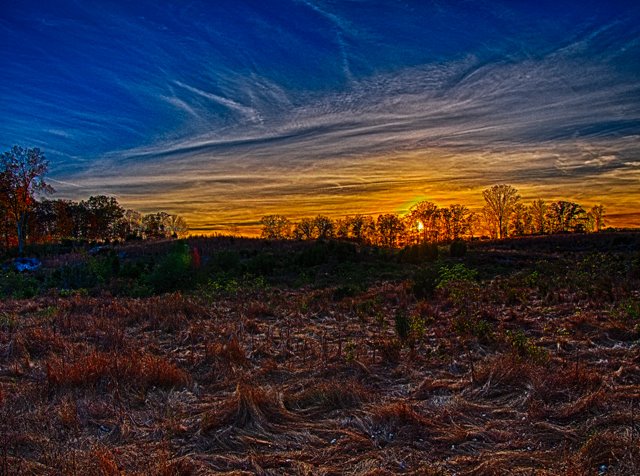
Bring a camera into the Triangular Field at Gettysburg and the story goes that it will quit on you. A battery that read full up at the parking lot reads empty fifty yards down the slope. Photos come back blank, or washed white. It happens often enough that tour guides have stopped calling it a ghost story and started calling it a fact of the ground.
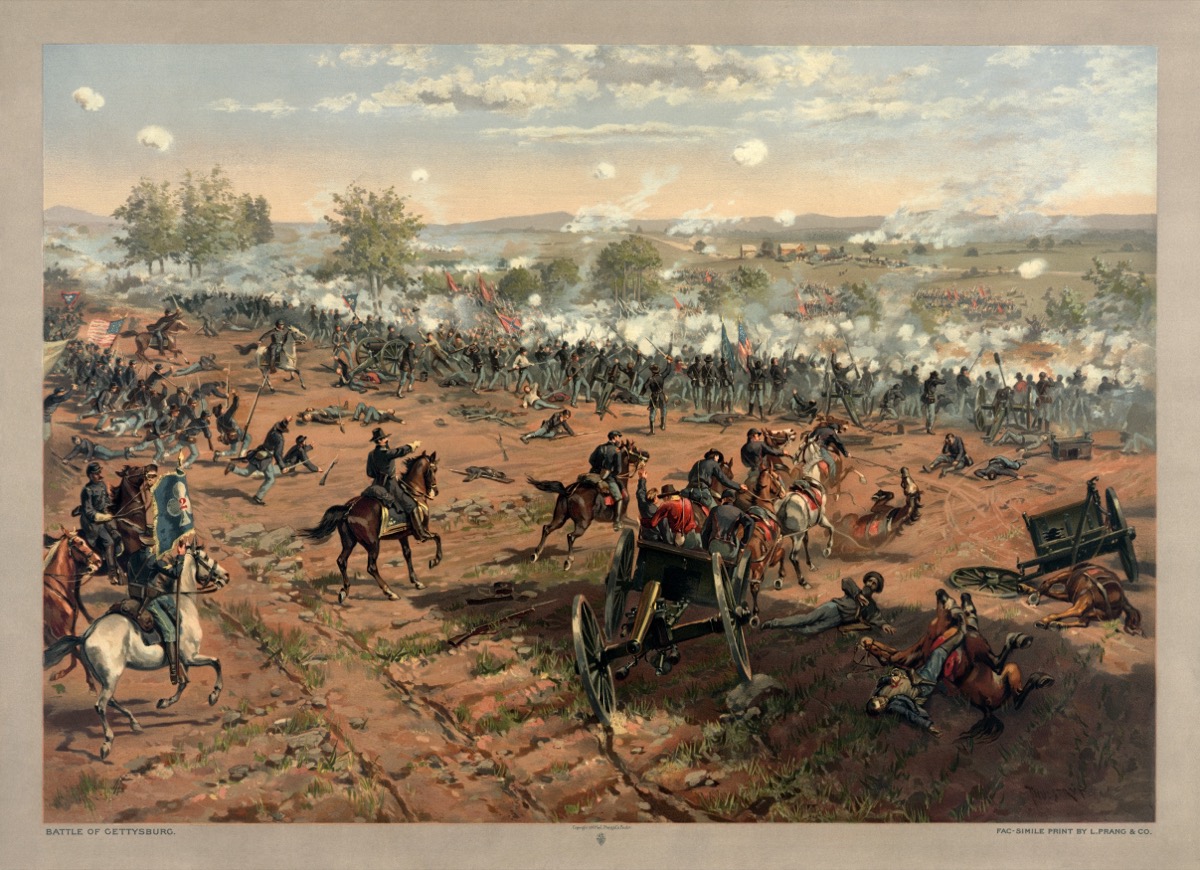
The field is a shallow triangle of open grass on the western slope of Houck's Ridge, just below Devil's Den, bordered by a low stone wall. On July 2, 1863, Confederate brigades from Texas, Arkansas, Alabama, and Georgia had to cross it uphill into Union cannon fire to reach the boulders beyond. The 124th New York, a volunteer regiment called the Orange Blossoms, held the slope against them. Two of its officers, Col. Augustus Van Horne Ellis and Maj. James Cromwell, mounted up and charged downhill into the assault. Warned that climbing into the saddle made them targets, Cromwell answered, "the men must see us today." Both were killed within minutes; a bullet caught Ellis in the forehead and he fell dead off his horse.
The cost was high on both sides. Hood's Texas Brigade lost 597 men across the day; the 1st Texas alone, 426 strong, gave up 29 killed before the fight moved on. Gen. John Bell Hood himself took shrapnel in the left arm from an exploding shell near this ground around 4:30 that afternoon, and the arm stayed useless for the rest of his life. Few of the men who started up the field were still standing at the wall.
People who walk it now report battle sounds with nothing on the field to make them, gunfire and shouting and cannon. A Union soldier is seen standing by the gate at the trailhead, taken for a reenactor until visitors learn no reenactment was scheduled.
Not everyone buys it. Plenty of photographs come out fine, and a local who has lived in Gettysburg since 1953 says he's never seen or felt a thing out there. People reach for the iron in the boulders to explain the dead cameras, but that's a story people tell, not anything anyone has measured.
The closest thing to a thread runs through Mark Nesbitt, a former park ranger turned ghost author who has recorded in the field for years. One night he asked into a voice recorder, "Thomas Lewis Ware, are you here with us?" Ware was a real first sergeant of the 15th Georgia who kept a diary of the campaign and died in this field on July 2. On playback, Nesbitt says, a gruff voice answered. It said, "Yes."