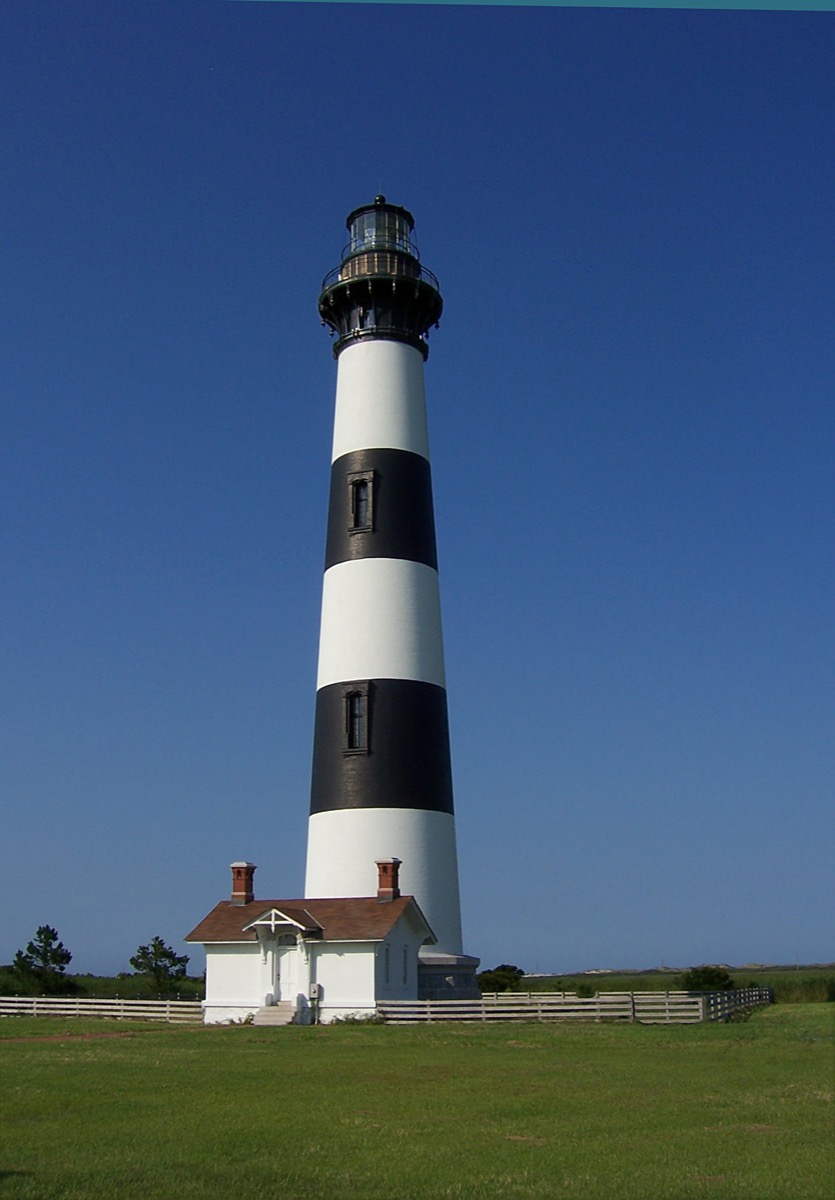
At Bodie Island Lighthouse near Nags Head, North Carolina, climbers report nothing in the famous striped tower. The ghost keeps to the keeper's cottage beside it, where a single knock sounds at 4 p.m. from behind a fireplace bricked shut.
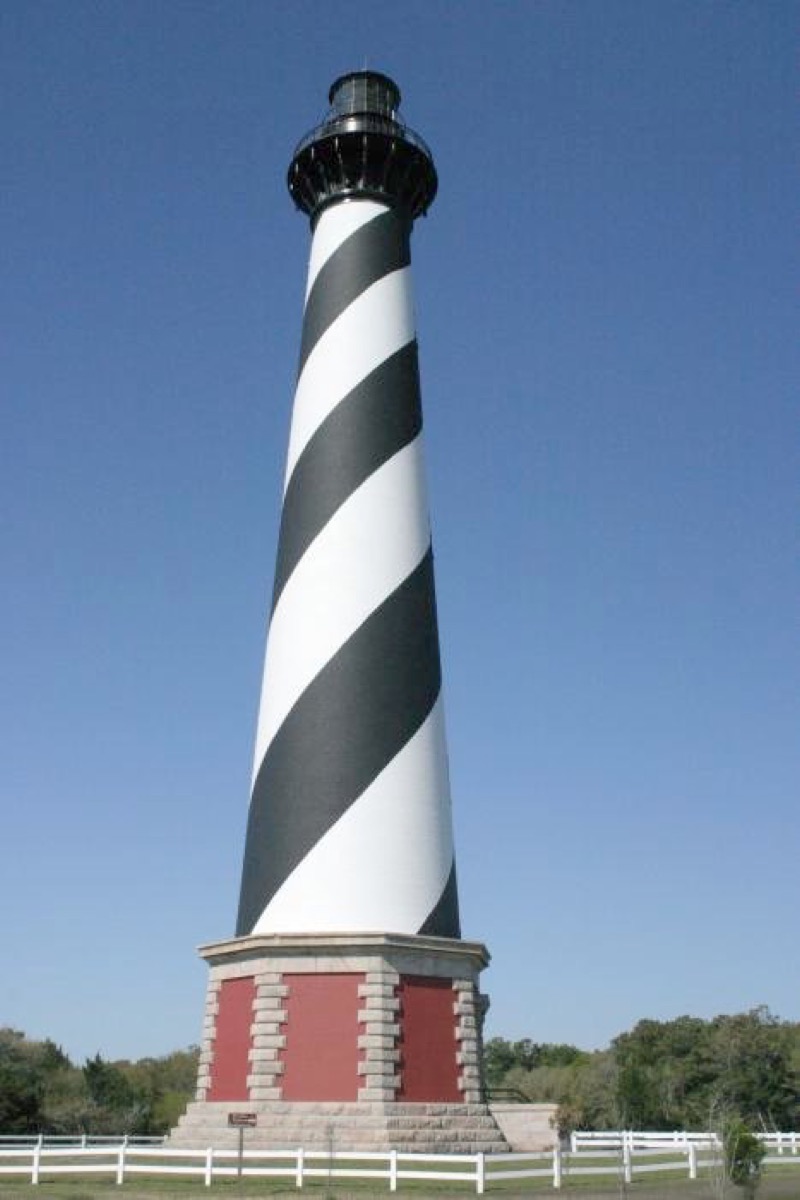
The famous thing at Bodie Island Lighthouse near Nags Head, North Carolina is the black-and-white striped tower standing over the Outer Banks. The haunted thing is the squat white cottage beside it. Visitors climb the 200-plus steps to the top of the lighthouse and report nothing at all. The activity stays down in the keeper's quarters, and it keeps to a schedule.
Around 4 o'clock every afternoon, the story goes, a single loud knock sounds from behind the cottage's large brick fireplace. The fireplace was bricked over years ago, walled in solid. "Every day at 4:00 PM on the dot you can hear a loud knock from behind its large brick fireplace," one Outer Banks account puts it, "but no one knows what or who lies behind it." Travel writers like to say it's a keeper still marking the end of his shift. No source names him, and no record dates when the knock was first heard. It is just a knock that answers on time, from a wall sealed shut.
The cottage has plenty of keepers to draw on. William Fuller Hatsel ran the light from 1872. Peter Gregory Gallop held the post for 28 years, until 1906. Lloyd Vernon Gaskill was the last principal keeper, starting in 1919. The tower they tended is the third one to stand on this stretch of sand. The first leaned on a failing foundation and was razed by 1859. Retreating Confederate troops blew up the second in 1861 so the Union couldn't use it, and the soldiers carried off its lens, which Union forces later found sitting in the rotunda of the North Carolina Capitol. The current tower, first lit in 1872, still carries its original Fresnel lens, hand-built in Paris. Its beam reaches nearly 19 nautical miles out over a coastline that wrecked more than 40 ships in the decade before the first light went up.
For decades the cottage at the base of all this served as the park's gift shop and visitor center, the place where tourists bought postcards a few feet from the bricked fireplace. Then, on January 7, 2025, an electrical fire broke out inside the building. Responders arrived to find smoke pouring from all four of its chimneys. The damage was bad enough that the National Park Service closed the keeper's quarters indefinitely, with no firm date to reopen.
So the knocking room is now the burned room, shut up behind park tape. The tower stays open, and quiet, the way it always was. Whatever keeps time in the cottage has nobody left to hear it.