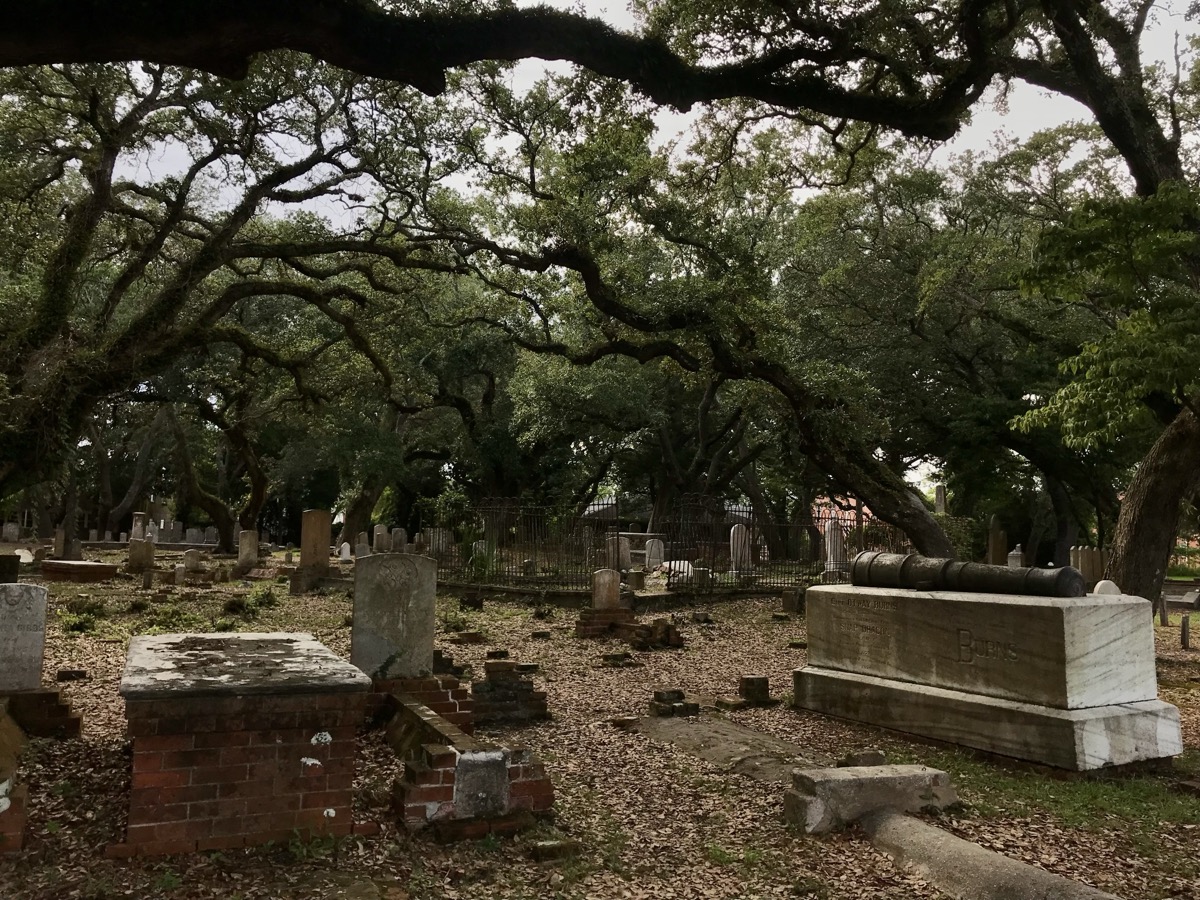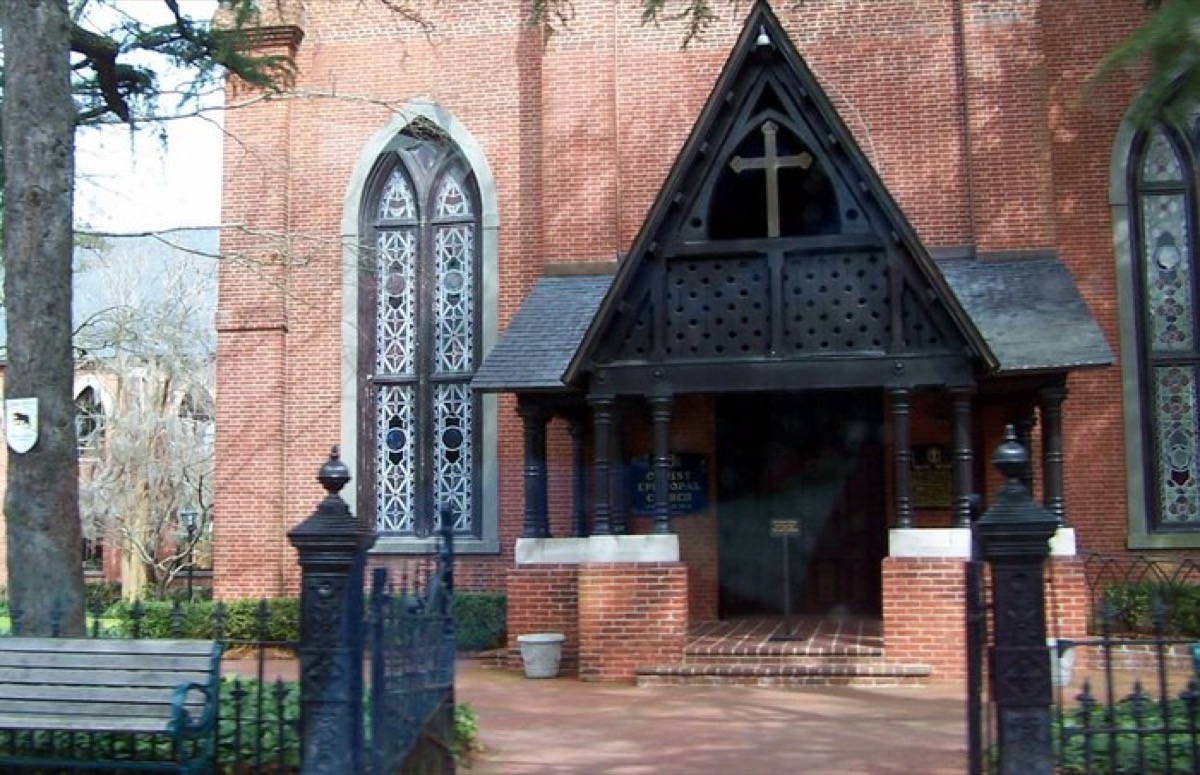
The small churchyard behind Christ Episcopal Church in New Bern, North Carolina is said to hold thousands of bodies, most of them yellow-fever dead buried in trenches at night. Tour guides say the haunting started when crews dug some of them back up.
The churchyard behind Christ Episcopal Church in New Bern, North Carolina is small, and it is said to hold thousands of bodies. Most of them went into the ground during a single terrible stretch, and the haunting there isn't a face or a name. It's the count.
In 1798 and 1799, yellow fever moved through New Bern and killed faster than the churchyard could take the dead one grave at a time. So they stopped digging single graves. "The Graveyard became extremely full during the fever because there was so many dead they dug out trenches and dumped the bodies in them as a mass burial," says New Bern ghost-tour guide Molly A. Allen. The work was done at night. By about 1799 the churchyard was full and closed to new burials, and when the town needed more room it opened a second cemetery a short walk away to take the overflow.
The churchyard behind the church had been New Bern's main burying ground since the 1740s, and it sits behind a parish that goes back to 1715, the third-oldest in North Carolina. Some of the early colony lies in there. The church's first rector, James Reed, is buried on the grounds. So is Charles Elliot, a colonial attorney general, and John Wright Stanly, a Revolutionary War patriot. But most of the dead have no marker at all, because most of them went in fast, in the dark, in 1799.
Three church buildings have stood on that same lot over the years. The colonial one went up around 1750. A second was consecrated in 1824. The current one was finished in 1875, after fire took the building before it. Each new sanctuary went up on the same crowded ground.
And that, the guides say, is where the trouble started. When crews built the newer church on the old ground, the story goes, they cut into the graves below and brought some of the dead back up. "When they built this new church they actually dug up a few of the bodies," Allen tells visitors, "and how the church and this cemetery are haunted."
What people report now is faint and scattered. Flashes of light over the markers. Floating orbs after dark. No figure walks the grass, no one is named. Just a small plot of land carrying more bodies than it was ever meant to hold, packed in fast and overlapping, and disturbed once by the people who came after.