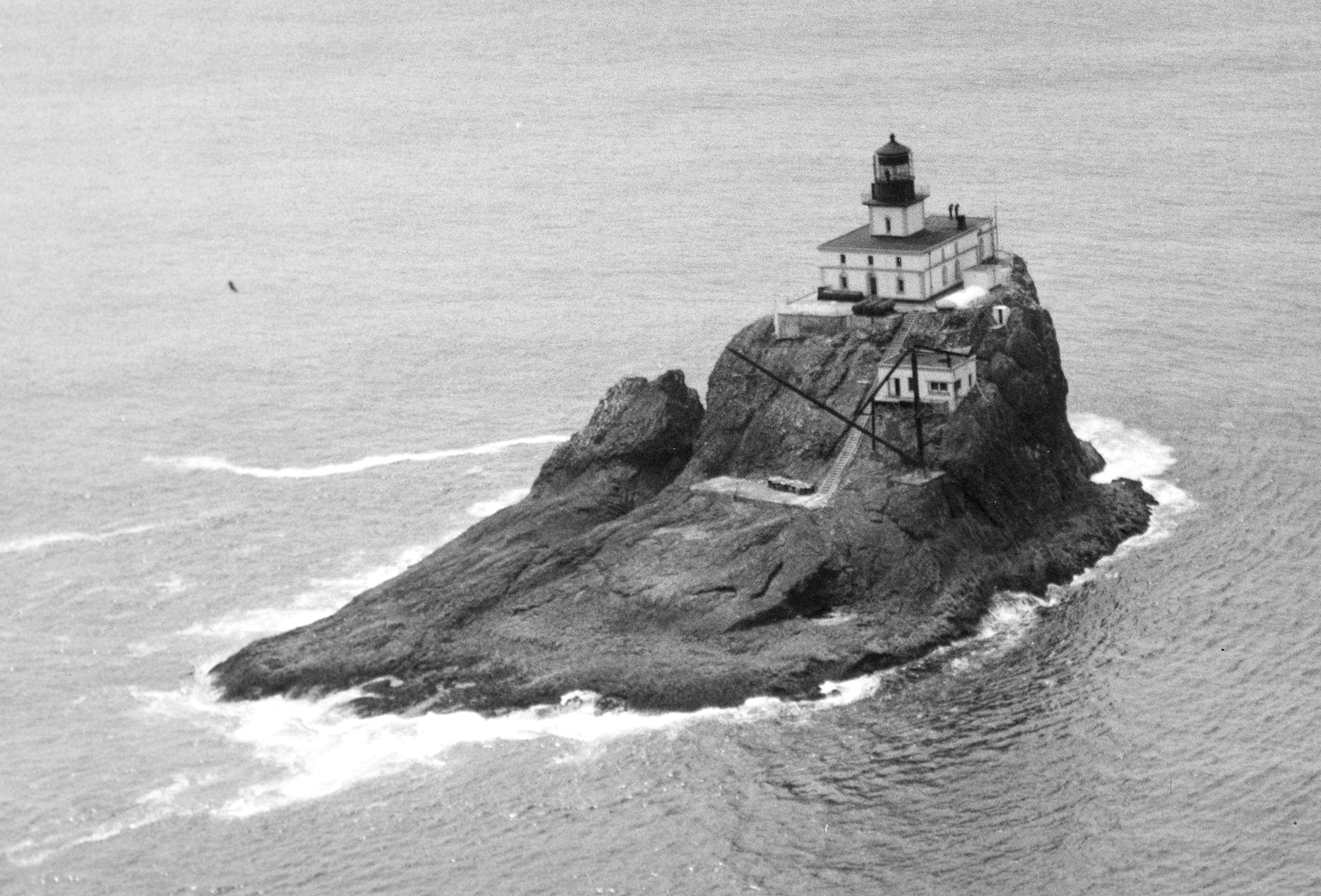
They called it Terrible Tilly — a lighthouse on a basalt rock off the Oregon coast that killed its first man before a stone was laid. Keepers swore a torn-sailed ghost ship circled it in the dark, crewed by sailors who drowned there in 1881.
At Tillamook Rock Lighthouse, a basalt wedge a mile off the Oregon coast near Cannon Beach, the keepers once said a sailing ship passed close in the dark — its sails torn and fluttering though there was no wind, the shouts of its crew carrying across the water. There was no ship out there. There was nothing.
The man who set it down was James Gibbs, a Coast Guard seaman posted to the rock in 1945. He said all four keepers on watch saw the ship that night. Gibbs later wrote a memoir about the place, Tillamook Light, and he never stopped insisting it was haunted. Alone on watch another night, with the others asleep, he heard something he recorded word for word: "a whispering moan, like one in pain."
Gibbs was no easy believer. His own first night on the rock, something crossed the floor toward his bunk and brushed past his throat in the dark, close enough to fan his face — and when he got a light on it, the thing was a goose with a broken wing, sitting in the middle of the room. The ship and the moan he never explained.
Why a vessel full of dead men might circle the rock goes back to the fog of early January 1881, weeks before the light first burned. The British barque Lupatia drove toward Tillamook Rock in heavy fog. The construction crew still finishing the lighthouse heard the sailors shouting somewhere out in the dark, and they lit lanterns and a bonfire to warn the ship off. It wasn't enough. The Lupatia went down with all 16 of her crew, and their bodies washed up on the beach at Tillamook Head. The only thing that came out of the water alive was the ship's dog, found on the sand the next morning.
Many who tell it believe the torn-sailed ship Gibbs saw was the Lupatia, come back. Along Tillamook Head, people say the dog can still be heard howling at night.
The men called the place Terrible Tilly, and they earned the name. But the first death came before a single stone was laid. In September 1879, a master mason named John Trewavas was rowed out to survey the bare rock, stepped from the boat onto the wet basalt, slipped, and was pulled into the Pacific. His body was never found. The local Tillamook people could have warned him. They had called the rock cursed for generations, said evil spirits lived in the tunnels worn into it, and never once set foot on it.