About This Location
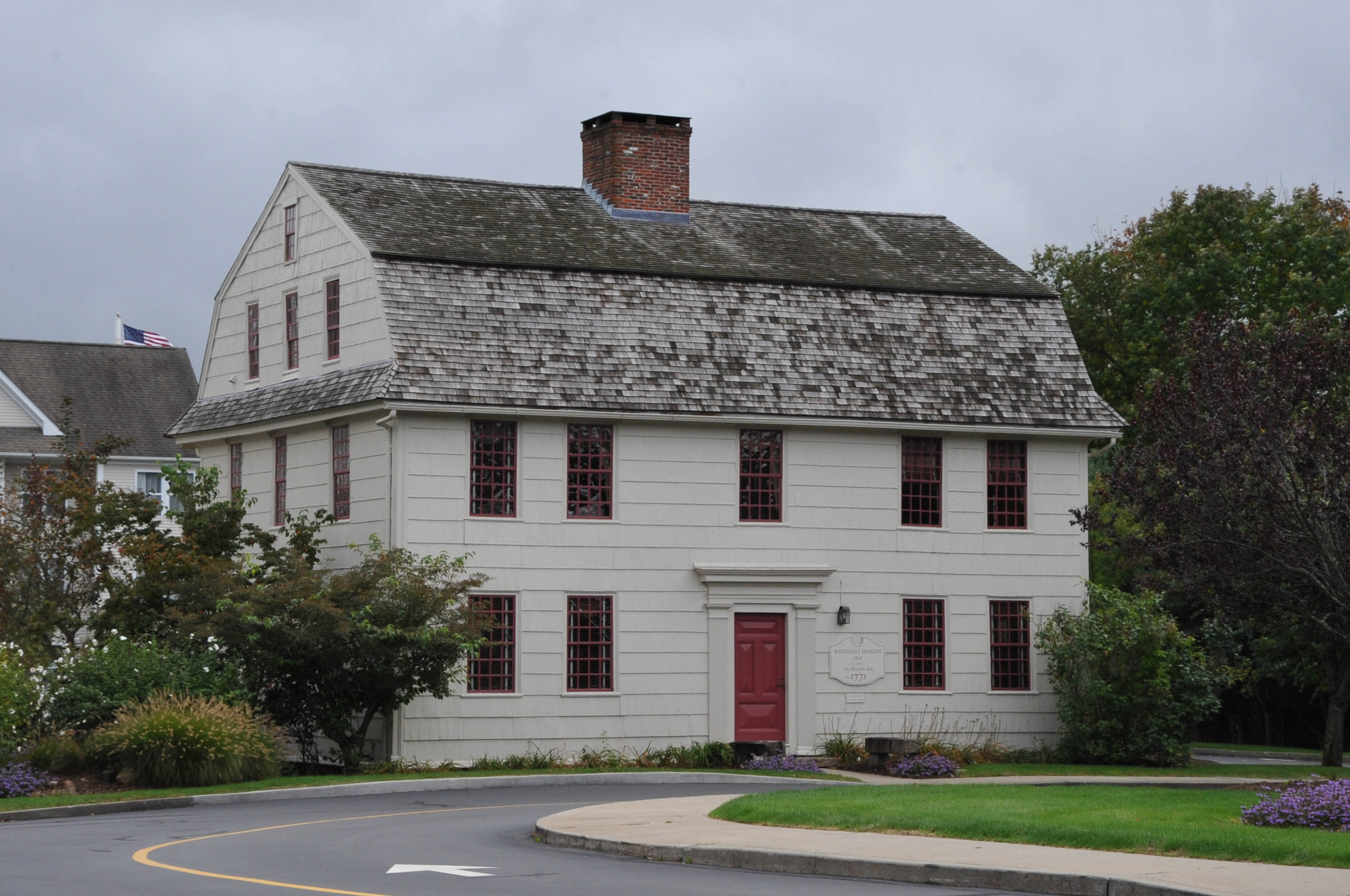
The story of Whitehall Mansion begins in 1771 when Dr. Dudley Woodbridge purchased the land where a tavern and stagecoach once stood. The house served as the doctor's office and clinic for many years.
The Ghost Story
Whitehall Mansion rises from centuries of colonial history in the Stonington section of Mystic, Connecticut. The current structure was built between 1771 and 1775 by Dr. Dudley Woodbridge, a Harvard-educated minister who abandoned theology for medicine in 1739. The mansion stands on land with even deeper roots—the original homestead was constructed around 1680 by Lieutenant William Gallup, whose family had received a land grant in 1650 for services to the fledgling Connecticut colony. Dr. Woodbridge purchased the property in 1764 from the Gallup descendants and built a tavern on the site before constructing the elegant Georgian mansion, which he designed himself featuring a distinctive gambrel roof, twelve-over-twelve windows, and unusual brick chimney construction for the era.
Dr. Woodbridge and his wife Sarah Sheldon raised nine children within these walls: Benjamin, Lucy, Charlotte, Sally, Samuel, Elizabeth, Joseph, William, and Dudley Jr. The family history was marked by tragedy—Benjamin died at just twelve years old, while Lucy never married and likely spent her entire life at the mansion. Dr. Woodbridge served as Groton's representative to the General Assembly and was named to the Committee for Inspection in December 1775 during the Revolutionary War. He died in 1790, followed by Sarah in 1796. Both parents and three of their children—William, Benjamin, and Lucy—lie buried in the adjacent Whitehall Burial Ground, the oldest cemetery in Mystic with 175 known graves dating to 1644.
The mansion's haunting centers on Lucy Woodbridge, Dr. Dudley's spinster daughter who remains the primary spirit in residence. Guests and investigators report her presence through disembodied laughter echoing through the rooms and doors that open and close on their own, leaving visitors startled by the unseen force. Lucy seems protective of her family home, and some believe she simply never chose to leave the place where she spent her entire earthly existence.
Young Benjamin's spirit also lingers at the property. In the guest room named for him, visitors have reported the TV cabinet repeatedly unlocking and opening by itself—leading one guest to joke, "Does Benjamin want to watch some TV?" Tour guide Courtney McInvale, founder of Seaside Shadows Haunted History Tours and author of "Haunted Mystic," has documented consistent paranormal encounters at Benjamin's gravestone in the Whitehall Burial Ground. She notes that children ages eleven to fourteen visiting the grave frequently capture faces, orbs, or unexplained anomalies in photographs, as if the young boy connects more readily with visitors near his own age at death.
Guests at the mansion—now operating as the Whitehall Mansion Inn, a bed and breakfast since 1996—have reported apparitions of both a woman and a young boy, objects moving in their rooms, and footsteps on the creaky colonial stairs when no one else is present. One paranormal investigation team called "Ghost Magnets with a Twist" booked an overnight stay specifically to document the activity, describing the inn's atmosphere as "intriguing" and noting that while nothing overtly frightening occurred, they hoped their recording equipment captured evidence of the mansion's supernatural residents.
The property carries additional historical intrigue through persistent legends of Underground Railroad connections. After the Civil War, whispers circulated about secret passages beneath the floor leading to the Mystic River and clandestine spaces in the attic floor accessed by lifting certain boards. While excavation during Interstate 95 construction in the 1960s revealed no such passages, the mansion was nearly demolished during that highway expansion—saved only by Florence Grace Keach's donation to the Stonington Historical Society in 1962. The house was carefully relocated approximately 100 yards to its current site and added to the National Register of Historic Places in 1979.
The adjacent Whitehall Burial Ground hosts regular ghost tours and paranormal investigations where attendees use authentic ghost hunting equipment to attempt contact with spirits from the 17th through 19th centuries. Visitors report footsteps, disembodied voices, and full-bodied apparitions throughout the cemetery grounds. Dr. Woodbridge's sandstone headstone, topped with a soul effigy featuring kind eyes and gentle wings, marks the resting place of the man who built this haunted home—though his daughter Lucy seems determined to ensure the Woodbridge family never truly vacates the property they called home for generations.
Researched from 12 verified sources including historical records, local archives, and paranormal research organizations. Learn about our research process.