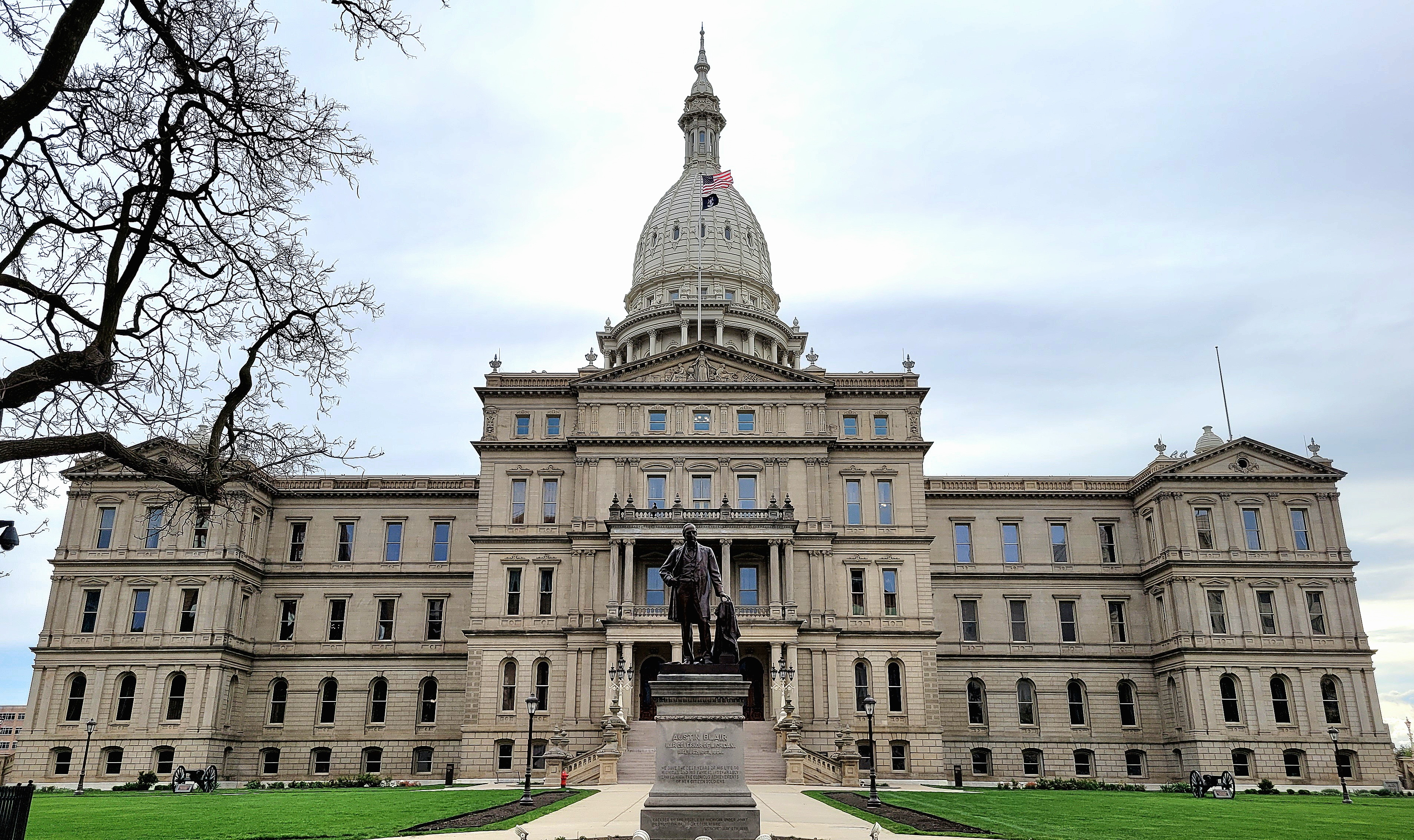
At the Michigan State Capitol in Lansing, staff keep seeing a painter on the rotunda walkway, in paint-spattered clothes. He fell to his death from a broken lift during the restoration that finished in 1992 — and the dome he was restoring is still up there, finished.
At the Michigan State Capitol in Lansing, staff keep seeing a painter on the open walkway that rings the rotunda. He wears paint-spattered work clothes, moves along the gallery, and is gone in a second. They know who he is, because they remember when he died.
It happened during the five-year restoration that finished in 1992 — a $58 million project to strip away decades of modifications and return the building to the way architect Elijah E. Myers drew it in the 1870s. The painter was working high on the rotunda walkway when his articulating boom lift broke. It pitched him over the railing.
The dome and the hand-painted finishes he was restoring are still up there, done. He's one of relatively few state capitols to keep its original decorative paint, and that work is his. The man staff describe on the walkway is still up there too, by their accounts, wearing the clothes he fell in.
He isn't the only death the building carries. Staff and ghost-tour guides keep a short catalog of them. There's a roofer. There's an elevator maintenance worker, electrocuted at some point in the building's history; no name or date for him survives in any record anyone can reach. And going back furthest, there's a teenage page boy. The story is that sometime in the 1880s the boy was showing off on the grand staircase, tried to leap between the railings, and fell two stories to the marble below. Employees say they still hear quick light footsteps on the stairs.
Then there are the things with no body attached. Disembodied voices in empty chambers. Footsteps. Cold spots, and a wind no one can find the source of. One maintenance worker, working late on the fourth floor, said he heard a voice come from a portrait, and after that refused to go back up there on night shifts.
For decades the rotunda held more than 200 Civil War battle flags carried by Michigan regiments, hung in glass cases around the rotunda walls until they began literally falling apart under their own weight and were removed during the restoration. Some employees float a theory about what the flags brought into the building, and what stayed after they were gone.
A former state representative put the official position plainly: "I don't believe that there are ghosts among us right now." The painter's clothes, by every account, are still up on the walkway.