At Mary Mayo Hall on Michigan State's campus, students keep hearing a baby grand piano in the lounge play itself once the lights go down. It's named for a woman who died in 1903, 28 years before the building she supposedly haunts ever existed.
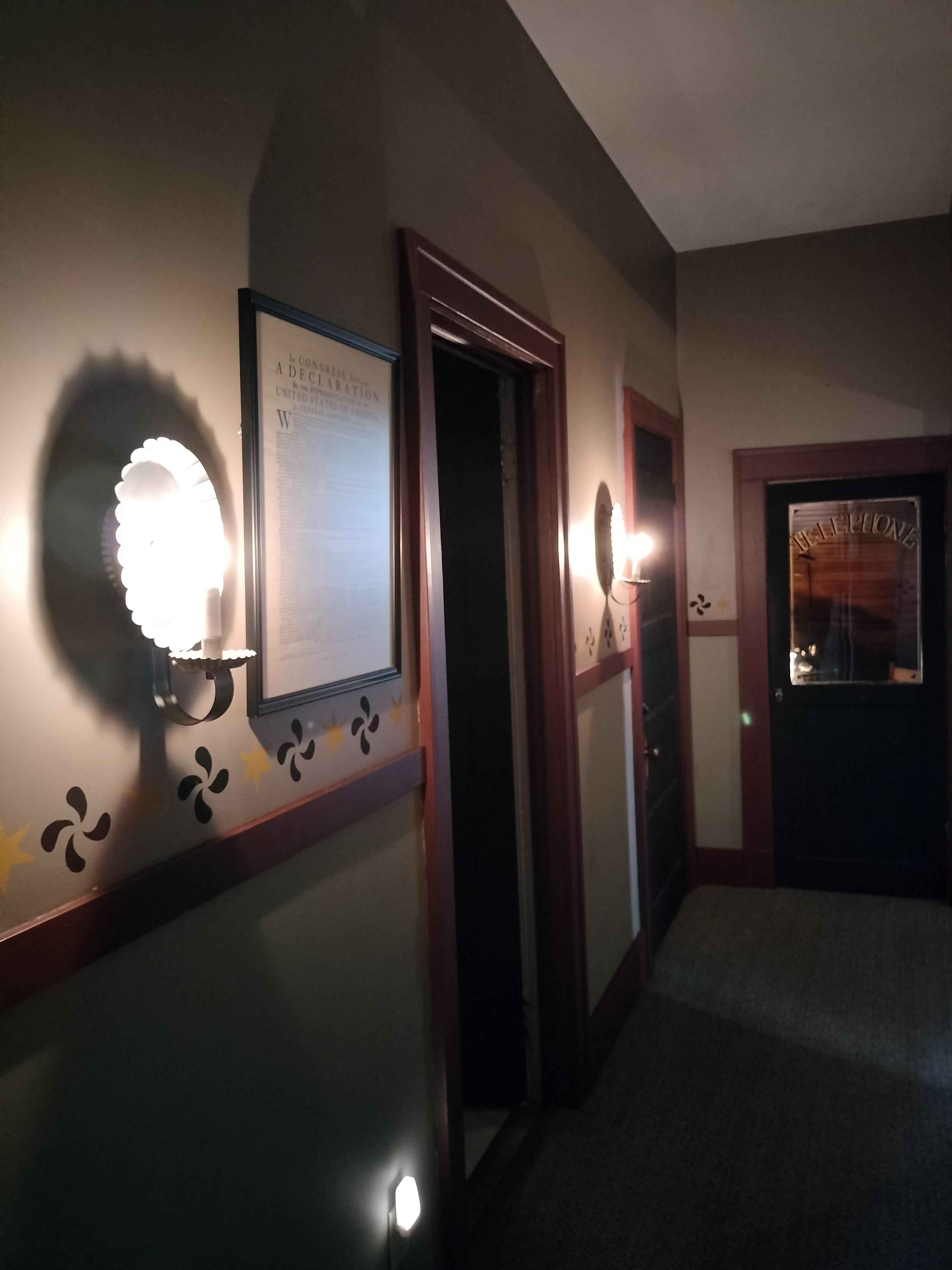
Mary Mayo Hall sits on the West Circle of Michigan State University in East Lansing, a Tudor-style dorm with a tower and long dim corridors, and the thing students keep coming back to is the piano. A baby grand sits in the lounge, and the story goes that once it gets dark, it plays on its own. Single keys pressed and let go. Sometimes a phrase. Always after the lights drop. One folklore account describes it as the piano "played by invisible fingers once it gets dark," and alumni still trade the story years after they've left.
MSU's own Campus Archaeology Program calls it the most haunted building on campus. Residents and RAs report the rest: footsteps, lights flicking on and off, thuds and creaks down the corridors, a shadowy woman drifting through the West Lounge, and a portrait on the first floor whose eyes are said to follow you across the room. When MSU's paranormal society spent a night there in 2021, a member said the most common thing they recorded was voices.
The portrait is of Mary Mayo, and here's the part that unravels the whole legend. She died in 1903. The hall didn't open until 1931, MSU's first all-women's dormitory, named for her out of respect. She never lived here. She never set foot in the building she supposedly haunts.
Mary Anne Bryant Mayo, born in 1845 in Calhoun County, spent her life arguing for women's education at what was then Michigan Agricultural College. In 1895 the governor put her in charge of the new Women's Division of the Farmers' Institute, and a women's department followed at the college a few years later. The dorm came decades after she was gone, and her portrait was hung in the lounge to honor a namesake, not to summon her.
The legend has grown the usual additions. There's a sealed "Red Room" in the attic, the story goes, painted red and used for satanic rituals and seances when the building first opened. In 2025 The State News went looking and found no record of any of it, no suicide, no ritual room, nothing in the archives. The fourth floor is sealed, but only because it houses HVAC units, with facilities staff coming and going regularly. That accounts for a fair number of the footsteps and shadows. As one freshman told the paper, "if anything happens, we just blame Mary, the lights, the drawers, the elevator, it's all her."
The Red Room dissolves under a records search. The piano in the dark is the one nobody has explained away.